Reformer Spare Parts: A Guide for Studios and Workshops
Reformer Replacement Parts: A Guide for Studios and Workshops
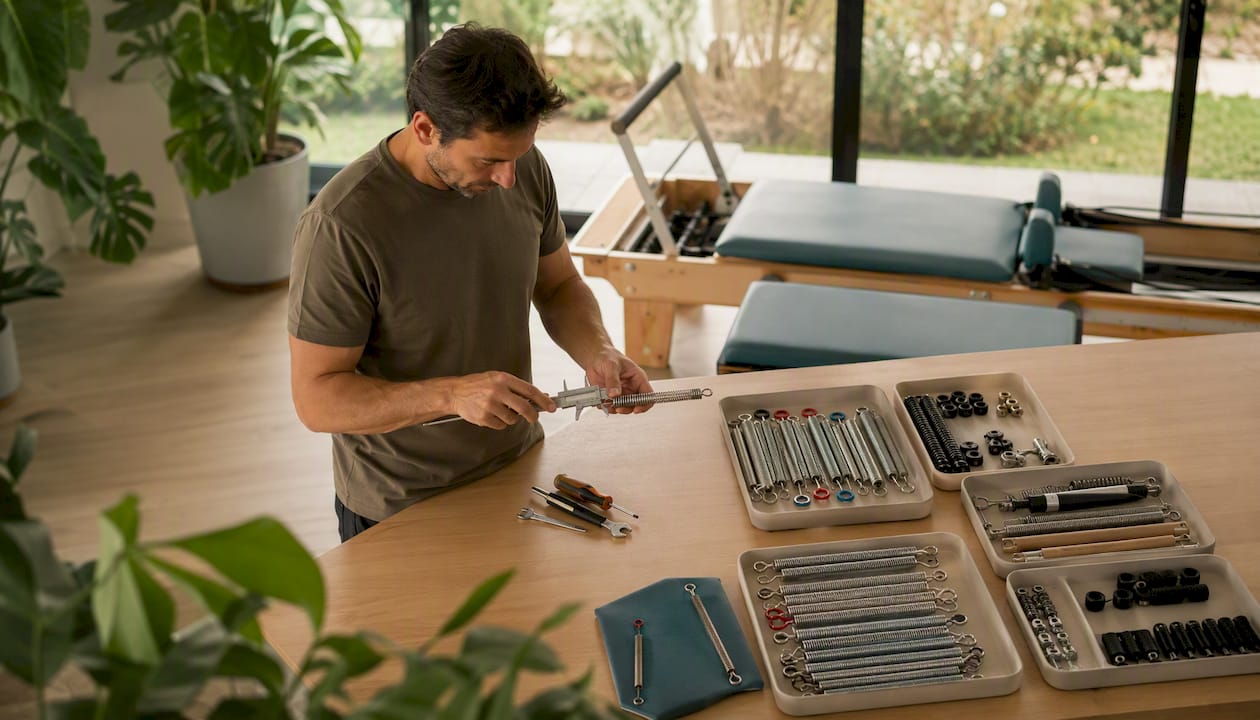
When a spring breaks or a carriage wheel starts rattling, there's only one priority: locating the correct part, confirming compatibility, and getting it installed before the studio loses capacity. For that, you need your equipment's OEM part number, key measurements (spring length and diameter, wheel profile, strap width), and the contact information of an authorized dealer who can confirm availability and warranty. For MetaLife equipment, Pilates de México is the official channel with access to verified spare parts and direct technical advice.
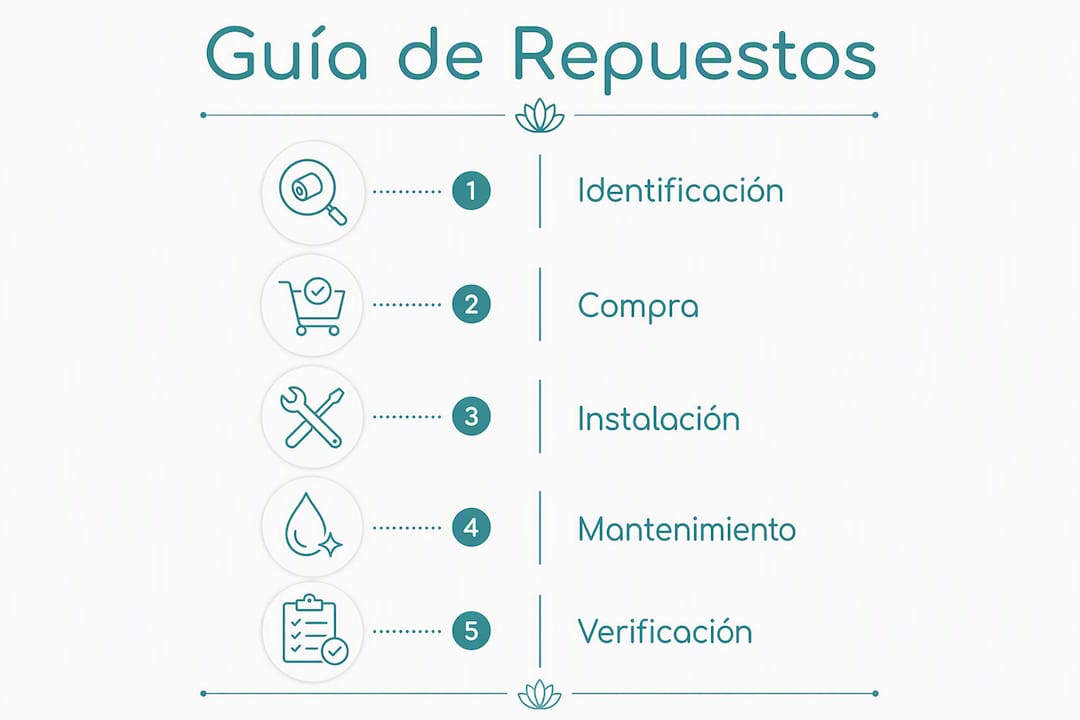
The four-step process: locate the serial number and OEM part reference → contact the authorized dealer with photos and measurements → confirm delivery time and warranty conditions → verify the replacement part upon receipt before installing.
Table of Contents
- What replacement parts and accessories does every professional reformer need?
- How do you identify the correct part for your model?
- Where to buy replacement parts in Mexico and what lead times to expect?
- Installation, preventive maintenance, and signs of failure
- Original (OEM) vs. Aftermarket Parts: Which is better to buy?
- Key Points
- What no one tells you about managing reformer replacement parts in a studio
- Pilates de México: OEM Parts, Advice, and Support for Your Studio
- Sources and Technical Reference Documentation
What replacement parts and accessories does every professional reformer need?
The critical components of a reformer are divided into fast-wearing parts, which should be kept in stock, and structural parts, which are replaced less frequently but whose failure can shut down the studio.
Frequently worn parts (maintain minimum stock):
- Springs: the heart of the resistance system, color-coded by intensity. A complete set covers all intensities used in your programming; high-volume studios usually manage two rotation sets.
- Carriage wheels and rollers: wheel kits typically range from 4 to 10 units depending on the model. A loose or noisy wheel affects the glide and the student's proprioceptive feedback.
- Straps, ropes, and handles: the parts in direct contact with the user are the first to show visible wear. Replacing them as a complete kit of ropes, handles, and grips reduces logistics and ensures consistent quality.
- O-ring kits and spring covers: protect the spring from corrosion and cushion impact; their replacement is economical and preventive.
Accessories and structural parts:
- Jumpboard: a high-impact accessory that expands class offerings; its surface and attachment system should be checked periodically.
- Long box and short box: accessories that enhance the versatility of the reformer for spine and limb exercises; edges and upholstery are common wear points.
- Footbar and stoppers: the footbar bears direct load in every session; check screws and fasteners quarterly.
- Pulleys, eye bolts, and carabiners: small parts with a direct impact on the safety of the pulley system.
Professional tip: record the installation date and estimated hours of use for each replacement part on a control sheet per equipment. This data truly tells you when to schedule the next replacement, not the visual appearance of the part.
How do you identify the correct part for your model?
Buying by approximate measurements is the most common, and most expensive, mistake. Real compatibility depends on the spring's thread diameter, hook type (open or closed), pulley finish, and manufacturing tolerance, not just the total length. Measuring only the spring length is almost always insufficient.
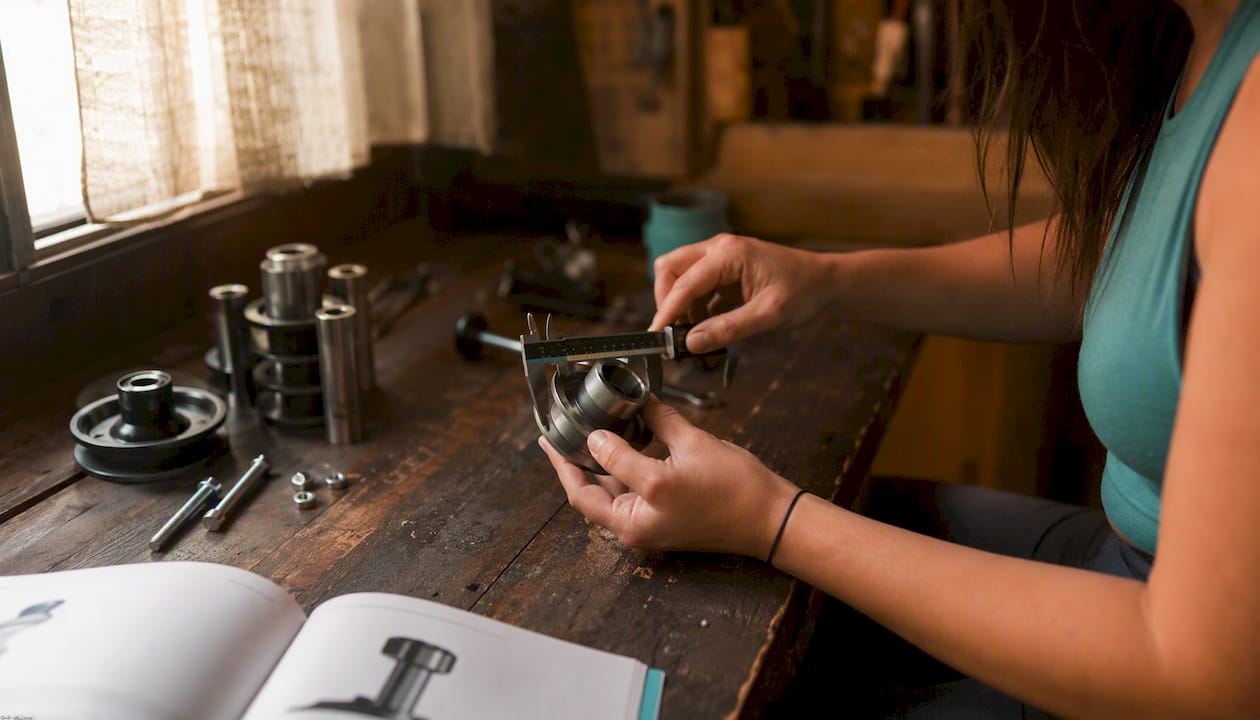
Before contacting the distributor, gather this information:
| Data to verify | How to obtain it | Where it appears |
|---|---|---|
| Equipment serial number | Adhesive plate or engraved on the frame | Side or bottom of the reformer |
| OEM part number | Technical manual or manufacturer's catalog | Original documentation or manufacturer's website |
| Spring length (mm) | Measuring tape, spring at rest | End to end, without tension |
| Spring outer diameter (mm) | Calipers or vernier caliper | Central body of the spring |
| Spring wire diameter (mm) | Calipers | Wire cross-section |
| Hook type | Visual inspection | Spring ends |
| Wheel diameter and profile | Calipers + profile inspection | Wheel removed from the carriage |
| Strap width and material | Measuring tape + touch | Strap in use position |
To photograph the part, always use a ruler or measuring tape in the frame. Take at least three angles: general view, detail of the hook or anchor point, and cross-section if it's a spring. These photos speed up dealer confirmation and eliminate ordering errors.
Where to buy spare parts in Mexico and what lead times to expect?
Purchase channels determine both the price and the guarantee of originality. Ordered by reliability:
- Authorized manufacturer distributor: access to OEM references, manufacturer's warranty, and technical support. This is the priority channel for critical parts.
- Official importer channel: for MetaLife equipment, Pilates de México manages access to verified spare parts with included advice.
- National specialized stores: useful for standard parts (wheels, compatible generic straps), provided you confirm part number and measurements before buying.
- Local manufacturer kits: valid for non-critical parts when the OEM distributor has long lead times; verify materials and tolerances before installing.
Estimated lead times by part type:
| Category | Usual lead time | Remarks |
|---|---|---|
| Standard wheels and straps | 1–3 days | Normally in stock at national distributors |
| Standard springs and kits | 3–10 days | Depends on intensity/color and model |
| Specific or imported OEM parts | 2 weeks | Always confirm with the supplier before ordering |
Estimated price ranges (reference for budgets):
| Part | Estimated range |
|---|---|
| Single spring | $400 MXN–$800 MXN |
| Complete set of springs | $2,000 MXN–$5,000 MXN |
| Single wheel | $200 MXN–$400 MXN |
| Wheel kit (4–10 units) | $1,000 MXN–$2,400 MXN |
| Pair of straps/ropes | $600 MXN–$1,200 MXN |
| Ropes + handles + grips kit | $1,000 MXN–$2,400 MXN |
| Jumpboard | $3,000 MXN–$5,000 MXN |
Estimated prices; confirm with your distributor before budgeting.
When ordering, always verify: OEM part number, return policy, proof of originality, shipping cost, and warranty period of the spare part.

Installation, preventive maintenance, and failure signs
Parts that the studio can change without technical service
For wheels, straps, springs, and handles, the process is straightforward if you follow these steps:
- Disconnect system tension before touching any part: remove all springs from the carriage and lock movement.
- Document the prior state with photos of the original assembly; these will be useful if there are doubts during assembly.
- Replace with appropriate tools: Allen wrench, torque screwdriver, and calipers. Never force a part that doesn't fit easily.
- Verify fastening torque according to manufacturer specifications; a loose screw on the footbar or pulley system is a real risk.
- Test empty before loading: slide the carriage without a student, check for no noise, play, or irregular resistance.
- Record the intervention: date, responsible technician, and photos of the final result.
Preventive maintenance schedule for high-volume studios
- Weekly: Visual inspection of springs (cracks, deformation), wheels (noise, lateral play), and straps (fraying, stiffness).
- Monthly: Lubrication of rails and pulleys, tightening of screws, inspection of carabiners and pins.
- Quarterly: Torque check on footbar and pulley system, upholstery inspection of boxes and jumpboard.
- Annually (or every 500 hours of use in intensive studios): Preventive replacement of springs even if they show no visible symptoms. Springs lose elasticity non-linearly: tension may be sufficient at rest but fail under dynamic load.
Component failure signs: Spring with noticeable tension loss, visible deformation or crack; wheel with constant noise or lateral play; strap with loose threads or stiffness that alters the movement path. Any of these signs justifies immediate replacement, not waiting for the next scheduled inspection.
Professional tip: Document each intervention with date, technician, and photos. This record reduces warranty disputes and provides real data to calculate when to schedule the next replacement.
Original (OEM) vs. Aftermarket Parts: What to Buy?
Advantages of OEM Parts
- Guaranteed compatibility with equipment manufacturing tolerances.
- Certified materials that maintain the reformer's warranty.
- Lower risk of failure under load, especially in springs and pulley systems.
- Investment in original parts reduces the Total Cost of Ownership (TCO) by avoiding frequent repairs and downtime.
When Aftermarket Can Be Acceptable
- Non-critical parts with verifiable standard specifications (upholstery, decorative covers).
- Temporary emergency situations while waiting for OEM parts, always for low-risk components.
- Never for springs, pulley systems, or traction straps: using inappropriate materials alters the biomechanics of the exercise and can cause postural compensations in students.
Originality Verification Checklist Upon Receiving a Spare Part
- Confirm that the part number on the packaging exactly matches the order.
- Check the manufacturer's label: it should include reference, batch, and country of manufacture.
- Verify that the packaging is intact and shows no signs of tampering.
- Request the authorized distributor's certificate or seal if not included.
- Measure the part before installation and compare with order specifications.
To calculate the true TCO, add the purchase price, estimated replacement frequency, and the cost of studio downtime during repair. An aftermarket spring that fails after three months costs more than an OEM one that lasts two years.
Key Points
Original reformer spare parts are identified by OEM part number, purchased from authorized distributors, and verified before installation to ensure compatibility, safety, and maintenance of equipment warranty.
| Point | Details |
|---|---|
| Identification before purchase | Gather serial number, OEM reference, and physical measurements before contacting the distributor. |
| Critical parts in stock | Keep a set of springs, a wheel kit, and straps available for immediate replacement. |
| OEM for load-bearing parts | Springs, wheels, and traction straps must always be original; aftermarket compromises warranty and safety. |
| Lead times by part type | Standard parts in 1–3 days; imported OEM parts may take 2 weeks; always confirm before ordering. |
| Pilates de México for MetaLife | Official channel for MetaLife OEM parts and accessories, with technical advice and studio packages. |
What Nobody Tells You About Managing Spare Parts in a Reformer Studio
Most studios learn to manage spare parts the hard way: when equipment is already out of service and a group of students is waiting. The problem is usually not the part itself, but the lack of prior documentation. Without the serial number at hand, without photos of the original assembly, and without a registered OEM reference, any inquiry to the distributor becomes an identification process that can take days.
What makes a difference in high-volume studios is treating spare parts as inventory, not as an emergency purchase. This means registering each piece of equipment with its serial number, photographing common wear points during periodic inspections, and keeping at least one set of springs and a wheel kit available. It's not an extra expense: it's the real cost of operating a professional studio without interruptions.
Another often underestimated point is negotiation with the distributor. Studios with multiple pieces of equipment can agree to preferential supply terms: guaranteed delivery times, volume pricing, and priority for urgent orders. This conversation is worth having before you urgently need a part, not during a crisis.
Pilates de México offers precisely this type of support for MetaLife equipment: advice to identify part numbers, access to verified spare parts, and studio packages that include financing. For studios managing several machines, this direct relationship with the official importer makes a real operational difference.
Pilates de México: OEM spare parts, advice, and support for your studio
Managing the maintenance of several reformers requires a supplier who knows the parts as well as you know your studio. Pilates de México is the official importer of MetaLife in Mexico and the go-to channel for studios that need verified spare parts, technical advice on identifying part numbers, and access to Pilates accessories compatible with their equipment.
The offer is concrete: direct sale of OEM spare parts for the MetaLife line, packages for studios with multiple equipment, financing available, and equipment consulting for those expanding or opening a new studio. Post-sale support includes guidance for correct installation of each part and warranty documentation.
If you have out-of-service equipment or want to establish a preventive maintenance plan for your studio, contact Pilates de México with your reformer's serial number and photos of the part. The team will confirm the OEM reference, delivery time, and conditions. Browse the complete catalog and request your quote at pilatesdemexico.com.
Sources and technical reference documentation
To validate parts, measurements, and maintenance practices, these resources are a solid starting point. When requesting technical support from a distributor, citing the OEM reference and attaching manufacturer documentation accelerates resolution.
- Reformer Component Guide — Physitrack: detailed description of reformer parts and their biomechanical function.
- Essential Accessories for the Reformer — Infancia Deportiva: guide to value-added accessories for studios.
- Reformer Anatomy — Cursos de Pilates: context on how each component affects the student's experience.
Note on internal documentation: keep a file for each piece of equipment with photos of every intervention, spare part invoices, and signed inspection sheets. This record supports any warranty claims and forms the basis for calculating the actual life cycle of each part.
Recommendation
- Infinity Reformer with Tower — MetaLife
- Studio Packages — Pilates de México
- Zürich Labs Reformers by Balanced Body — Pilates de México
- Reformer Advanced — MetaLife Pilates
Why studios across Mexico equip with Pilates de México
- MetaLife reformers — our flagship line: manufactured in Brazil from Brazilian hardwood and the number one selling Pilates Equipment brand in all of South America, featured in over 40,000 studios. Pilates de México is the exclusive distributor of MetaLife in Mexico: local stock, local technicians and a 3-year frame warranty.
- Advanced and Infinity Reformers by MetaLife — the two MetaLife lines most studios in Mexico choose, with towers, accessories and studio-grade upholstery.
- Zürich Labs — our accessible alternative when the budget is tighter.
- Studio packages — complete studio setups, with discounts on packages of 5+ reformers.
- Financing — equipment financing so your opening budget goes further.
- Certifications and workshops — instructor training and continuing education.
We own and operate studios throughout Mexico, so the advice comes from operators, not resellers. Request a quote.