Reformer Cleaning: Complete Maintenance Guide
Reformer Cleaning: A Complete Maintenance Guide
Clean your reformer with a microfiber cloth and water or mild soap after each use. Add a weekly deep clean for rails, wheels, and hardware, and monthly technical maintenance including lubrication and spring inspection. This daily, weekly, and monthly rhythm is what keeps your equipment safe and performing like new.
In summary:
- Daily cleaning with a microfiber cloth and water or mild soap helps keep the reformer in good condition and safe for constant use.
- Weekly deep cleaning of rails, wheels, and hardware prevents the accumulation of dust, fibers, and debris that affect the equipment's glide and mechanics.
- It is essential to periodically lubricate the guide wheels with lithium grease or silicone lubricant to reduce friction and prevent noise or malfunctions.
- Correct product usage, avoiding strong solvents and abrasive cleaners, protects the equipment's finishes and fabrics, especially in shared facilities.
- Proper preventive maintenance, including spring and hardware inspection, extends the reformer's lifespan and ensures a safe and comfortable experience for users.
Table of Contents
- Recommended tools and products for reformer cleaning
- Quick protocol after each use
- Weekly deep cleaning: how and why to do it
- Technical maintenance: guide wheels, lubrication, and springs
- Care for straps, handles, and upholstery according to material
- Common mistakes that damage the reformer
- Quick checklist: daily, weekly, and monthly
- Expert perspective: how maintenance affects the student experience
- Technical support and original spare parts for your reformer
- Sources
- Frequently asked questions
Recommended tools and products for reformer cleaning
You don't need an arsenal of chemicals to clean your reformer effectively. What's essential is a handful of the right tools and the discipline to use them consistently.
- Microfiber cloths: absorb sweat and dust without scratching wood or stainless steel.
- Soft-bristle brush to remove debris from rails and grooves.
- Allen wrench set of the size indicated in the manufacturer's manual, for hardware and wheels.
- Mild detergent diluted in water or an alcohol-free sports cleaner for upholstery and straps.
- Disposable covers or personal handles, plus alcohol-free disinfectant applied to a cloth, in high-volume studios.
Completely avoid bleach, ammonia, and strong solvents: they irreversibly damage finishes and upholstery, even with a single application. If you manage a studio shared by multiple students daily, investing in personal handles reduces direct contact with common surfaces without requiring constant washing.
Quick Protocol After Each Use
After class, the reformer needs less than two minutes of attention. Follow this order:
- Remove visible sweat with a dry cloth before applying any liquid.
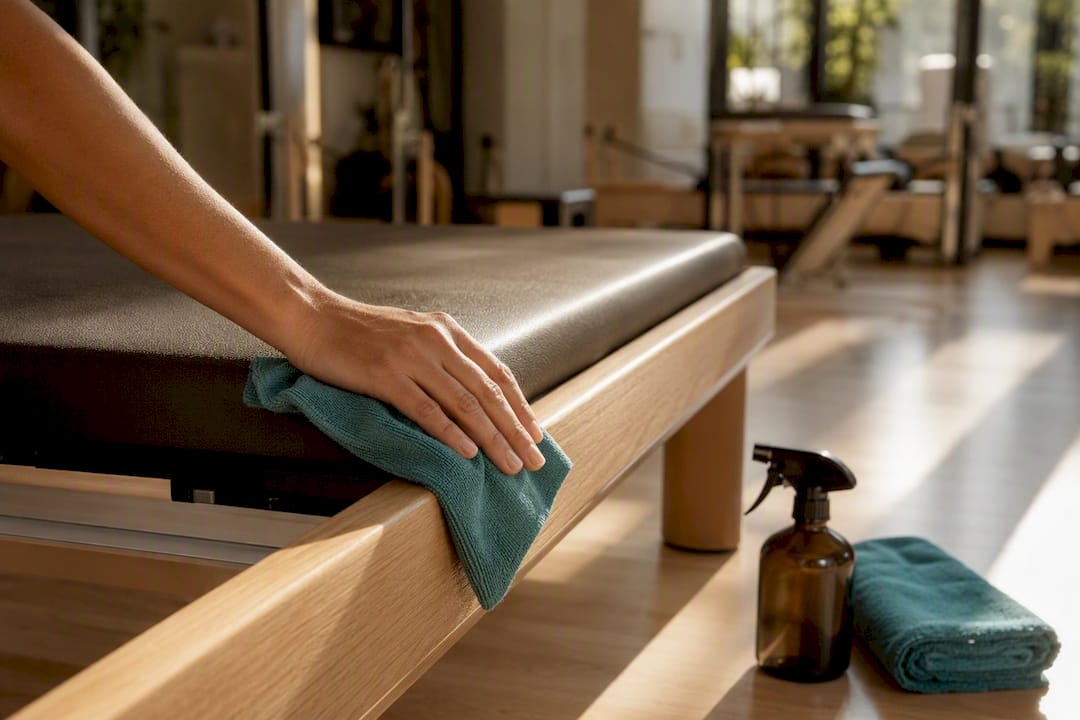
- Dampen a clean cloth with water and neutral soap; never spray cleaner directly onto the upholstery or straps.
- Wipe the contact areas: headrest, carriage upholstery, handles, and footbar.
- Dry immediately with a clean, dry cloth, leaving no residual moisture.
- Visually check that no sweat remains in seams or upholstery edges.
The golden rule is simple: liquid goes on the cloth, never directly on the equipment. Spraying directly onto straps or upholstery soaks the internal fibers and accelerates their deterioration. This step, repeated after each session, is the foundation of any reformer maintenance protocol and prevents dirt from accumulating to the point of becoming a deep cleaning problem.
Weekly Deep Cleaning: How and Why to Do It
Once a week, the reformer needs more than just a cloth. Rails and wheels accumulate dust, clothing fibers, and residue that are not visible to the naked eye, but which affect the carriage's glide.
- Remove dust from rails and wheels with a soft brush or compressed air, paying special attention to corners where lint accumulates.
- Clean and dry the entire frame, giving special attention to joints and metal supports.
- Check all screws and anchors, tightening anything loose without forcing threads.
- In studios, apply disinfectant to the cloth before touching the equipment; never pour it directly onto wood or upholstery.
This weekly routine is what Pilates equipment maintenance guides recommend for commercial use, and it applies equally to a home reformer that receives several sessions weekly.
Professional tip: Keep a visible calendar next to the equipment with the date of the last deep cleaning. In studios with multiple instructors, this prevents everyone from assuming "someone already did it" and the task ending up undone.
Technical Maintenance: Guide Wheels, Lubrication, and Springs
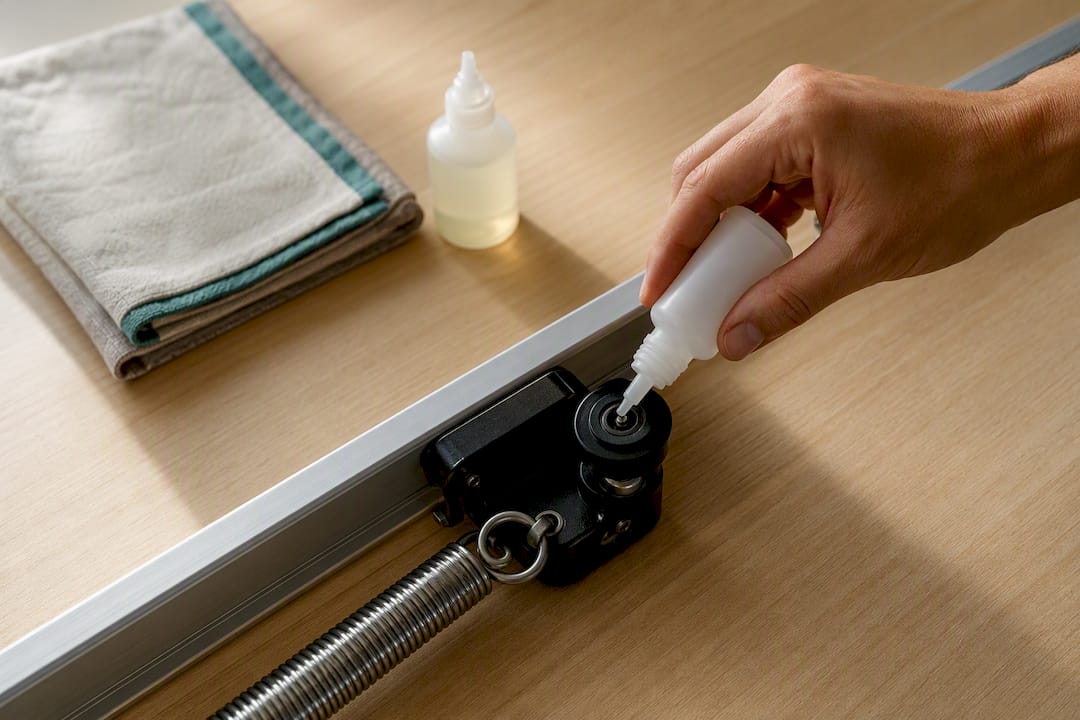
This is where reformer cleaning stops being aesthetic and becomes mechanical. The carriage's guide wheels are the parts that accumulate the most friction, and their condition determines whether the glide is fluid or noisy.
Technical manuals recommend disassembling the wheels with the correct size Allen wrench (usually 5/32), cleaning any accumulated residue, and applying a small amount of lithium grease or silicone lubricant before reassembling everything in the original screw order. Excess lubricant attracts more dust than it removes, so moderation is key.
- Necessary tools: Allen wrench of the indicated size, small brush, cloth, and manufacturer-recommended lubricant.
- Indicative frequency: regular inspection of wheels and springs according to use, more frequent in studios with high class turnover.
- Warning signs: noises when sliding the carriage, irregular movement, springs with visible rust or tension that changes from one exercise to another.
When lubrication dries out or is insufficient, friction increases, and that characteristic noise appears, which many instructors confuse with a more serious problem. If the noise persists after lubrication, or if a spring shows corrosion, that's when it's best to call technical service instead of continuing to adjust it yourself.
Care of Straps, Handles, and Upholstery According to Material
Not all straps are cleaned the same way, and treating them all with the same method is a common mistake. The material determines the procedure.
- Washable fabric straps: submerge them in lukewarm water with neutral soap, rub gently, and dry flat, never hung or near a direct heat source.
- Leather straps and handles: use specific leather cleaners with nourishing properties, applied with a damp cloth, without excess water that could dry out or deform the material.
- Carriage upholstery: water and neutral soap in minimal amounts, immediate drying to prevent moisture from seeping under the foam.
In studios where dozens of students use the same straps every week, adding personal loops or protective covers reduces accumulated wear and minimizes germ contact, without needing to wash the original accessory daily. If you're looking to replace worn-out straps, it's advisable to first check accessory compatibility between brands to avoid buying a part that doesn't fit your model.
Common Mistakes That Damage Your Reformer
Some habits seem harmless but shorten the equipment's lifespan much faster than the average user imagines.
- Submerging metal parts or directly spraying water on the carriage, rails, or frame.
- Using abrasive cleaners, bleach, or alcohol on upholstery and straps, even if it's "just once."
- Postponing inspection when noises, vibrations, or irregular spring resistance appear, assuming it will "just go away."
Each of these mistakes shares a pattern: they save two minutes today and lead to an expensive repair tomorrow. A spring that sounds odd for weeks doesn't fix itself, and a strap washed with bleach won't return to its original texture.
Quick Checklist: Daily, Weekly, and Monthly
This list summarizes the entire protocol into three frequencies, designed to be printed and posted next to the equipment.
- Daily: Clean contact surfaces (upholstery, headrest, hand loops, foot bar) with a damp cloth and dry immediately.
- Weekly: Clean rails and wheels with a soft brush, check visible screws, and the condition of straps.
- Monthly: Lubricate guide wheels with the manufacturer's recommended amount, check spring tension and corrosion, and tighten any loose screws.
Expert Perspective: How Maintenance Affects the Student Experience
The strongest technical argument for this routine isn't aesthetic; it's biomechanical. A reformer with worn wheels or inconsistent spring tension alters how each exercise feels, and that directly affects the quality of movement and student safety, not just comfort.
What many studio owners underestimate is the commercial effect of this detail. A student who feels a "strange" carriage or hears squeaks during a class associates that sensation with the overall studio quality, not just the specific equipment's maintenance. Preventive maintenance, then, protects both the physical investment and the business's reputation. The line separating cleaning you can do yourself from what requires technical service usually lies with the springs and carriage behavior: that's where improvising is not advisable.
Technical Support and Original Spare Parts for Your Reformer
Specialized suppliers offer original replacement parts when regular cleaning and maintenance are no longer enough, and a wheel, spring, or strap needs actual replacement.

We work with MetaLife, the leading reformer line in South America, built with certified Lyptus® FAS wood and stainless steel hardware designed to withstand years of daily classes without losing precision. If your equipment already shows signs of wear that cleaning doesn't resolve, or if you're considering renovating your entire studio, you can check out the Zürich Labs Reformer and request a quote with direct financing options. Our consulting team will advise you on when a technical adjustment is appropriate and when it's time to invest in new equipment.
Sources
For detailed steps on disassembling and lubricating guide wheels, consult the Gratz Pilates setup guide. For broader commercial maintenance routines, the Bilinkpilates Factory guide and Pilatesology's complete maintenance offer complementary perspectives on periodic inspections.
- Pilates Equipment Maintenance Guide | Bilinkpilates Factory
- Gratz Pilates REFORMER Configuration Guide
- Pilates Reformer Maintenance: Guide with Tips from Astrid Rosell
Frequently Asked Questions
How often should I clean my reformer?
A quick clean after each use, a deep weekly cleaning of rails and wheels, and a monthly technical review of lubrication and springs.
What liquid can I use to clean gym machines?
Water with diluted neutral detergent or an alcohol-free sports cleaner applied with a cloth, always avoiding bleach, ammonia, and strong solvents.
What is a reformer and what is it used for?
It's a Pilates machine with a sliding carriage, adjustable resistance springs, and straps, used for strength, control, and mobility exercises with many exercise variations.
How do I clean reformer straps without damaging them?
Fabric straps are washed with warm water and neutral soap and dried flat; leather straps require specific cleaners applied with a damp cloth, without saturating them with water.
How many times a week is it recommended to do Pilates reformer?
Practice frequency varies depending on the student's goal, but equipment with regular maintenance supports daily use in studios without losing movement precision.