Pilates Studio Equipment: What to Buy First and How Much to Invest
Pilates Studio Equipment: What to Buy First and How Much to Invest
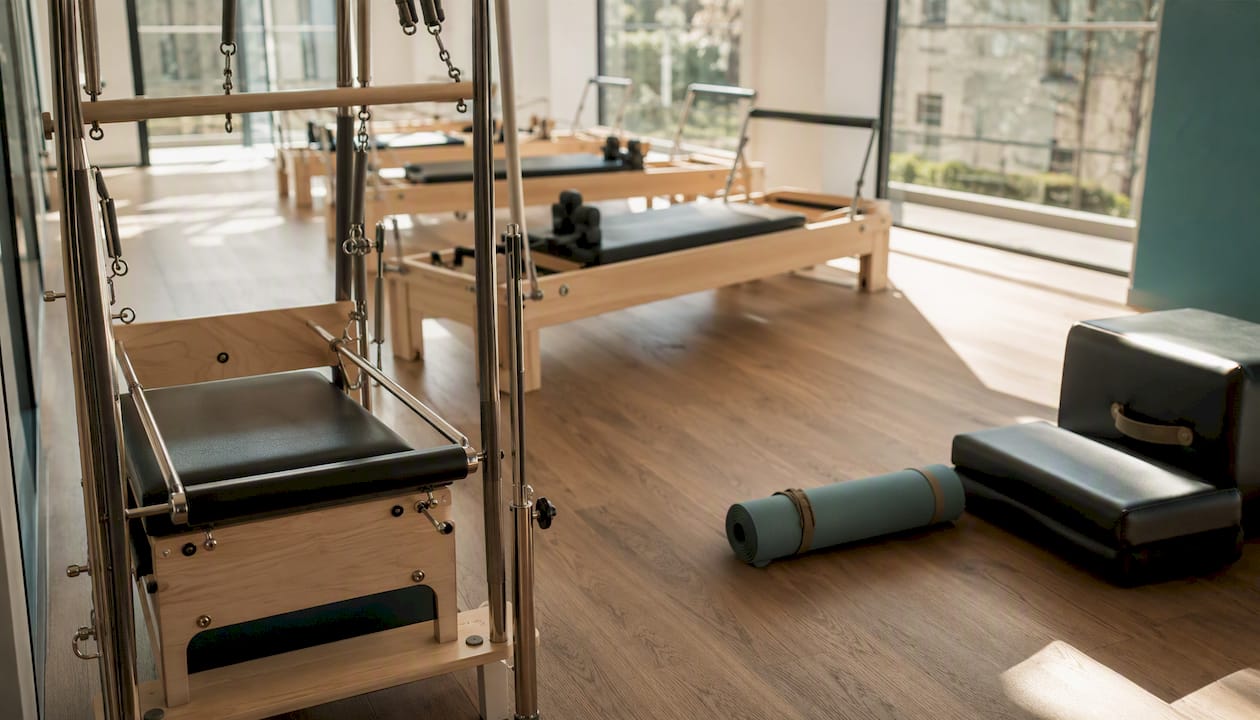
The professional Reformer is the first investment any Pilates studio should make: without it, there are no profitable group classes, no complete repertoire, and no unique selling proposition compared to a conventional gym. From there, the strategy is to scale in phases according to actual demand, not according to the supplier's full catalog.
To open safely and start generating income from the first month, the minimum viable package includes:
- Professional Reformers (several units for group classes with practitioner rotation)
- Mat Pilates mats (one per reformer at minimum, plus two additional for warm-up)
- Basic accessories: Pilates rings, resistance bands, and small balls
- A measured and prepared space before the first machine arrives
The Reformer justifies its priority because it is the only machine that allows working strength, mobility, postural control, and more than 200 different exercises in a single station. Each unit generates income per individual, duet, or group class, making it the highest return-per-square-meter asset in the studio. Planning the purchase in phases and evaluating financing and package options from the start reduces capital pressure without compromising equipment quality.
Key Points
The professional Reformer is the priority investment for any Pilates studio: without it, there are no profitable group classes, no complete repertoire, and no foundation for scaling.
| Point | Details |
|---|---|
| The Reformer is the foundation | Start with a minimum of 4 professional units before investing in any other machine. |
| Phased purchase | Add Cadillac, Chair, and barrels only when occupancy is stable for several weeks. |
| Materials and support matter | Certified wood, steel hardware, and available local spare parts are non-negotiable criteria. |
| Space is planned beforehand | Calculate a clearance of 0.8 m per side and a minimum of 30–35 m² for a room with 4 Reformers. |
| Pilatesdemexico as a reference option | Offers MetaLife and Balanced Body lines with financing, installation, and opening consulting included. |
Table of Contents
- What Equipment Makes Up a Professional Pilates Studio?
- Essential Accessories From Day One
- Phased Purchase Plan: From Initial Studio to Full Studio
- How Much Does It Cost to Equip a Pilates Studio?
- Space, Layout, and Installation: What No One Measures Until It's Too Late
- Technical and Commercial Checklist for Choosing Machines and Suppliers
- Maintenance, Lifespan, and Resale Value
- Why MetaLife and Pilates de México Are the Recommended Option
- What No One Tells You When Equipping Your First Studio
- Pilatesdemexico: Packages and Financing to Open Your Studio
- Sources
What Equipment Makes Up a Professional Pilates Studio?
A well-equipped studio is not one with the most machines, but one with the correct machines for the type of classes it offers. The combination of Reformer, Chair, and Cadillac with updated technical training transforms the equipment into a safe and pedagogically sound experience for practitioners.
The Reformer: Operational Pillar
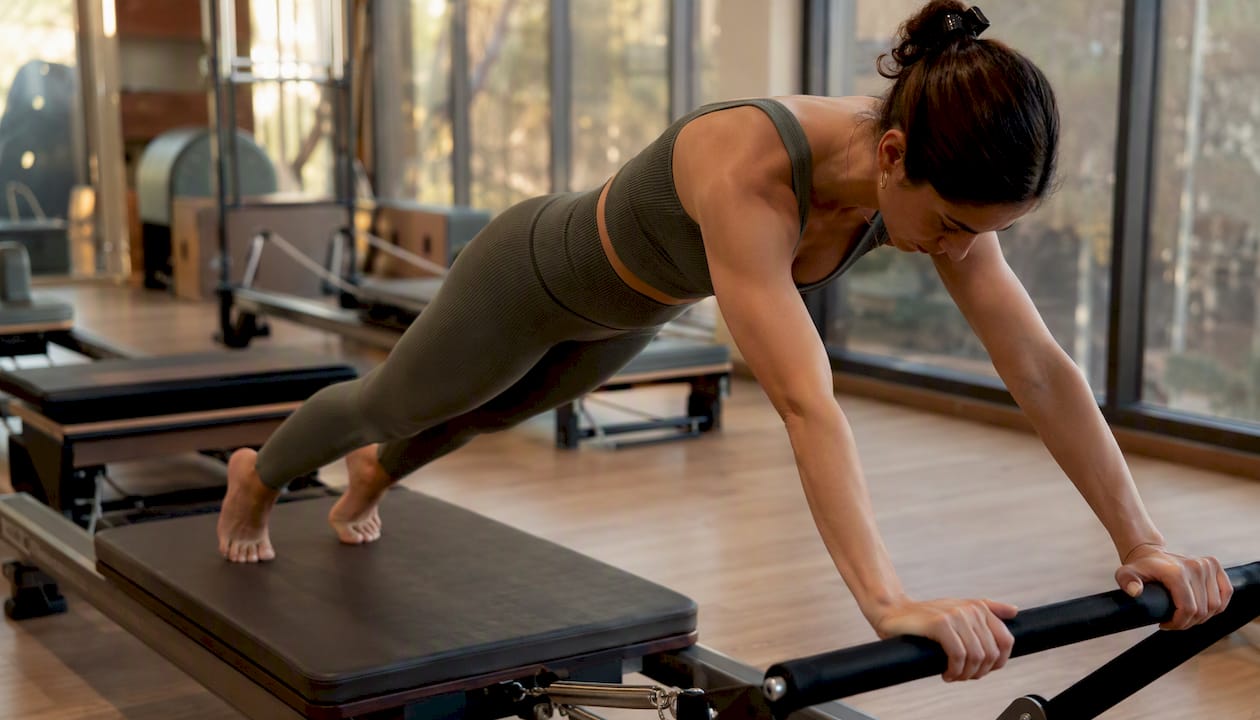
The Reformer is the central machine in any studio. Its system of calibrated springs and a sliding carriage allows for work in supine, seated, kneeling, and standing positions, making it suitable for beginners, high-performance athletes, and patients in rehabilitation. The Sotnyk Zürich Labs Reformers by Balanced Body and the MetaLife Infinity Reformer with Tower are two of the professional lines available in Mexico, built to withstand the intensive use of multiple daily classes.
Cadillac and Tower: Expanding the Repertoire
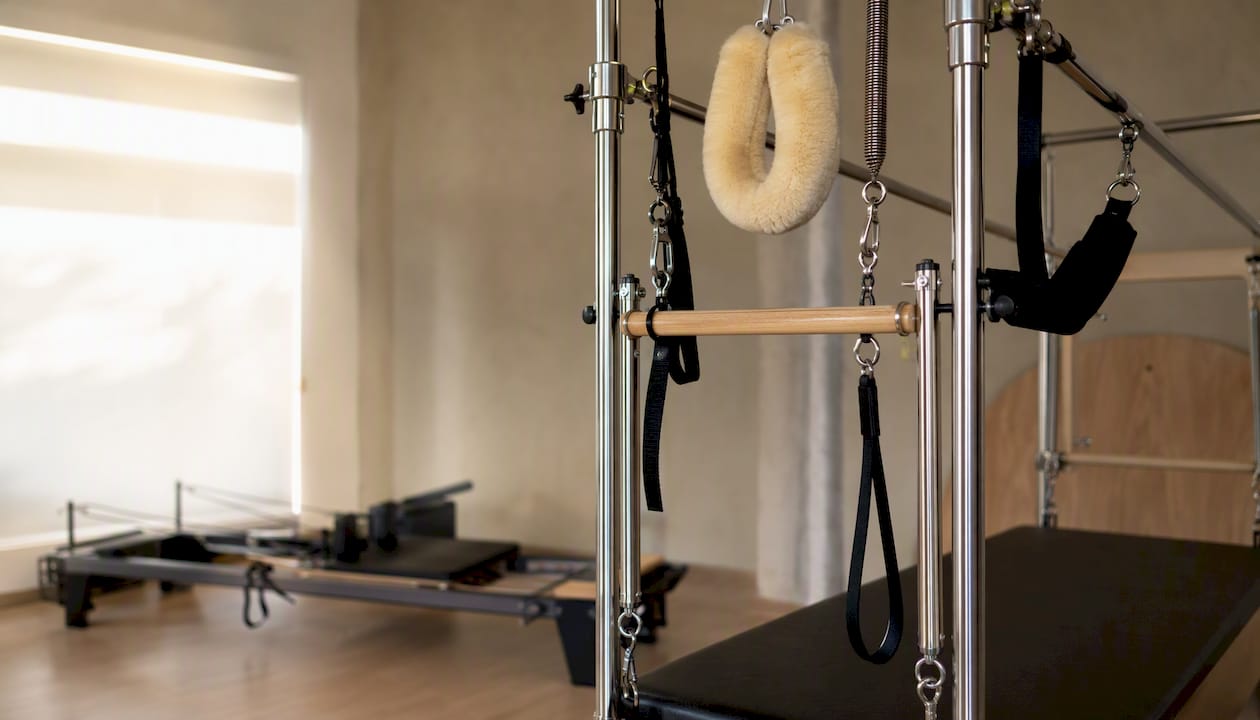
The Cadillac, also called a Trapeze Table, adds traction, suspension, and spinal mobility work that the Reformer cannot replicate. The Tower version, which attaches to the Reformer itself, is a more compact and economical alternative for studios with limited space. It is recommended to incorporate at least one unit in phase 2, when the studio already has stable occupancy and wants to diversify its offerings towards rehabilitation classes or advanced training.
Chair (Wunda Chair): Functional Work in Limited Space
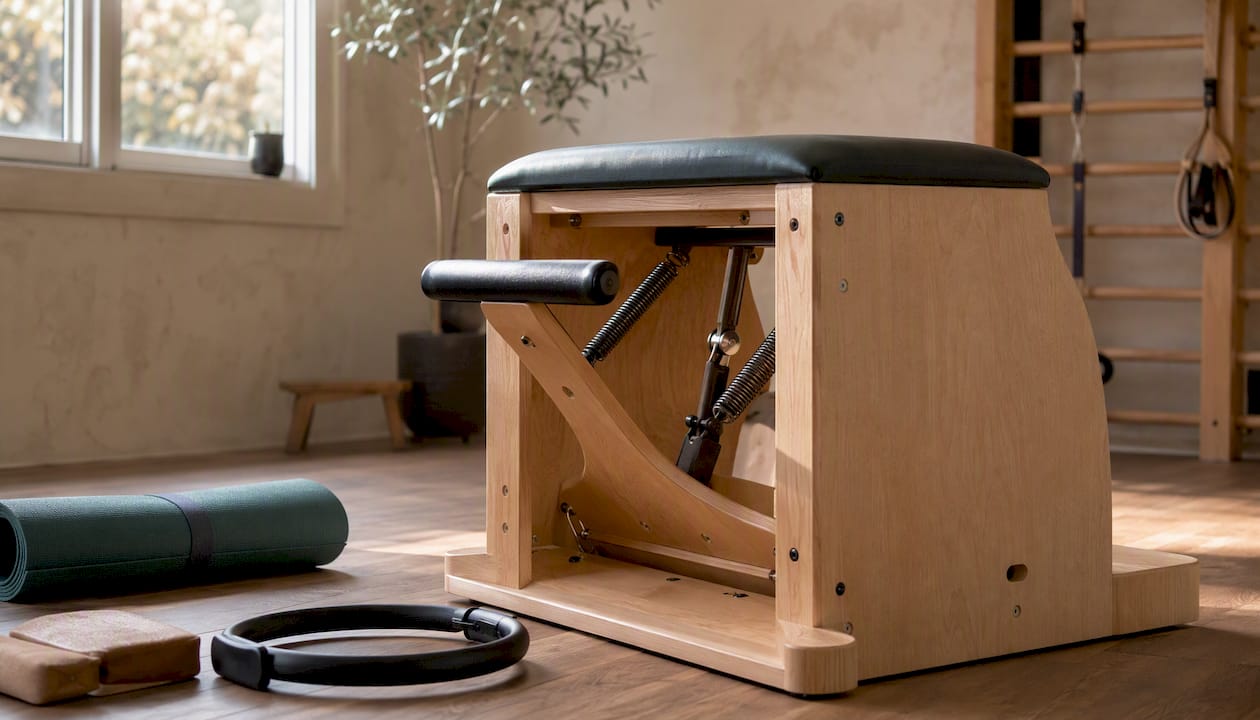
The Pilates chair, in its Wunda or Step Chair version, works functional strength, balance, and stability in a minimal footprint. It is especially useful for high-performance individual classes and to complement Reformer work in duo sessions. The MetaLife Infinity Step Chair is a compact option with commercial finishes designed for frequent use.
Barrels: Spinal Mobility and Extension
Barrels (Spine Corrector, Ladder Barrel, and Arc Barrel) work spinal extension and flexion in a way that no other machine replicates with the same precision. These are Phase 3 pieces of equipment, aimed at studios offering advanced training or specialized postural rehabilitation programs.
The relationship between class type and machine mix is direct: a group class studio needs more Reformers; one oriented towards individual sessions or clinics might prioritize the Cadillac and Chair earlier.
Essential Accessories from Day One
Accessory equipment is not a luxury: the right accessories improve safety, allow intensity to be adapted by level, and are the difference between a class that works for everyone and one that excludes beginners or people with physical limitations.
Accessories to purchase at opening:
- Pilates Rings (magic circle): one per Reformer; they add resistance to arms and legs without changing the machine's setup.
- Resistance Bands: a minimum of two tension levels per station; useful for warm-ups, mobility, and shoulder work.
- Small Balls (soft ball): ideal for core activation and proprioceptive work; used on both mat and Reformer.
- Mat Mats: minimum 6 mm thickness for floor use; 10 mm is preferable for classes with spinal work.
- Positioning Cushions and Wedges: essential for adapting exercises for people with hyperkyphosis, pregnant women, or those in rehabilitation.
- Spare Straps and Harnesses: having at least one spare set per machine prevents class cancellations due to wear and tear.
Accessories that can be added in Phase 2:
- Hand weights (0.5–2 kg) for arm work on mat
- Foam rollers for group mobility and warm-up
- Long Therabands for hip and pelvis work
For resistance and complementary conditioning accessories, specialized stores like Techfit offer band and ball options that integrate well into class programming.
Mats and cushions, however, should be purchased as needed based on the actual capacity of the studio to avoid immobilizing capital in unused stock.*
Phased Purchase Plan: From Initial Studio to Full Studio
Commercial guides for Pilates studios recommend starting with a Reformer and mat, and adding more expensive equipment as demand grows. The most common mistake is buying the entire catalog before having students, which leads to overspending and machines sitting idle for months.
Phase 1: Startup Room (Months 1–6)
The goal is to generate income from the first month with minimal investment that supports quality classes.
- 4 professional Reformers with included accessories (footbar, straps, springs)
- 6 Pilates mats
- Set of rings, bands, and balls (one per Reformer)
- Cushions and positioning wedges (minimum 4 units)
With 4 Reformers, you can offer group classes for up to 4 people, duo classes, and individual sessions concurrently.
Phase 2: Expansion (Months 6–18)
When demand justifies it, the following are added:
- 2 additional Reformers (for classes of up to 6 people)
- 1 Tower or Cadillac (for specialized individual sessions)
- 1 Step Chair (for high-performance duo classes)
- Second-line accessories: weights, foam rollers, long bands
Phase 3: Complete Studio (Month 18 onwards)
- Ladder Barrel or Spine Corrector (for rehabilitation and advanced training)
- Additional Reformers if space permits
- Mat equipment for independent group classes
| Phase | Main Equipment | Key Accessories | Advancement Criterion |
|---|---|---|---|
| 1 — Startup | 4 Reformers + mats | Rings, bands, balls, cushions | Sustained occupancy for weeks |
| 2 — Expansion | +2 Reformers, Tower, Chair | Weights, foam rollers, long bands | Specialized classes with a waiting list |
| 3 — Complete Studio | Barrels, additional Reformers | Independent mat equipment | Demand for advanced training or rehabilitation |
How Much Does It Cost to Equip a Pilates Studio?
Price ranges vary depending on the equipment's origin, materials, and included service level. A home-use Reformer can cost between 15,000 and 35,000 MXN, but its construction is not designed to withstand multiple daily classes. A professional Reformer made of certified wood with steel hardware, such as those from the MetaLife line, falls into a higher range that justifies its cost due to its lifespan and resale value.
The difference between the low and high range is not just price: it's about materials, warranty, technical support, and resale value.
Financing options to consider:
- Monthly payments without interest (available with specialized providers like Pilatesdemexico)
- Discount packages for bulk purchases: buying 4 or more Reformers in a single order usually includes a discount and additional accessories
- Leasing or financial lease for studios that prefer to preserve liquidity
- Ambassador programs with discounts and commissions for instructors who recommend the provider
The total cost of ownership includes replacement springs, upholstery, straps, and annual technical service. A provider that does not offer original spare parts or local technical support can turn an initial saving into a greater expense within 18 months.
Space, Layout, and Installation: What No One Measures Until It's Too Late
A professional Reformer occupies approximately 2.5 m (8.2 ft) in length by 0.65 m (2.1 ft) in width. The recommended clearance for the instructor to move safely around the machine is at least 0.8 m (2.6 ft) on the sides and 0.5 m (1.6 ft) at the ends. For a room with several Reformers in parallel, the minimum recommended operational space is moderately ample, not including reception, changing rooms, or storage.
Technical installation requirements:
- Floor: minimum resistance of 200 kg/m² (40 lb/ft²) for commercial use; non-slip and easy-to-clean finish (high-density vinyl or floating wood are the most common options).
- Anchors: most professional Reformers do not require floor anchoring but do need a level surface with a maximum tolerance of 2 mm per linear meter.
- Headroom: minimum 2.4 m (7.9 ft) for standing exercises on the Reformer; 2.7 m (8.9 ft) or more if a Cadillac with an upper bar is installed.
- Ventilation and temperature: between 18 °C and 22 °C (64 °F and 72 °F) is the optimal range for Pilates classes; excessive heat affects upholstery adhesion and practitioner comfort.
- Installation time: a provider with assembly service can install 4 Reformers in 4–6 hours; without included service, assembly can extend to 2–3 days if the team lacks previous experience.
Pro tip: Before confirming your order, draw the layout to scale on paper or use a floor plan app like MagicPlan. Place rectangles representing the actual size of each Reformer and simulate the instructor's movement. What seems spacious in total square footage can become very cramped when you add the safety clearance for each machine.
Technical and Commercial Checklist for Choosing Machines and Suppliers
Use this list in the meeting with any supplier before signing an order:
Materials and construction:
- Is the frame made of certified solid wood (such as Lyptus® FAS) or particleboard?
- Are the hardware and rails made of stainless steel or standard aluminum?
- Are the springs calibrated and certified for intensive commercial use?
Warranty and service:
- How many years of warranty cover the frame, springs, and upholstery separately?
- Does the supplier have local technical service, or is support only remote?
- Is stock of original spare parts available in the country?
Logistics and delivery:
- Does the price include delivery, assembly, and setup?
- What is the actual delivery time from order confirmation?
- Is there a return or exchange policy in case of a manufacturing defect?
Compatibility and accessories:
- Are accessories (straps, footbar, box) interchangeable between models of the same line?
- Does the supplier offer replacement accessories or only sell complete machines?
Red flags: A price significantly below market without material specifications, the absence of a physical address or local technical service, and the lack of verifiable references from other studios are sufficient reasons not to proceed. General marketplaces offer lower initial price options, but technical support and warranty vary considerably compared to a specialized distributor.
Maintenance, Lifespan, and Resale Value
A well-maintained professional Reformer can have an extended lifespan in intensive commercial use. Consumable parts that wear out sooner are the springs, foot straps, and carriage upholstery, all of which are replaceable without needing to change the entire machine.
Recommended maintenance schedule:
- Daily: clean rails and carriage with a damp cloth; check strap tension and spring condition before each class.
- Monthly: lubricate rails with a specific product (never vegetable oil or WD-40); check screws and adjust if loose.
- Annually: complete spring inspection (replace those showing deformation or loss of tension), upholstery inspection, and wooden frame review.
The most frequent recurring costs are:
- Replacement springs: between 500 and 1,500 MXN per unit depending on the model
- Carriage upholstery: between 2,000 and 5,000 MXN per Reformer
- Foot straps: between 300 and 800 MXN per pair
To maximize resale value when it's time to expand or renew your equipment fleet, it's advisable to keep the original documentation, use only manufacturer's spare parts, and record every technical service performed.
Why MetaLife and Pilates de México are the Recommended Option
Pilatesdemexico distributes two professional lines in Mexico with distinct features for each stage of a business.
MetaLife Line (premium):
- Construction with certified Lyptus® FAS wood, known for its density and resistance to intensive use
- Hardware and rails made of stainless steel with anti-corrosion treatment
- Also available in the Reformer Advanced version for studios prioritizing specific technical features
Balanced Body Line (accessible professional):
- Recommended for studios opening with a tight budget and wanting to scale to MetaLife in later phases
Services included:
- Direct financing with monthly payment options
- Opening consultancy: space dimensioning, machine selection, and phased planning
- Installation and setup included in studio packages
- Availability of original spare parts and post-sales technical support
What Nobody Tells You When Outfitting Your First Studio
There's one decision almost all studio owners get wrong the first time: buying the cheapest available equipment with the intention to "upgrade later." The problem is that "later" almost never arrives in an orderly fashion. What happens in practice is that low-quality machines start failing just as the studio begins to grow, and the cost of replacing them at that point, with students waiting and full classes, is much greater than having bought well from the start.
The versatility of the equipment matters more than the quantity. A studio with 4 commercial-grade Reformers, well-maintained and with complete accessories, can generate more revenue and better retention than one with 8 machines of dubious quality. Students perceive the difference in the feel of the carriage, the smoothness of the springs, and the stability of the structure, even if they can't name it.
The other frequent mistake is underestimating after-sales support. A broken spring or a worn strap that takes three weeks to replace because the supplier doesn't have local stock can cost more in canceled classes than what was saved on the purchase price. Before signing any order, the most important question is not "how much does it cost?" but "how long does it take for a replacement part to arrive if something fails tomorrow?".
The technical training of instructors is the other factor that multiplies the value of the equipment. A high-end Reformer operated by an instructor without specific machinery training is an underutilized asset. Equipment and training are investments that mutually enhance each other.
Pilates de México: Packages and Financing to Open Your Studio
Equipping a professional studio doesn't have to mean tying up all your capital from day one. Pilates de México offers studio opening packages designed for the three growth phases described in this article: from the starter pack of 4 Reformers with accessories to the complete room with Cadillac, Chair, and barrels.
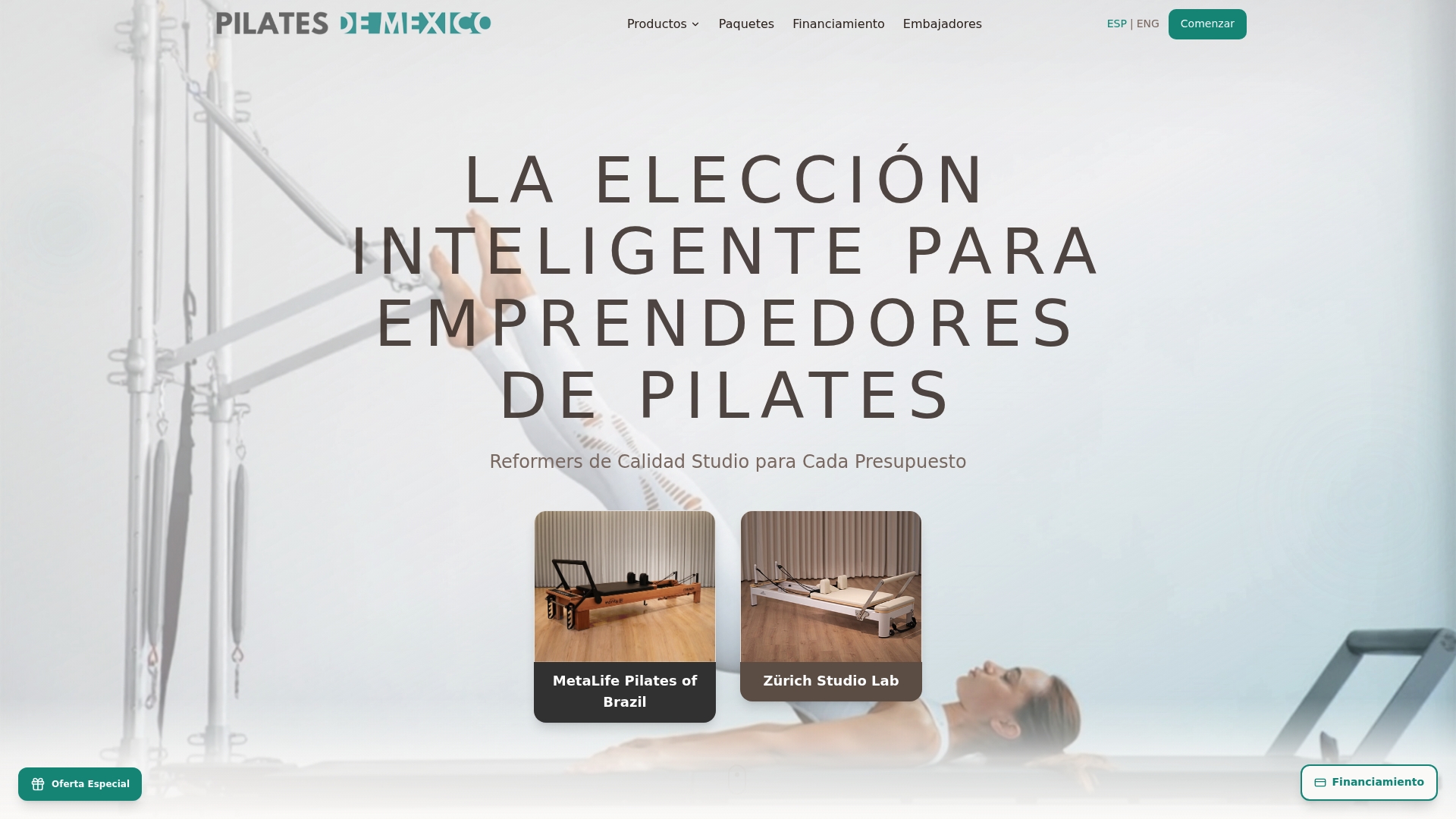
The Infinity Reformer with Tower from MetaLife and the Zürich Labs Reformers from Balanced Body are available with direct monthly financing, without the need to manage external bank credit. Volume packages include discounts, installation, and opening consulting: a team that understands the real cost of opening and filling a studio will accompany you from machine selection to launch. To request a personalized quote or review package options, visit Pilates de México.
Sources
Before finalizing any purchase, it's advisable to review the technical specifications directly from primary sources. These are the most useful:
- What a Pilates Studio Should Have | Ciencias Deportivas
- The Equipment | CoreStudio Pilates
- Reservalo
Always confirm spare part availability and warranty coverage with the local distributor before placing your order.