Pilates Reformer for Lower Back Pain: Evidence and Studio Equipment Needs

Pilates Reformer for Low Back Pain: Evidence and What Your Studio Needs
Low back pain is one of the most common reasons someone walks into a Pilates studio, and the evidence is encouraging: Pilates exercise reduces pain compared to not exercising and is a safe strategy for most people with back pain. The Reformer adds what matters most in these cases: adjustable spring resistance, which makes it possible to find the exact load for each client. If you run a studio, a gym, or a clinic, delivering this service rests on three things: an instructor who knows how to adapt, a clear protocol for red flags, and equipment that is stable, precise, and durable.
This article is designed for those who equip or manage a studio: studio owners, gym and box operators, physical therapists, chiropractors, and investors. It is not a home workout guide, nor does it replace a clinical evaluation.
At a Glance
- A 2023 systematic review and meta-analysis concluded that Pilates reduces low back pain compared to not exercising and is a safe, non-pharmacological option for most people.
- In a Reformer study on patients with chronic low back pain, the machine-trained group reduced their pain by 37.32%, compared to 18.87% in the mat group.
- WHO guidelines and Mexican medical sources recommend staying active and using exercise programs; they advise against prolonged bed rest and lumbar belts.
- The service thrives on instruction that modifies the load and on a solid, reliable reformer, because every session for a sensitive back depends on fine adjustments.
- Red flags (loss of sensation, bladder or bowel changes, weakness in both legs) must always be referred to a healthcare professional prior to training.
Table of Contents
- What the Evidence Says About Pilates and Low Back Pain
- What Clinical Guidelines Recommend
- How to Adapt a Reformer Session for a Sensitive Back
- Physical Therapy, Clinical Practice, and Evidence: What You Can Back Up
- Athletes: Another Demographic for the Same Studio
- What Equipment Must Deliver When Working with Sensitive Backs
- Equip Your Studio with Pilates de México
- Frequently Asked Questions
- Sources
What the Evidence Says About Pilates and Low Back Pain
The strongest foundation is a Cochrane review of 10 studies and 510 patients with non-specific chronic low back pain. It concluded that the Pilates method is probably more effective than minimal intervention for pain and disability in the short and medium term. Adverse events were minor or nonexistent.
The systematic review and meta-analysis by Patti et al. (2023) analyzed 1,566 records, included 36 articles, and evaluated 19 in the meta-analysis. It found pain reduction compared to no exercise, as well as a favorable trend compared to non-specific exercise.
Another meta-analysis, by Wong, Rugg, and Geere, examining 11 trials on non-specific chronic low back pain, found low-certainty evidence that Pilates reduces pain more effectively than general exercise (effect size 0.44). The authors conclude that the choice of exercise type should be guided by each patient's individual goals and preferences.
That conclusion is valuable for anyone running a studio. Pilates is a well-supported exercise modality, and what makes it truly effective in practice is that clients enjoy it, stick with it, and perform it with the appropriate resistance. A studio offering a great class experience and comfortable equipment strongly fosters that consistency.

What Studies on the Reformer Show
Most reviews focus on Pilates in general. Even so, several studies have been conducted specifically on the machine:
| Study | Participants | Program | Outcome |
|---|---|---|---|
| Jeon et al., 2024 | 30 patients with chronic low back pain (15 Reformer, 15 mat) | 8 weeks, 50 min per session | Pain (VAS scale) 37.32% lower on Reformer vs. 18.87% on mat; superior results in Oswestry Disability Index and quality of life |
| Aydoğdu et al., 2026 | 28 individuals with chronic low back pain (52 participants total) | 4 weeks, 2 sessions per week, 8 sessions total | Significant improvements in pain, sleep, quality of life, and disability |
The authors of the Korean study explain the potential mechanism: spring resistance induces effective muscle contraction and activates the deep muscles of the lumbar spine, contributing to spinal stability. They acknowledge the small sample size, meaning these findings encourage further research rather than guaranteeing identical outcomes for every client.
When Changes Become Noticeable
The Turkish study demonstrated measurable improvements after four weeks with two sessions per week. Programs across various reviews range from 6 to 24 weeks, typically with 2 to 3 sessions per week according to the 2024 Chilean review. When communicating with clients, it is best to present this as a multi-week journey requiring consistency rather than an overnight fix.
What Clinical Guidelines Recommend
Clients dealing with low back pain have likely encountered conflicting advice. Here are official sources you can reference:
- IMSS (Mexico): Its clinical practice guideline for acute low back pain indicates that bed rest for more than 2 to 3 days is ineffective and even harmful, recommending that daily activities continue as pain allows within a multidisciplinary treatment plan that includes exercise. It also advises against lumbar belts for pain prevention.
- WHO: Its chronic primary low back pain guideline, released on December 7, 2023, recommends non-surgical interventions such as exercise programs, education, and manual therapy, while advising against lumbar belts, traction, and opioids.
- UNAM: The +Salud resource from the UNAM Faculty of Medicine highlights that physical activity within personal tolerance is essential to treatment, noting that exercises like Pilates or swimming can be beneficial alongside core strengthening and proper postural habits.
- Revista Atención Médica: Reports low- to moderate-quality evidence that exercise reduces pain and improves function in chronic low back pain, showing noticeable clinical effects in the short term (6 to 12 weeks).
The practical takeaway is clear: guided movement plays a vital role in spinal care, and a well-equipped studio provides the ideal environment to deliver it.
How to Adapt a Reformer Session for a Sensitive Back
The advantage of the Reformer is that almost everything is adjustable. In a session for lower back pain, the instructor works with five variables: position, range of motion, resistance, base of support, and speed. The idea, as many professionals point out, is not to prove how much load the client can handle, but to find the one that allows them to work with control and progress when appropriate.
Before the First Class
A good studio asks four questions right at the start:
- What movements are bothering you today?
- Do you have a diagnosis or recommendation from a healthcare professional?
- How long have you had these symptoms?
- What should be avoided or prioritized?
This also helps distinguish between acute pain (less than six weeks), where the underlying cause must first be identified, and chronic pain (more than three months), where controlled movement has strong backing as a first-line approach.
Guidelines During Class
- Start short and gentle. In early recovery, plan for 30- to 45-minute sessions, progressing gradually.
- Use pain as a guide. If pain during exercise exceeds their everyday baseline pain, that exercise is not yet suitable and should be modified.
- Be cautious with flexion. With a diagnosed herniation or disc prolapse, spinal flexion is avoided because it compresses vertebrae and can put pressure on nerve roots. With acute pain, full flexion and heavy-load single-leg movements should also be avoided.
- Change positions. Remaining supine for more than 30 minutes and then flexing the spine can increase the likelihood of pain, so it is best to vary positions throughout the session.
- Do not force an "ideal" posture. Proper alignment does not look identical on every body; the goal is to adapt the exercise to the body in front of you.
Stability is at the heart of this work. If you want to dive deeper into how it is taught on the mat versus on the machine, check out our guide on stability in Pilates on the mat and on the reformer.
Red Flags: When to Stop and Refer Out
This part of the protocol is non-negotiable. Your team must know that a client requires medical clearance before training if they present with:
- severe pain of sudden onset or following significant trauma;
- fever or general malaise;
- loss of sensation in the perineal (saddle) area;
- changes in bladder or bowel function;
- significant weakness in both legs;
- pain radiating down the leg accompanied by tingling or loss of strength;
- progressive worsening or night pain.
In these cases, the client must consult their physician or physical therapist, and Pilates should only be resumed with their medical clearance. The same applies to recent injuries, diagnosed herniations, pregnancy, or a recent medical event. The UK's NHS also recommends stopping exercise immediately if pain or discomfort appears. Any stabbing, burning, or sharp pain that persists after the session must also be evaluated by a medical professional.
If you run a physical therapy or rehabilitation clinic, you are that professional. If you manage a studio or gym, define in writing whom you refer out to and in which cases, and supply that list to all your instructors.
Physical Therapy, Clinical Practice, and Evidence: What You Can Confidently Claim
For anyone integrating reformers into a clinical practice, there are two key findings worth keeping in mind.
First, the AQuAS (2022) report notes that none of the reviewed trials reported adverse effects associated with Pilates.
Second, the narrative review by Kwok, Lim, and Kong (2021) on clinical Pilates for non-specific chronic low back pain concludes that the method is safe and offers earlier recovery, with long-term outcomes comparable to general exercise. Their protocols spanned 6 weeks, 1 to 2 times per week, with sessions up to 60 minutes when using equipment. They also recommend that patients repeat the prescribed exercises at least once a day, opening the door to an at-home routine that complements equipment-based studio sessions.
When communicating with clients and patients, an honest and solid phrasing is: "Pilates is an evidence-supported exercise option for lower back pain that can be tailored to your specific case." Never promise a cure or guaranteed outcomes.

Athletes: Another Audience for the Same Studio
If your studio or gym trains athletes, the Reformer also has specific research backing it:
- A randomized trial in PLOS One (2025) compared 8 weeks of Reformer and Mat Pilates (3 days per week) in 30 amateur soccer players. The Reformer group improved in jumping, balance, flexibility, speed, agility, dribbling, and passing, and outperformed the mat group in agility, passing, and single-leg triple jump. The authors attribute this to the greater mechanical resistance and variety of exercises offered by the springs.
- In 20 elite fencers, 8 weeks of Pilates improved dynamic balance and several Functional Movement Screen scores.
- In 18 Latin dance students, 12 weeks of Reformer improved joint angles, muscle activation, and technical quality.
For a CrossFit, HYROX, barre, or dance operator, the practical takeaway is clear: a reformer studio serves two audiences with the same equipment—the client with back discomfort and the athlete seeking control, mobility, and injury prevention. If you are evaluating this expansion, check out how to integrate Pilates into a gym without risking your investment.
What your equipment must deliver when your clientele includes sensitive backs
During a session for lower back pain, the instructor constantly adjusts springs, carriage travel, and positioning, repeating these adjustments dozens of times a week. That is why the equipment is part of the service, not just a detail. Three criteria can help you decide:
- A structure that supports variety. Adaptations for each client require a machine that supports dozens of exercises without losing stability. The MetaLife reformers we carry at Pilates de México are built for over 200 exercises and years of daily classes.
- Materials designed for heavy-duty use. Our MetaLife line uses certified FAS Lyptus® wood and stainless steel hardware.
- Long-term value. Well-built equipment retains its resale value when the time comes to expand—a key factor in the decision-making process for established studios and investors.
For those opening their first studio, we also offer more accessible options so your first studio space doesn't have to start at the highest price point. Flooring, lighting, and room layout also impact the experience for clients managing pain: check out our guide on flooring for reformer studios: requirements, materials, and mistakes.
How many reformers do you need and where to start
The answer depends on your business model: group classes, private sessions, or one-on-one clinical practice. A physical therapist might start with a few units and grow based on demand, while a group fitness studio plans around capacity. To organize your investment, check out our guide on which equipment to buy first and how much to invest, and if you are already operating, read when and how to expand your studio without risking your operations.
Equip your studio with Pilates de México
We are the equipment partner behind reformer studios across the country. We carry the Infinity and Advanced lines by MetaLife, backed by local warranty, professional installation, and accessories to expand the scope of every session. Every unit includes financing options, bundle packages, and consulting from a team that understands what it takes to open and fill a studio.
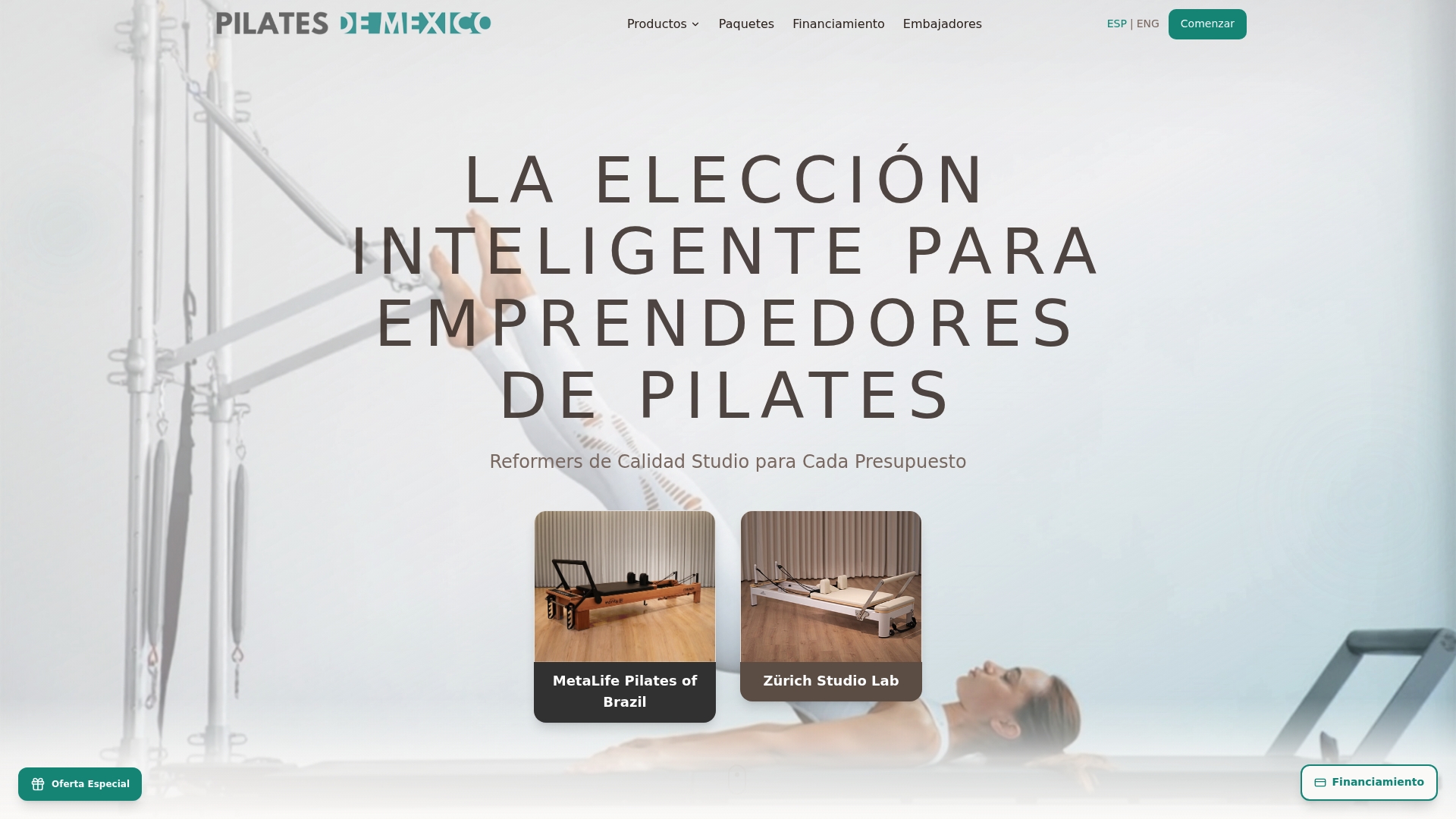
If you are planning to open or expand a space that caters to clients with lower back pain, explore the Infinity Reformer with Tower, our studio packages, or our financing options, and speak with our team to properly size your studio.
Frequently Asked Questions
Can you do Pilates Reformer with lower back pain?
In many cases, yes—provided the instructor adapts the resistance, range of motion, and positioning. If there is severe, sudden pain, tingling, loss of strength, changes in bladder or bowel control, or a diagnosed herniated disc, consult a physician or physical therapist first. Pain during class is always a signal to modify or stop the exercise.
When do you see results from Pilates Reformer for your back?
In a study of 28 individuals with chronic low back pain, improvements in pain, sleep, quality of life, and disability were observed after 4 weeks, with two sessions per week. Other programs range from 6 to 24 weeks. Progress varies based on each person, their diagnosis, and their consistency.
Is the Reformer better than Mat Pilates for lower back pain?
In a study of 30 patients, the Reformer group experienced greater pain reduction than the mat group, although the authors note that the sample size was small. Ultimately, the decision is guided by the client's goals and preferences, and many studios combine both formats.
What exercises should be avoided with a herniated disc?
With a disc herniation or prolapse, spinal flexion should be avoided because it compresses the vertebrae and can pinch nerve roots. During acute pain, high-load single-leg movements should also be avoided. Each case must be evaluated beforehand with the client's healthcare provider.
What are the benefits of the Reformer for athletes?
In amateur soccer players, 8 weeks of Reformer training improved jumping, balance, agility, and passing. Improvements in balance, control, and technique have also been observed in fencers and dancers. While these studies feature small sample sizes, they provide valuable insight for designing goal-oriented programs.
Sources
- Pilates for low back pain, Cochrane
- Effectiveness of Pilates exercise on low back pain, PubMed (2023)
- The effects of Pilates exercise in comparison to other exercise, PubMed (2023)
- Effects of Lumbar Stabilization Exercises Using a Pilates Reformer, Journal of Korean Society of Physiotherapy (2024)
- Pilates-Based Training and Its Influence on Muscle, MDPI Healthcare (2026)
- Pilates to reduce pain in patients with low back pain, Revista Chilena de Rehabilitación y Actividad Física (2024)
- Clinical guideline for acute low back pain, IMSS
- WHO releases guidelines on chronic low back pain, WHO (2023)
- What is low back pain?, +Salud FacMed UNAM
- Atención Médica Journal (2023)
- Pilates precautions for back issues, Deusto Salud
- Back pain pilates video workout, NHS
- Efficacy and safety of the Pilates method, AQuAS (2022)
- The Theoretical Framework of the Clinical Pilates Exercise Method, PMC (2021)
- Randomised controlled study on the effects of pilates, PLOS One (2025)
- Comparison of the Effects of Pilates and Yoga Exercise, PMC (2024)
- Effects of 12-week pilates reformer training, PMC (2025)