Pilates Equipment Leasing in Mexico: The Guide to Reducing Your Initial Investment

Pilates Equipment Leasing in Mexico: The Guide to Reducing Your Initial Investment
For most new studios in Mexico, pure leasing (arrendamiento puro) is often the option that reduces the initial investment and protects cash flow during the first months of operation. Typical market conditions show a down payment starting at 10%, terms from 12 to 48 months, and amounts usually starting from 300,000 Mexican pesos. If your priority is to open quickly without committing capital, this route almost always wins against direct purchase.
In summary:
- Pure leasing allows for capital preservation, with terms of 12 to 48 months and down payments from 10%, facilitating a quick opening without a high initial investment.
- The tax deductibility of leasing in Mexico requires the expense to be essential and properly documented; otherwise, the authority may reject the full deduction.
- The option to lease avoids showing debt on the balance sheet, improves financial indicators, and offers more flexibility to renew or return equipment at the end of the contract.
- Purchasing with a bank loan requires a larger initial outlay but is advisable if the studio already has consolidated cash flow and wishes to own the equipment from the start.
- Before signing, the total cost of the contract must be verified, including guarantees, maintenance, and possible hidden costs, to avoid future surprises.
Table of Contents
- Equipment acquisition options: pure leasing, financial leasing, supplier financing, and purchase
- How pure leasing works in Mexico: deductibility and basic tax obligations
- Requirements, terms, and typical figures for equipment leasing in Mexico
- How to evaluate offers: operational criteria and questions you should ask
- Quick economic evaluation: numerical example and key dimensions table
- Practical perspective from experience equipping studios in Mexico
- What most leasing guides don't tell you
- How Pilates de México can help equip your studio
- Sources
- Frequently Asked Questions
Equipment acquisition options: pure leasing, financial leasing, supplier financing, and purchase
In Mexico, "arrendamiento puro" (pure lease) and "leasing" are often used synonymously. However, in practice, "leasing" typically refers to contracts with an explicit purchase option at the end, while "arrendamiento puro" leaves that decision open: renew, return, or acquire at residual value. Both share the same cash flow effect: you pay a monthly rent instead of disbursing the full price of the equipment.
Supplier financing works differently. Some suppliers offer packages with direct financing that combine reformers, accessories, and installation in a single operation, without involving an external leasing company. This makes sense when you have already identified the exact equipment you need and want to simplify the process to a single point of contact.
Buying with bank credit or in cash is still valid, especially for established studios with a solid credit history:
- Pure leasing preserves working capital and usually offers full tax deductibility of the rent.
- Supplier financing simplifies the process by integrating equipment, installation, and payment into a single contract.
- Direct purchase avoids long-term rents but requires the highest upfront disbursement.
How Pure Leasing Works in Mexico: Deductibility and Basic Tax Obligations
In a pure lease contract, you pay a fixed monthly rent for the agreed term. At the end of the contract, you have three options: return the equipment, renew the lease, or purchase it at its residual value, which is usually a smaller fraction of the original price.
The reason so many Mexican companies prefer this route is tax-related. For legal entities, the monthly rent is usually 100% deductible from ISR (Income Tax), provided the expense meets the requirements set by the Income Tax Law: valid tax receipt, clear relation to the company's social objective, and proper accounting registration. The equipment also does not appear as debt on the balance sheet, which improves financial indicators compared to traditional credit.
Here is the criterion that can invalidate a deduction if not met:
The expense must be strictly indispensable for the purposes of the taxpayer's activity.
If the leased reformer does not have a demonstrable relationship with the studio's operation, or if the documentation is not in order, the SAT (Mexican Tax Administration Service) can reject the deduction entirely.
Requirements, Terms, and Typical Figures in Mexico for Equipment Leasing
Before signing, prepare the documentation that almost every Mexican leasing company will ask for. These are the steps and figures you can expect:
- Request a formal quote from the equipment supplier, as most leasing companies require it as part of the file.
These times vary depending on the leasing company and the volume of the order, but they give you a realistic reference point to plan your opening.
How to Evaluate Offers: Operational Criteria and Questions You Should Ask
Not all leasing offers are comparable, even if the monthly rent seems similar. Before signing, check the total cost of the contract, not just the monthly payment: sum rents, VAT, and any mandatory insurance.
- Confirm if preventive maintenance is included in the rent or billed separately.
- Ask if the warranty has local coverage or depends on a foreign manufacturer.
- Review the default clauses and what penalty applies if you need to terminate the contract early.
- Ask in writing who covers the costs of equipment installation and transfer.
The most common red flags are hidden costs that appear after signing, clauses that block renewal or sale of the equipment, and contracts that do not specify the residual value at the end of the term.
Professional Tip: always ask for the full amortization schedule before signing, not just the monthly rent amount.
Quick Economic Evaluation: Numerical Example and Key Dimensions Table
A simplified example helps compare routes. If a package of three reformers costs 300,000 pesos, a 10% down payment implies an initial outlay of 30,000 pesos, leaving 270,000 pesos to be distributed over a 24-month period, before interest and commissions specific to each leasing company. Buying the same package in cash requires the full 300,000 pesos from day one, capital that many new studios simply do not have available upon opening.
| Dimension | Pure Leasing | Purchase with Bank Credit |
|---|---|---|
| Typical Down Payment | From 10% of equipment value | Variable depending on the financial institution |
| Available Terms | 12 to 48 months | Defined by the bank, generally longer |
| Approval Time | Pre-approval in 48 hours | Varies depending on credit history |
| Tax Treatment | 100% deductible rent for legal entities | Deduction via asset depreciation |
If your priority is to open with the least capital possible and keep the equipment off the balance sheet, leasing wins. If you already have stable cash flow and are looking to own the asset from the start, bank credit may be more convenient in the long run. To determine how many reformers you need before deciding, it's a good idea to first review the actual cost of opening a studio in Mexico City.
Practical Perspective from Experience Equipping Studios in Mexico
Working with MetaLife lines and more accessible packages, we see the same mistake repeated: entrepreneurs leasing more reformers than their class schedule can fill in the first few months. Opening consultancy exists precisely to avoid this over-sizing before signing any contract. Also, review the actual costs to open a Pilates studio in Mexico before committing capital or signing a lease.
What Most Leasing Guides Don't Tell You
The conversation about leasing versus buying Pilates equipment in Mexico often focuses on tax deductibility, as if that were the decisive variable. It isn't. The tax benefit is real, but it only matters if the studio generates enough income to take advantage of it, and that depends on class occupancy, not the type of contract signed.

An entrepreneur with three well-occupied reformers generates more cash flow than one with eight reformers leased at half capacity.
Before comparing rates or terms between lessors, calculate how many classes you can actually fill in the first eight weeks. That number, not the down payment, should determine how much equipment you lease or buy.
How Pilates de México Can Help Equip Your Studio
If you're looking to equip your studio without committing all your startup capital, Pilates de México offers concrete routes to achieve this. We work with direct financing, studio packages, and opening consultancy designed for those who need to open with less risk.
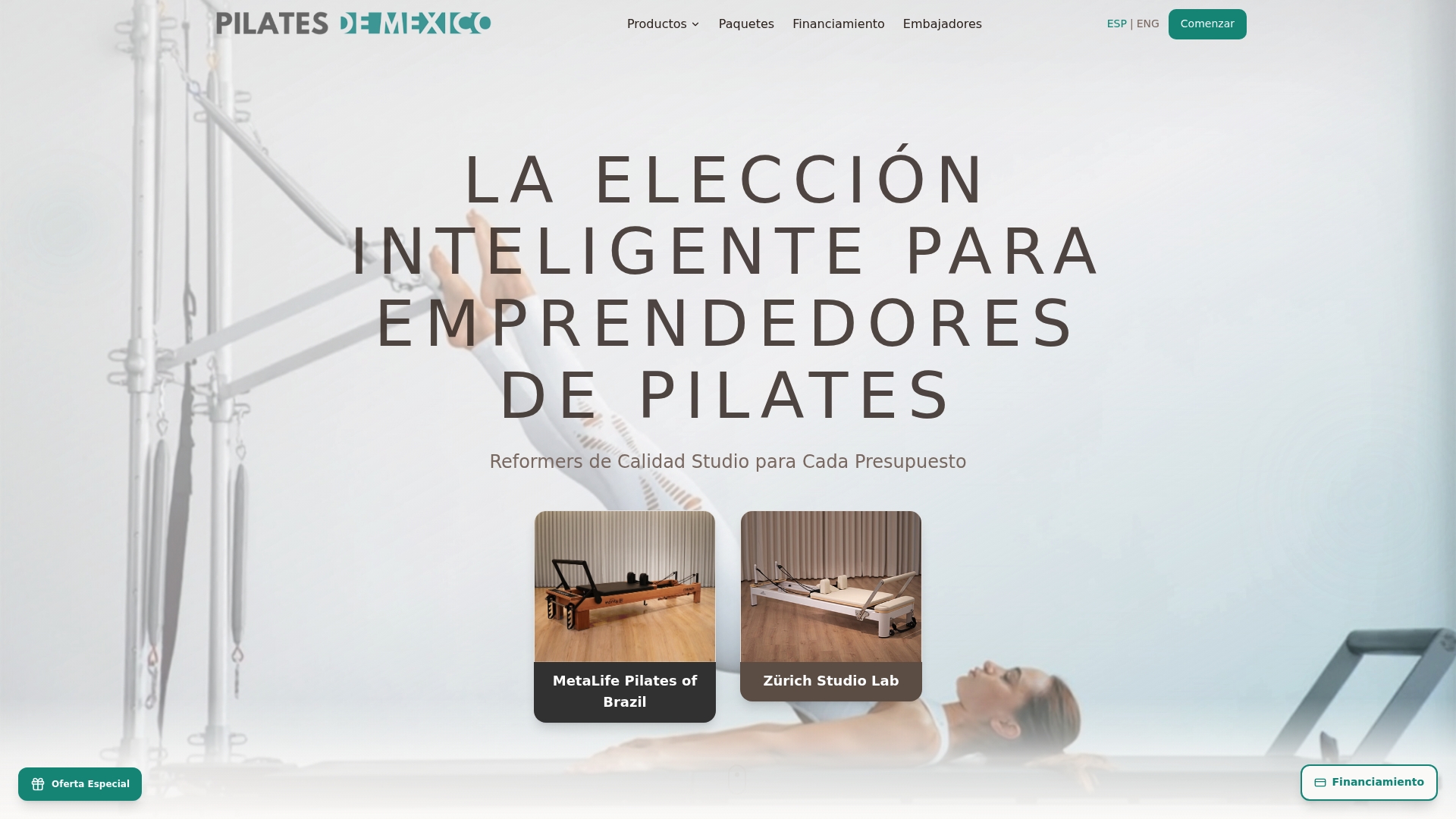
- Infinity Line and Advanced Line, depending on your budget and studio phase.
- Specialized accessories to complete your reformer room.
- Studio packages with volume discounts and personalized financing.
We directly answer questions about installation, local warranty, and financing options adapted to your cash flow, with consultancy included from studio design to daily operation. Learn about the financing options available and build your equipment package.
Sources
Frequently Asked Questions
What is the difference between leasing and buying Pilates equipment?
Leasing means paying a monthly rent without disbursing the full price of the equipment, which preserves working capital. Buying requires full payment from the outset, either in cash or through credit, but makes you the owner of the asset immediately.
Is leasing Pilates equipment tax deductible in Mexico?
For legal entities, pure lease rental is usually 100% deductible from ISR, provided the expense meets the criteria of the Income Tax Law. Correct tax documentation and accounting records are essential to retain this deduction.
Does Pilates de México offer financing to equip a studio?
Yes, Pilates de México offers direct financing along with studio packages, opening consultancy, and local warranty for its equipment lines. You can check the conditions on the financing page.
What happens at the end of the equipment lease contract?
At the end of the term, almost all pure lease contracts in Mexico offer three options: return the equipment, renew the contract, or purchase it at its residual value. The most convenient option depends on the condition of the equipment and whether the studio plans to scale its installed capacity.