Open a Pilates Studio in Mexico City for 200,000 Pesos: Financing Options
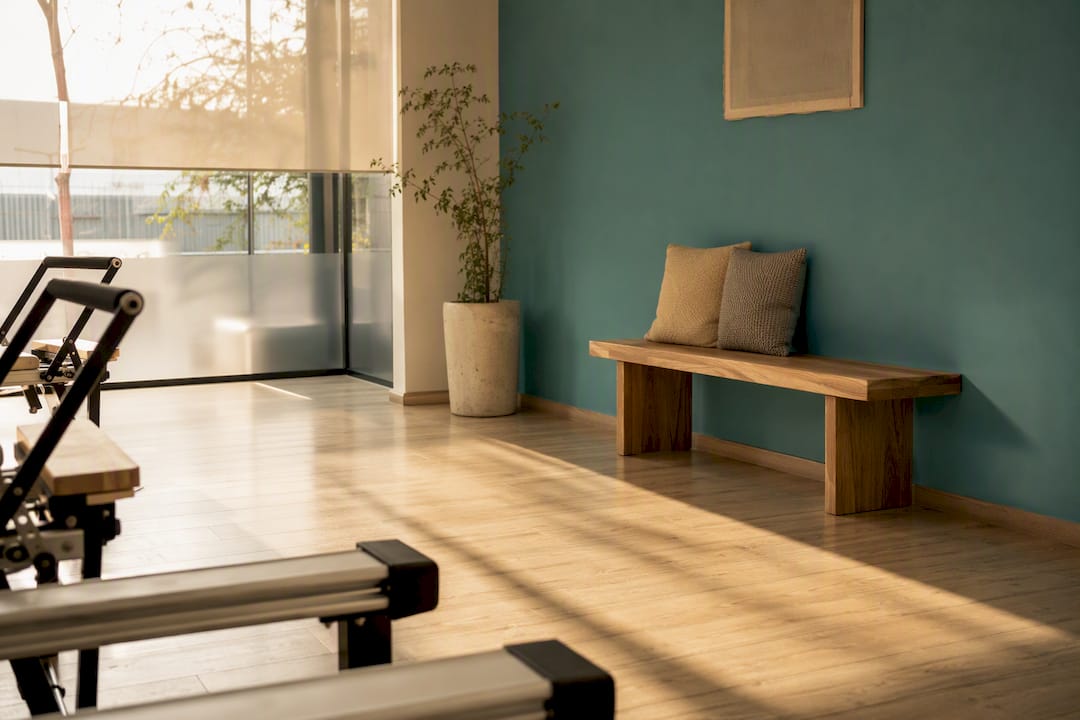
Starting from 200,000 pesos: Open a Pilates studio in CDMX with financing
A small Pilates studio in Mexico City typically starts with an investment between 200,000 and 350,000 pesos, while a medium-sized one with more reformers can reach 500,000 pesos. Three items account for almost this entire range: rent and deposit for the premises, space renovations, and equipment. Before committing a single peso to a deposit, verify the land use of the premises: this step saves the most money in the long run.
In summary:
- Rent can represent between 30% and 40% of the total initial cost, making it crucial to prioritize a location with good pedestrian traffic.
- It is essential to request and obtain a written certificate of land use to avoid financial losses due to subsequent permit denials.
- Investment in premium reformers like MetaLife ensures greater durability and resale value, although their initial cost is higher.
- It is advisable to set aside three to six months of fixed working capital expenses and start with a few reformers, expanding as demand grows.
- Paying attention to permits, legal procedures, and insurance prevents fines, closures, and unforeseen expenses that can affect business viability.
Table of Contents
- Breakdown of the cost of opening a studio in Mexico City by item
- How does location affect the real cost of rent?
- What equipment to buy first and how to finance it?
- Permits and procedures: costs and timelines you should anticipate
- How much working capital do you need before opening?
- Real tactics to reduce initial investment
- Final checklist before signing or investing
- Legal and Notary Costs when opening your studio
- Taxes and fiscal obligations when starting operations
- Insurance your studio needs before opening
- How much you will actually pay for water, electricity, and internet
- Staff and initial hiring: when does it make sense?
- Analyze your competition before setting your budget
- What no one tells you about mistakes that actually cost money
- Equip your studio without exhausting your initial capital
- Sources
Breakdown of the cost of opening a studio in Mexico City by item
Each studio has its own mix of expenses, but the structure is similar in almost all cases. These are the items you should budget for before signing anything:
- Rent and deposit: between 15,000 and 45,000 pesos monthly depending on the area, plus one or two months' deposit.
- Space renovations: floors, mirrors, lighting, and electrical installation usually cost between 1,500 and 3,000 pesos per square meter, depending on the original condition of the premises.
- Equipment: reformers account for the largest part of this item. A premium line like MetaLife costs more per unit but retains its resale value better than cheaper alternatives.
- Accessories and tower: bands, weights, jump boxes, and complementary towers add between 20,000 and 60,000 pesos depending on how many reformers you have.
- Launch marketing: an initial campaign with trial classes, social media, and local alliances typically requires between 10,000 and 25,000 pesos.
- Working capital: set aside three to six months of fixed expenses (rent, payroll, utilities) to avoid relying on initial registrations.
Rent is the variable that most distorts the budget. In high-demand areas, it can represent between 30% and 40% of the total initial investment; so it's wise to first calculate how much space you need before letting yourself be tempted by an expensive location.
How Does Location Affect the True Cost of Renting?
A smaller space on a visible corner almost always yields more than a large one hidden on a second floor. Prioritizing foot traffic over square footage is a strategy that works especially well in dense markets like Mexico City, because it reduces the time needed to fill your class schedule.
The listed price is never the real cost. Before signing, check these points:
- Ask for the history of annual rent increases for the last three years, not just the current figure.
- Ask who covers building maintenance and if there are additional condominium fees.
- Read the early termination clauses: some contracts penalize leaving before three years.
- Request the property's land use certificate from the landlord or go directly to the corresponding borough to confirm it.
Many entrepreneurs underestimate how rent increases and maintenance costs alter cash flow from the second year of operation, when there is no longer room for negotiation.
Pro Tip: Always ask for the land use certificate in writing before paying the deposit. A "commercial" space does not guarantee you can operate a fitness studio.
What Equipment to Buy First and How to Finance It?
The order of purchase matters as much as the total budget. These are the real priorities when equipping a studio:
- Reformers: these are the central investment. They determine how many students you can serve per class and how much your studio bills from the first month.
- Tower or chair: expands the exercise catalog without duplicating the space occupied by each reformer.
- Essential accessories: bands, small weights, magic circles, and jump boxes complete routines without representing a large expense.
The decision between a premium line and an accessible option is not just about price. MetaLife, built with certified Lyptus® FAS wood and stainless steel hardware, withstands years of daily classes and maintains its value better when you decide to sell or expand. Options manufactured in other countries cost less per unit, but it's worth checking how they perform after thousands of hours of use before deciding based solely on the entry price.
Buying all reformers at once is not always the smartest option. Financing equipment in installments, or acquiring a studio package that groups reformers, towers, and accessories with preferential conditions, frees up capital for rent and working capital for the first few months. If your budget is tight, also check what certified used equipment is available before committing to new units.
Permits and Procedures: Costs and Timelines You Need to Anticipate
Opening a business in Mexico City typically involves between three and five different procedures, and each has its own cost and timeline:
- Zoning and land use certificate: costs approximately 2,104 pesos in fees, although the process can take anywhere from days to several weeks depending on the borough.
- Operating notice: replaces the traditional license for most commercial activities and is managed at a single-window office.
- Civil Protection approval: mandatory for any premises that receives the public, it includes inspection of emergency exits and fire extinguishers.
Managing everything with a specialized agency can take between 8 and 10 business days, while doing it without experience can extend up to five weeks. Operating without permits in order exposes the business to fines of up to 35,000 pesos and immediate closure, just when you have already invested in remodeling and equipment.
How Much Working Capital Do You Need Before Opening?
Working capital covers rent, payroll, utilities, and unforeseen expenses while your studio builds a stable base of students. Calculate your break-even point with this method:
- Sum your fixed monthly expenses: rent, utilities, payroll, and maintenance installer.
- Divide that total by the average price of your class or monthly membership.
- The result is the number of classes or memberships you need to sell each month just to cover costs.
A studio with four reformers and fixed expenses of 60,000 pesos per month, with an average monthly fee of 1,500 pesos per student, needs about 40 active memberships to break even. Reserving between three and six months of fixed expenses as a cushion prevents a low season from forcing you to close before consolidating your client base.
Real Tactics to Reduce Initial Investment
You don't need to open with maximum capacity from day one. These tactics lower your outlay without sacrificing the student experience:
- Start with two or three reformers and add more as you fill schedules, instead of buying full capacity from the start.
- Take advantage of equipment packages and direct financing to spread equipment payments over manageable installments.
- Negotiate the deposit and ask for two or three months of frozen rent as an adaptation period before starting to charge the full amount.
- Generate income before opening with presales of class packages and alliances with nearby businesses (cafes, spas, offices).
Pro Tip: Sell discounted class packages during the month leading up to opening. That upfront money covers part of your working capital before you even open your doors.
Final Checklist Before Signing or Investing
Dedicate two to four weeks before signing to resolve the following:
- Confirm in writing the land use of the premises with the corresponding municipality, not just with the landlord.
- Gather at least three equipment quotes and compare financing conditions, not just list prices.
- Verify that your working capital budget covers three to six months of fixed expenses.
- Ask the landlord about the history of rent increases and who covers building maintenance.
- Stop if the landlord refuses to provide land use documentation or if the quoted equipment does not include a written warranty.
Legal and Notary Costs When Opening Your Studio
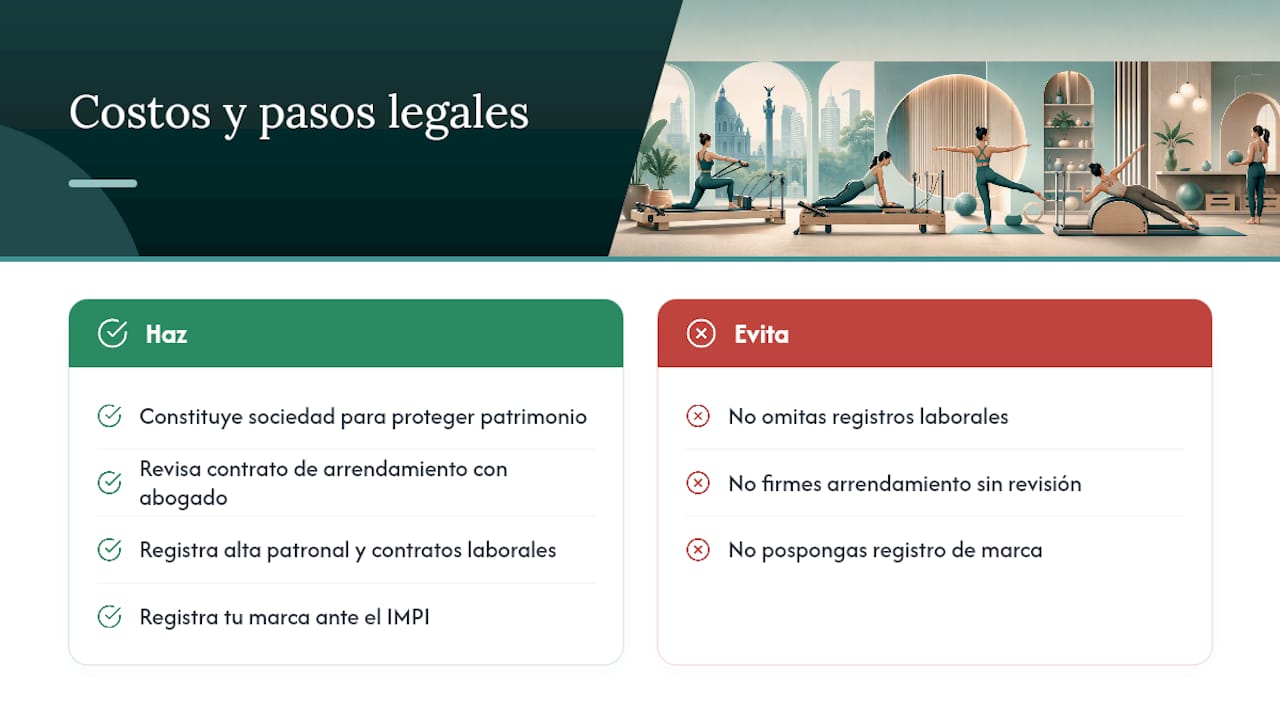
Incorporating your studio as a legal entity (a company) involves notary fees that typically start at several thousand pesos, depending on the complexity of the articles of incorporation and the chosen notary. If you decide to operate as a sole proprietor with business activity, you avoid that initial expense, although you lose some asset protections that a company does offer.
Beyond incorporation, consider the legal review of the lease agreement. A lawyer specializing in commercial real estate can detect abusive clauses for increases or hidden penalties before you sign them, and that expense is usually much less than the cost of breaking a poorly negotiated contract later on.
If you hire staff from the outset, you need to register for employer registration with IMSS and draft employment contracts that comply with the Federal Labor Law. Skipping this step does not save money: it generates labor liabilities that can cost you much more if an instructor claims unpaid benefits.
Finally, if you are going to use your own brand, logo, or trade name, registering the trademark with the Mexican Institute of Industrial Property protects your investment in identity and marketing. It's a process many entrepreneurs postpone until another business is already using a similar name in their area, at which point it's too late to avoid conflict.
Taxes and Fiscal Obligations When Starting Operations
Registering with the Tax Administration Service as a sole proprietor with business activity or as a legal entity is the first fiscal step, and it must be done before issuing your first invoice. The regime you choose determines both the income tax rate you will pay and the monthly declaration obligations.
A Pilates studio must charge VAT on its services, with very specific exceptions that rarely apply to fitness classes. This VAT is passed on to the customer in the final price, but you are responsible for declaring it and remitting it monthly to the SAT, along with provisional ISR payments.
If you hire staff, you add the obligation to withhold and remit employee ISR, in addition to employer-employee IMSS contributions and INFONAVIT contributions. These obligations begin from the first day of hiring, not when the business starts to be profitable.

Many studios that open as individual businesses underestimate the administrative time required for monthly accounting. Hiring an accountant from the start, even for modest fees, almost always costs less than the fines for declarations submitted late or incorrectly calculated.
Insurance Your Studio Needs Before Opening
Liability insurance is the most important policy for a Pilates studio: it covers injuries a student might suffer during a class, including medical expenses and potential legal claims. Without this coverage, any incident during a reformer session falls entirely on the owner's pocket.
Property insurance, which covers fire, theft, and flood, protects your investment in renovations and equipment. Given that reformers represent one of the most expensive initial budget items, insuring them against damage or theft is a decision that pays for itself if a claim occurs.
If you hire instructors as employees, also review the terms of your occupational hazard insurance with IMSS (Mexican Social Security Institute), which is mandatory for any business with formally hired staff. Clinics and gyms that already add reformers to an existing space often have some of these coverages resolved, but a studio opening from scratch must obtain quotes for all of them from the first month of operation.
What You Will Really Pay for Water, Electricity, and Internet
A Pilates studio doesn't consume as much electricity as a gym with cardiovascular machines, but lighting, air conditioning, and sound systems do represent a constant fixed monthly expense.
Water is rarely a major expense unless your studio includes changing rooms with showers, a service increasingly common among boutique studios competing to retain students with additional amenities. Internet, however, deserves special attention if you use online booking systems, streaming music, or screens for guided classes: contracting a business plan with guaranteed speed avoids interruptions during classes.
Include everything within your monthly working capital, not as a separate expense. Utility services for a small studio usually represent a smaller fraction of total fixed costs compared to rent, but ignoring them in the initial budget is a common mistake that tightens cash flow during the first few months.
Staff and Initial Hiring: When Does It Make Sense?
Many studios open with the owner as the lead instructor, hiring additional staff only when demand justifies it. This strategy reduces initial payroll but limits how many classes you can offer simultaneously from day one.
If you decide to hire instructors from the opening, first define whether they will be employees with a fixed salary or collaborators who are paid per class taught. The second option reduces the initial tax commitment, although experienced instructors usually prefer more stable arrangements once the studio gains traction.
Reception or administrative staff is another decision point. A small studio can operate with the owner covering that function for the first few months, deferring the hiring of reception until the volume of classes economically justifies it. Each person hired adds not only their salary but also employer contributions to IMSS and the cost of initial training in the booking system and customer service.
Analyze Your Competition Before Setting Your Budget
Visiting the Pilates studios already operating in your area before signing any contract gives you information that no article can provide generically. Observe how many reformers they have, what prices they charge per class or monthly membership, and which schedules fill up first.
If the area already has three or four established studios, competing solely on price rarely works: margins are already tight in most boutique businesses. Differentiating yourself by the type of equipment, specialization in certain disciplines, or personalized attention usually yields better results than lowering prices against competitors with more time in the market.
This analysis also adjusts your actual budget. If the competition charges low monthly fees due to saturated offerings, your break-even point calculated in the previous section needs to be reviewed with realistic pricing figures for your area, not with optimistic figures based on more expensive areas of the city.
What No One Tells You About Mistakes That Really Cost Money
The most costly mistake I've seen repeated in this business is not buying the wrong equipment or overspending on renovations. It's signing the lease agreement and starting construction without having confirmed the land use, something that can result in the total loss of the deposit and already paid rent when the municipality denies the permit months later.
The real priority is not negotiating the best reformer price or finding the cheapest rent. It's having the land use confirmed in writing and enough working capital to last six months without relying on a full schedule from day one. Everything else, including which equipment line to buy, can be adjusted along the way. If you have doubts about the zoning of your premises, consult a specialized manager before signing, not after.
Equip Your Studio Without Draining Your Initial Capital
Pilates de México is the direct alternative for entrepreneurs who already have a clear budget and are looking to finalize their equipment acquisition without compromising all their working capital. We carry the MetaLife line, built with certified Lyptus® FAS wood and stainless steel hardware for years of daily classes, as well as more accessible professional options for those who prefer to start without paying the highest market price.
Before requesting your quote, have handy the square footage of your space, the number of reformers you plan to purchase, and whether you are looking for individual equipment or a complete studio package. With this information, we can put together a direct financing proposal that spreads the equipment payment over manageable installments, instead of requiring the full outlay before opening. Write to us and build your quote based on your actual budget, not the list price.
Sources
- How much does it really cost to open a business in Mexico City?
- Guide to opening a business in CDMX 2026
- Gentrification reaches commercial spaces and rents
- How much does it cost to open a Pilates studio in Mexico?