The Most Common Mistakes New Pilates Studio Owners Make

The Most Common Mistakes of New Pilates Studio Owners
The most costly mistakes new Pilates studio owners make are overbuying reformers before validating demand, choosing a location without verifying the actual circulation space, and underestimating the total cost of instructors. Added to these are failing to negotiate delivery times, setting launch prices that anchor the market too low, and neglecting preventive maintenance. The correction for all of them starts the same way: buying in phases, prioritizing quality and warranty over price, and using actual occupancy as a compass.
- Overbuying reformers: start with fewer machines and expand based on demand.
- Location without verifying circulation or structural load: measure before signing a contract.
- Underestimating the actual cost of the instructor: calculate the total expense, not just the per-class payment.
- Not negotiating delivery times: premium equipment takes weeks to arrive.
- Launch prices that are too low: they anchor the perceived value of the service.
- Ignoring maintenance and documentation: reduces the resale value of the equipment.
Professional tip: Before buying a single additional machine, check the occupancy of your current classes. If you consistently exceed 80% occupancy per session, it's time to grow. If not, wait.
Key Points
Profitable Pilates studios share a purchasing discipline based on occupancy data, not enthusiasm, and prioritize warranty and financing over the lowest price.
| Point | Details |
|---|---|
| Start with fewer machines | Open with 4 to 6 reformers and expand only when occupancy consistently exceeds 80%. |
| Verify space before signing | Confirm floor load, ceiling height, and at least 0.9 meters (3 feet) of circulation between rows. |
| Calculate the total instructor cost | Include social charges, substitutions, and training, not just the per-class payment. |
| Negotiate delivery times | Premium equipment takes 8 to 16 weeks; plan your opening with that margin. |
| Consider Pilates de Mexico for equipment and financing | Offers MetaLife and accessible lines, wholesale packages, and opening consultancy to avoid overbuying. |
Table of Contents
- Common Mistakes Made by New Pilates Studio Owners
- How to Prioritize Reformer Purchases and Choose a Supplier
- Studio Design: Measurements, Flow, and Technical Requirements
- The True Cost of an Instructor and How to Prevent Equipment Wear and Tear
- How to Negotiate Bulk Purchases Without Being Exposed to Delays
- Maintenance, Warranty, and Resale Value
- The Importance of a Realistic Financial Plan and Cash Flow Management
- Frequent Problems in Customer Service and Class Management
- Lack of Knowledge of Applicable Health and Safety Regulations
- What Most Guides on This Topic Don't Tell You
- Pilates de Mexico: Packages, Financing, and Direct Consulting
- Sources
Common Mistakes Made by New Pilates Studio Owners
Every mistake has an identifiable cause and a concrete correction. Reviewing them one by one prevents them from repeating in the next growth phase of the studio.
-
Overbuying reformers. Buying 10 machines to fill a space "just in case" ties up capital that you could allocate to marketing or payroll. A commercial reformer costs between $3,000 and $8,000, and equipment can represent 30% to 40% of the initial expenditure for a studio with 8 to 12 machines. Start with fewer units and reinvest profits to expand when the schedule demands it.
-
Choosing space without structural verification. A beautiful space doesn't always support the weight of several machines in constant motion or allow safe circulation between rows. Measuring before signing the lease agreement avoids costly redesigns later.
-
Underestimating the true cost of instructors. Per-class payment is only part of the expense. Social security contributions, substitutions, and continuous training increase the total cost far beyond what the basic payroll reflects.
-
Not negotiating terms or purchase conditions. Premium equipment has delivery times of 8 to 16 weeks, and those who don't plan for it end up opening with incomplete rooms or delaying the opening date.
-
Setting launch prices too low. An aggressive opening promotion anchors your first customers' price expectations. Raising rates later generates friction and cancellations.
-
Omitting preventative maintenance. Not keeping a service history reduces the resale value of the equipment and increases the risk of downtime right when you need it most.
How to Prioritize Reformer Purchases and Choose a Supplier
The correct number of reformers depends on the space and the number of available instructors, not on a round number that “looks good” on the floor plan.
- 4 to 6 reformers: a reasonable starting point to test schedules and validate demand without overexposing capital.
- 6 to 8 reformers: suitable for rooms dedicated to group classes with more than one active instructor.
- 80% Rule: if a time slot maintains 80% or more occupancy for several weeks, it's a signal to add equipment.
When choosing a supplier, evaluate material durability, spare parts availability, transferable warranty (important if you ever sell the studio), and local technical support. Buying in volume reduces the unit cost, but only makes sense if you have already validated demand; otherwise, phased purchasing protects your cash flow.
| Criterion | Why it matters |
|---|---|
| Available spare parts | Reduces downtime when a part fails. |
| Transferable warranty | Preserves equipment value if you sell the studio. |
| Supplier financing | Allows scaling without decapitalizing the business. |
Room Design: Measurements, Flow, and Technical Requirements
The most frequent design error is calculating the number of machines per available square meter, without leaving space for the actual movement of classes.
- Allocate between 40 and 50 square feet per reformer, including carriage extension space.
- Leave at least 0.9 meters (3 feet) of aisle space between rows for instructors and students to circulate safely.
- Check the floor's load capacity before installing several machines in a row; not all commercial premises are designed for that distributed weight.
- Confirm minimum ceiling height, adequate ventilation, and access points that do not block the instructor's route during class.
- A 1,000-square-foot space usually fits 5 or 6 machines better when reserving space for reception, storage, and changing rooms.
The Real Cost of an Instructor and How to Prevent Staff Burnout
Paying per class taught is only a fraction of the true cost of having an instructor on staff. Substitutions, continuous training, and administrative time add to the base expense, and calculating only the first is one of the frequent errors in Pilates businesses that most affects profitability.
- Fixed payment model: predictable for budgeting, but does not incentivize filling classes.
- Occupancy percentage model: aligns the instructor's interest with yours, though it requires more administrative tracking.
- Seniority or performance scales: retain talent, but increase cost over time.
- Use waitlists as a decision metric: if a class consistently has a waitlist, it's time to hire before buying more machines.
Pro tip: Don't hire a new instructor just because "it looks full." First, confirm that occupancy remains high for several consecutive weeks, not just during Saturday's peak hour.
How to Negotiate Bulk Purchases Without Being Exposed to Delays
Buying in packages of several units reduces the cost per machine, but requires time planning that many owners overlook.
- Packages of 4 to 6 units often lower the unit cost by 15% to 30% compared to individual purchases.
- Premium equipment takes between 8 and 16 weeks to arrive; plan your opening date with that margin, or you risk opening with incomplete rooms.
- Consider a pre-sale membership strategy while waiting for the equipment, to avoid losing the first few months of revenue.
- Supplier financing allows for staggered payments without decapitalizing the business at startup, something that Pilates de Mexico offers along with its packages.
Maintenance, Warranty, and Resale Value
Maintenance is not an optional expense: it determines whether your equipment continues to generate income in three years or becomes a problem.
- Budget for annual maintenance per reformer and regularly check pulleys, straps, and springs; these are the parts that wear out the most with daily use.
- Prioritize suppliers with a technical service network and accessible spare parts; buying equipment with interchangeable parts reduces downtime in case of common failures.
- Document every inspection and repair. This history is the proof a future buyer will ask for before paying a fair price for your used equipment.
The Importance of a Realistic Financial Plan and Cash Flow Management
An optimistic financial plan is one of the quietest and most expensive mistakes in managing a new Pilates studio. Many owners calculate projected income from the first month, without allowing for the actual customer acquisition curve.
A new studio's cash flow often has a mismatch between fixed expenses (rent, payroll, maintenance) and income, which takes time to stabilize as the membership base is built. This mismatch is normal, but only if you planned for it in advance.
Separate three categories of expenses from day one: fixed costs (rent, insurance, base payroll), variable costs (maintenance, marketing, substitutions), and capital costs (equipment, renovation). Mixing all three into a single projection leads to hasty decisions, such as lowering prices or cutting staff at the worst possible time.

A commercial mix that combines recurring memberships with single class packages provides cash flow stability while the studio builds local reputation. Also, reserve a contingency fund equivalent to several months of fixed expenses before taking on large financing commitments; opening with just enough capital for the first month, with no margin for error, is the most common recipe for a studio's premature closure.
Frequent Problems in Customer Service and Class Management
The customer experience in a Pilates studio is built in the first few minutes of each class, and that's where most errors accumulate without the owner noticing them in time.
Common problems include overbooking during popular hours, unclear cancellation policies, and lack of communication when instructors change. A client who arrives to find their reformer occupied due to a booking error will not trust the studio's scheduling system again.
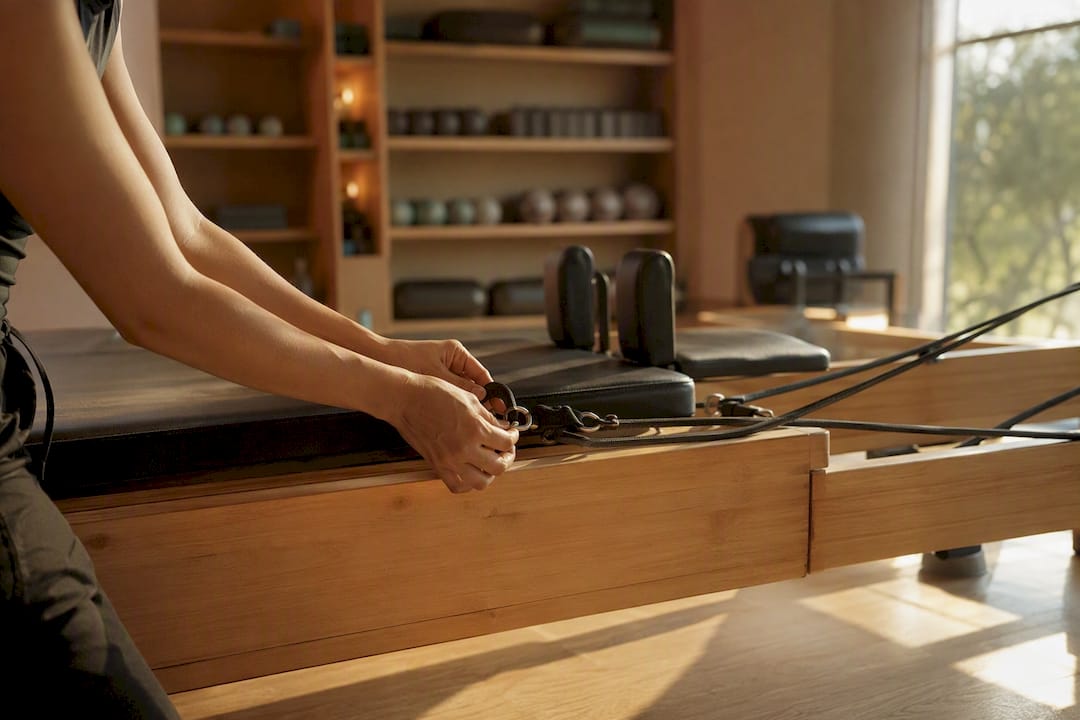
Implementing booking software with an automatic waiting list, integrated payments, and reminders reduces friction and prevents revenue loss due to no-shows. A clear no-show policy, communicated from the first class, protects both income and the perception of the studio's professionalism.
Another frequent mistake is not following up with clients who stop attending. Detecting early signs of abandonment (less frequent attendance, repeated cancellations) allows for intervention with a call or personalized message before losing the membership entirely. Improving weekday occupancy with flexible schedules or specific promotions also helps balance demand concentrated on weekends and early morning hours.
Lack of Knowledge of Applicable Health and Safety Regulations
Opening a Pilates studio involves legal responsibilities that go beyond having a good instructor. Ignoring land use permits, civil protection regulations, or local accessibility requirements exposes the business to fines or even temporary closure.
Each municipality has its own operating license requirements, and these usually include maximum capacity reviews, marked emergency exits, and valid fire extinguishers. Verify these requirements with local authorities before signing the lease for the premises, not after.
In the realm of health, having a basic first-aid protocol and certified instructors in the technique they teach reduces the risk of injuries and legal claims. Specific liability insurance for fitness studios is a minimum protection, not an optional expense, especially when dealing with equipment with mechanical resistance like reformers.
What Most Guides on This Topic Don't Tell You
Most advice for opening a Pilates studio focuses on launch marketing and neglects the part that truly decides whether the business survives: purchasing discipline. I’ve seen the same pattern repeat: an enthusiastic owner buys eight reformers for a room that barely needs four, convinced that “filling the room attracts clients.” The opposite occurs. Capital tied up in idle machines is what suffocates cash flow in the first six months.
Conventional wisdom also treats introductory pricing as a rapid growth tool. In practice, it anchors expectations that are later very difficult to adjust. Prioritize equipment quality and transferable warranty over the lowest price: this decision protects both the customer experience and the asset’s resale value. If I had to summarize the number one priority for any new owner, it would be this: let actual occupancy, not initial enthusiasm, dictate when to buy the next machine.
Pilates de Mexico: Packages, Financing, and Direct Consulting
Avoiding these mistakes is easier when the equipment supplier participates from the planning stage, not just at delivery. Pilates de Mexico offers MetaLife, the premium line with certified Lyptus® FAS wood and a structure for over 200 exercises, along with more accessible professional options for those who don’t want to start with the highest price.
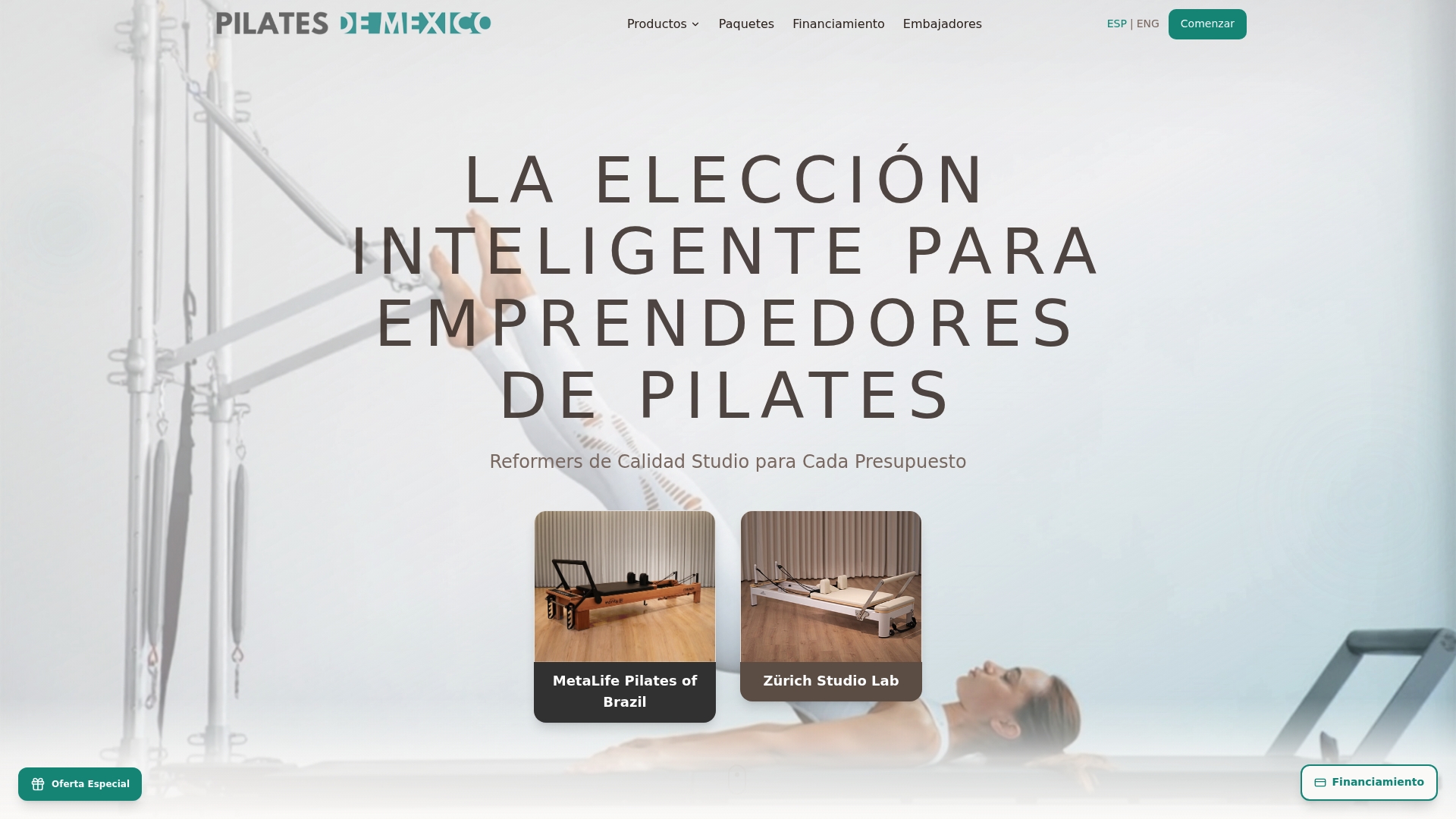
Studio packages include volume discounts and direct financing, so delivery times don't force you to choose between opening with incomplete rooms or decapitalizing the business. If you are equipping your first room or expanding an existing one, request a quote for the Zürich Labs reformers equipment and receive advice before committing capital.
Sources
- How Many Reformers for a New Pilates Studio in 2026?
- Smart Reformers & 2026 Pilates Equipment Buying Guide
- How to Open a Pilates Studio | bsport