MetaLife Reformer: Technical Specifications for Pilates Studios
MetaLife Reformer: Technical Specifications for Pilates Studios
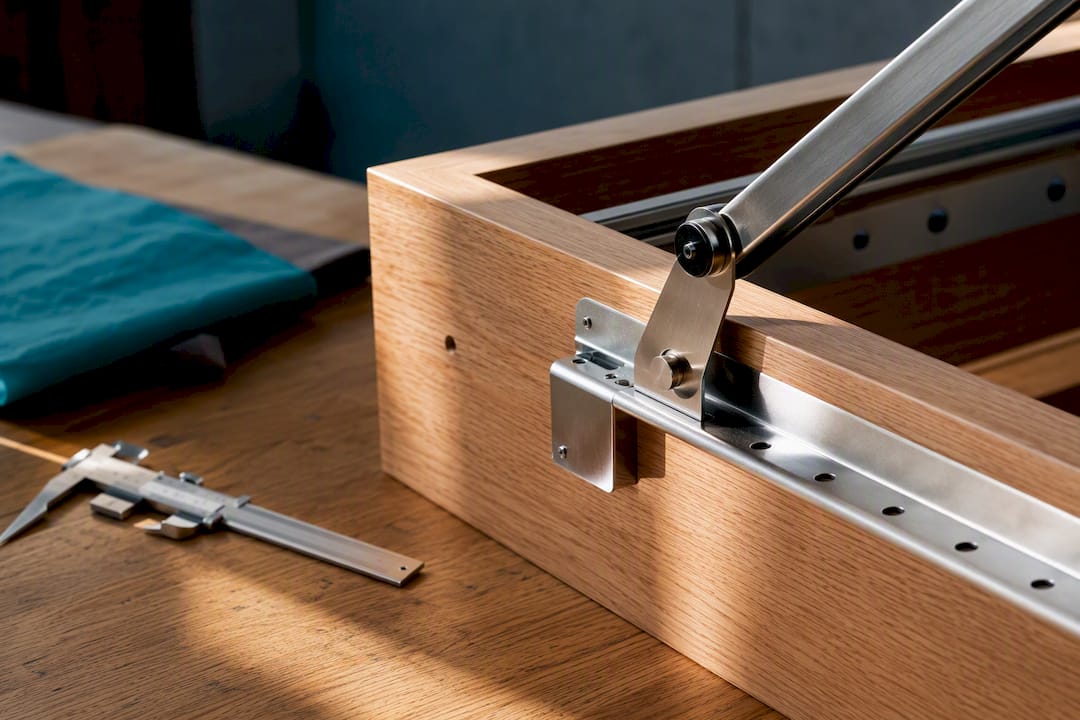
The MetaLife reformer is a professional-grade option for studios with daily use, thanks to its Lyptus® FAS wood structure and metal hardware that supports up to 140 kg of load. It combines structural resistance, financing options, and technical support, three important factors when equipping a studio.
In summary:
- MetaLife offers a reformer with a load capacity of 140 kg, ideal for daily professional use and with guaranteed structural resistance.
- Color-coded springs allow resistance adjustment from rehabilitation to advanced training, accommodating diverse profiles.
- The Lyptus® FAS wood structure requires controlled conditions for leveling, humidity, and sun protection to maintain its performance and warranty.
- The availability of spare parts, local technical service, and financing options makes studio maintenance and expansion more accessible.
- For studios with high turnover or intensive clinical use, investing in a MetaLife reformer is recommended, as it reduces premature failures and extends equipment lifespan.
Table of Contents
- MetaLife reformer technical specifications: materials, dimensions, and springs
- Operational advantages of MetaLife for studio productivity
- Installation and maintenance: steps to protect your warranty
- What to ask before buying a MetaLife reformer
- What the technical manual says about MetaLife
- Pilates de México as a supplier: reputation and coverage
- Editorial perspective: when MetaLife is the right choice
- MetaLife reformers and Pilates de México packages
- Sources
- Frequently asked questions
MetaLife reformer technical specifications: materials, dimensions, and springs
MetaLife builds its reformers with Lyptus® FAS wood, a certified reforestation material that combines density, dimensional stability, and a finish that resists the wear and tear of consecutive classes for years. The hardware is made of steel, treated to withstand constant friction on the rails without losing precision in the carriage's glide.
The documented maximum load capacity is 140 kilograms, a fact that is not merely decorative: it defines which protocols the studio can offer without compromising student safety or equipment lifespan.
The spring system works with a color code that indicates progressive stiffness, allowing resistance to be calibrated from postoperative rehabilitation to advanced strength training. This gradation is what differentiates a studio capable of serving diverse profiles from one that only serves basic group classes.
Included or available accessories extend the actual use of the equipment and allow for adaptations for different types of exercises.
- Integrated or modular tower, compatible with standing exercises and advanced core work.
- Mat converter to add floor work without buying additional equipment.
- Adjustable pulley system to vary traction angles.
- Reinforced straps and footrests, designed for high-turnover sessions.
Those considering adding clinical training to their offerings can review in detail the use of the reformer with a tower before defining the final model.
Operational advantages of MetaLife for studio productivity
A well-built reformer not only lasts longer: it changes the daily economics of the business. The combination of wood and metal hardware reduces premature failures that often appear in lower-quality fiber or treated wood equipment, which translates into fewer hours of studio downtime.
The silent and consistent glide of the carriage directly impacts the student's experience. A squeaky or sticky reformer creates real friction with the class, something instructors notice immediately and that can affect member retention in studios that rely on monthly subscriptions.
Other factors that weigh on profitability in the medium term:
- Higher resale value compared to entry-level brands, useful for those planning to scale or change locations.
- Availability of spare parts and technical service, which helps avoid prolonged downtimes.
- Better cost-benefit ratio in studios with high class turnover, where daily wear and tear takes a greater toll on equipment.
- Less frequent maintenance adjustments compared to inexpensive metal structures exposed to corrosion.
Professional tip: check your supplier's spare parts history before buying, not just the equipment price. A cheap reformer that takes weeks to get a part costs you more in cancelled classes than the initial price difference.
Installation and maintenance: steps that protect your warranty
The MetaLife technical manual estimates an assembly time of approximately 60 minutes per unit, ideally performed by two people or an authorized technician. Following the correct sequence from day one avoids problems that are difficult to trace later.
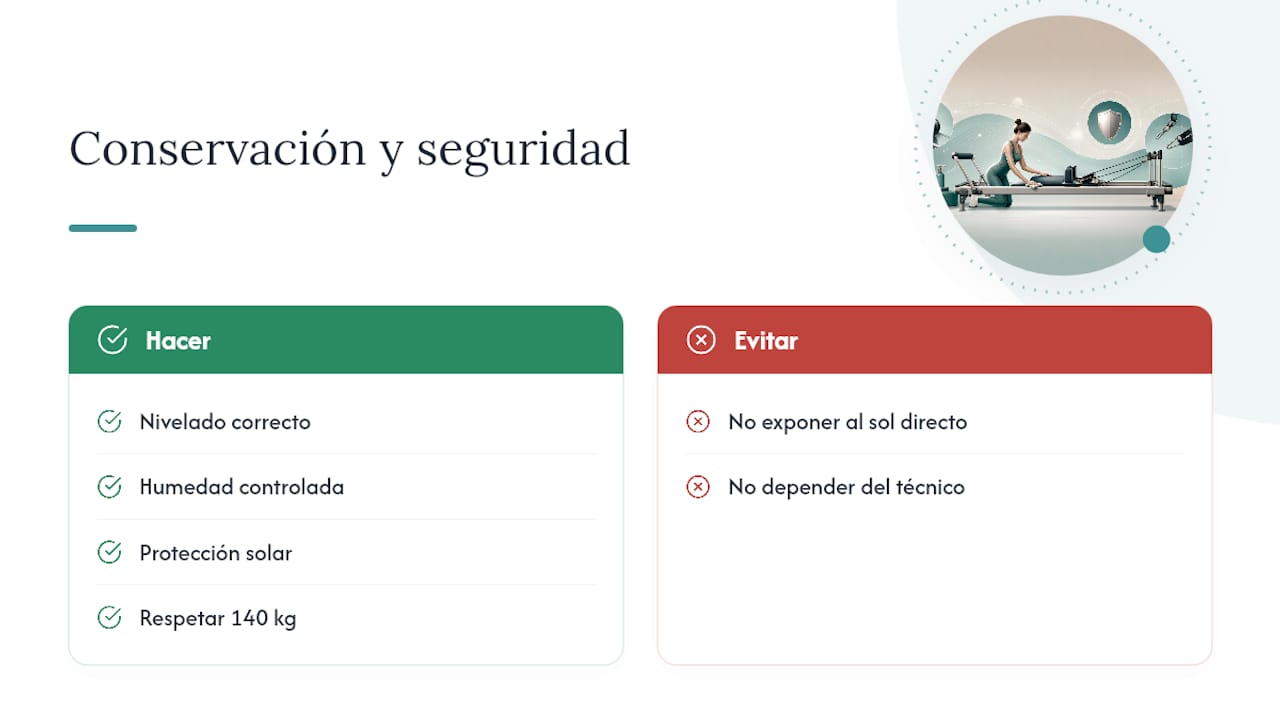
- Verify that the floor is level before assembling: even a minimal unevenness creates torsion that affects gliding and, over time, the entire structure.
- Install in a low-humidity environment without direct exposure to sunlight, conditions that the manufacturer itself indicates as critical for preserving wood and upholstery.
- Clean the rails regularly: dust accumulation significantly reduces the fluidity of the carriage, as indicated by manufacturer's maintenance recommendations.
- Inspect springs and upholstery seams every few weeks, looking for early signs of fatigue or wear.
- Never force assembly without the included tools: improperly executed assembly can void the warranty and cause uncovered damage.
If your installation team has no prior experience, it's advisable to review this reformer installation guide beforehand to avoid common leveling and space errors.
What to ask before buying a MetaLife reformer
Choosing the right model requires looking beyond the catalog. Prioritize equipment designed for intensive daily use, with confirmed compatibility for a tower and upholstery options that resist sweat and frequent cleaning with disinfectant products.
Before finalizing the purchase, ask the supplier directly:
- What stock availability do they have for immediate delivery, and how long does a special order take?
- Is initial assembly included, or is it charged separately as an authorized technical service?
- How quickly can they obtain spare parts like springs, pulleys, or straps if something fails?
- What financing options or multi-unit packages do they offer for opening or expanding a studio?
Regarding the budget, compare the total opening cost, not just the reformer's price: installation, accessories, replacement upholstery, and financing change the entire equation. Upon receiving the equipment, check that there are no visible splinters in the wood, that the rails slide without irregular resistance, and that the springs match the order specification. Any deviation there is a red flag that should be resolved before signing the delivery conformity.
What the technical manual says about MetaLife
This warning from the Metalife technical manual summarizes why installation should be taken seriously. The document also details that the structure uses Lyptus® FAS for its balance between aesthetics and resistance, and confirms a maximum capacity of 140 kilograms as a safety parameter for professional use. Preserving its lifespan depends on simple factors: correct leveling, controlled humidity, and protection from direct sunlight, conditions that any studio manager can verify without needing a technician.
Pilates de México as a Provider: Reputation and Coverage
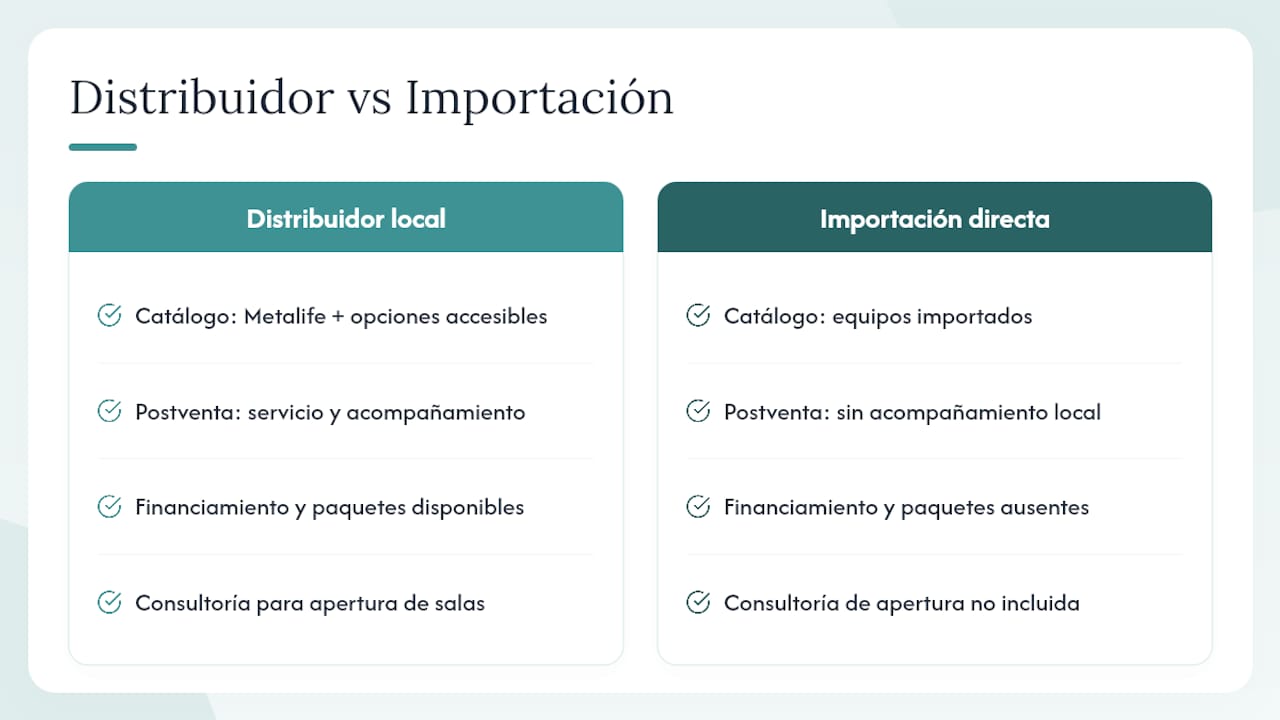
Buying a reformer doesn't end with the transaction: it begins there. Pilates de México distributes the Metalife line along with more accessible options manufactured in other countries, a combination that allows a new studio to start without immediately committing to higher-priced equipment.
After-sales service includes financing options, packages for multiple units, and consulting aimed at those opening a studio for the first time—a point that distinguishes a local distributor from a generic purchase without support. For workshops or studios already in operation, having a reliable source of reformer spare parts reduces inactive studio time when something breaks down.
Regional coverage matters as much as the catalog. A provider who understands the true costs of opening and filling a studio in Mexico, not just selling equipment, is one that can sustain a commercial relationship beyond the first invoice. This combination of premium product and accessible support is what often sways the purchasing decision towards an established distributor rather than direct import without local warranty.
Editorial Perspective: When Metalife is the Right Choice
Metalife makes sense for studios with daily classes, high student turnover, or clinical programming that demands constant resistance. If the budget is very tight, the same provider's more accessible lines cover the initial setup without compromising safety. The real question isn't price versus quality, but how much it's worth to avoid replacements and service downtime in the next five years.
Metalife Reformers and Pilates de México Packages
Pilates de México is the direct alternative to importing equipment without local support: in-house financing, included assembly, and spare parts available regionally, without depending on a foreign supplier who takes weeks to respond.
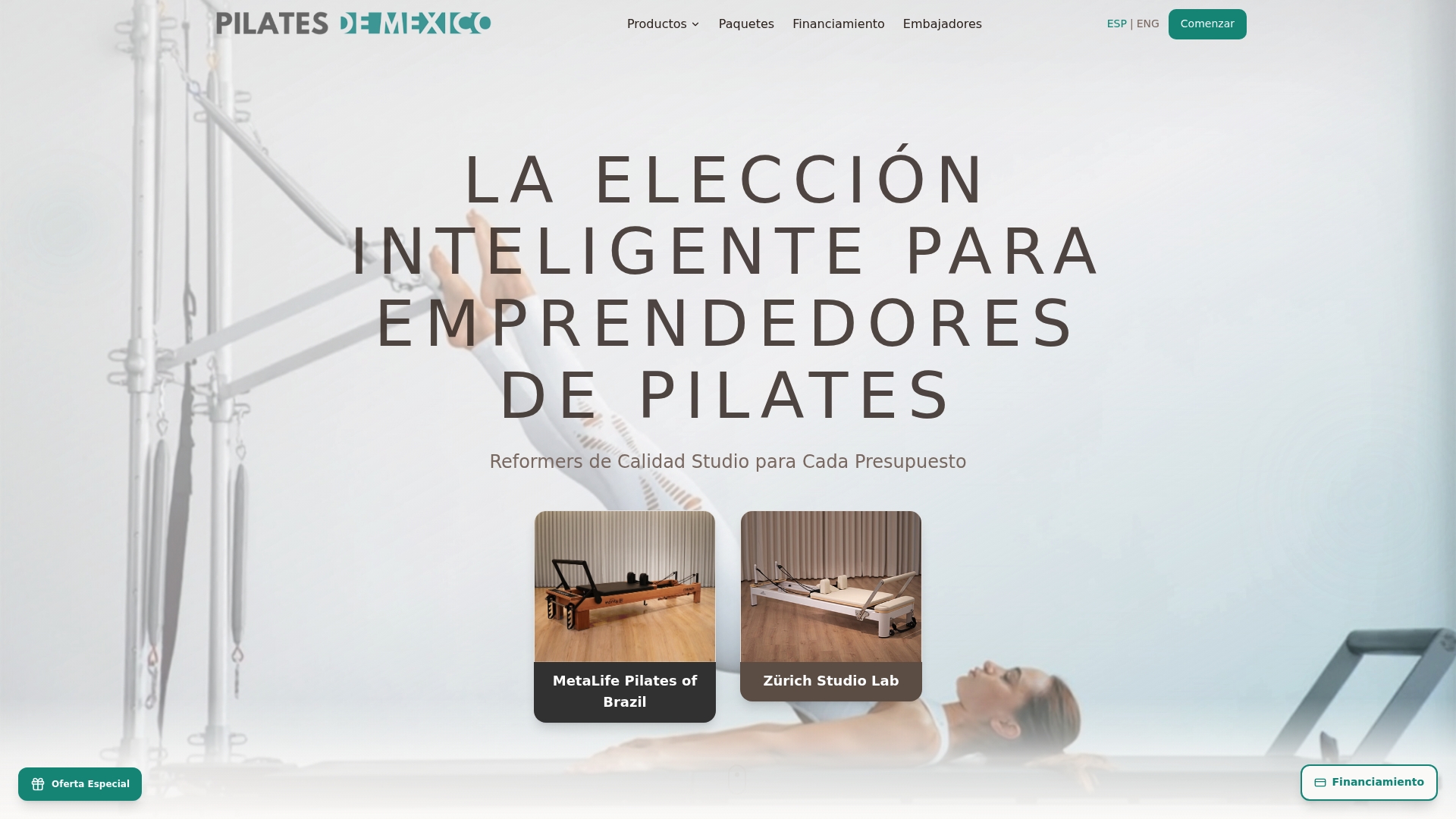
The Infinity Reformer with Tower is available with complete specifications for those seeking a Metalife-range machine ready for professional use. For studios that prefer to equip several rooms at once, studio packages simplify bulk purchasing, and equipment financing allows payments to be staggered without delaying opening. Before requesting a quote, have on hand the number of reformers you need, the available space in square meters, and whether you plan to add a tower or mat conversion accessories. With this information, the Pilates de México team can put together a proposal tailored to your studio and your opening schedule.
Frequently Asked Questions
What do the reformer spring colors mean?
Each color indicates a different level of stiffness, from light resistance for rehabilitation to high tension for strength training. The exact code varies by manufacturer, so it's advisable to check Metalife's specific chart when calibrating each exercise.
How many times a week is it recommended to do Pilates reformer?
Most professional programs suggest two to three sessions per week to see sustained results in strength and mobility. The final frequency depends on the student's goal and whether they combine reformer with other disciplines.
What is the difference between a Pilates mat and a reformer?
Mat Pilates works solely with body weight on a mat, while the reformer adds variable resistance using springs and a sliding carriage. This allows for much more controlled progression in difficulty than with the mat alone.
What does Pilates reformer work on the most?
The reformer focuses on core strength, postural control, and joint stability, supported by lower body work against spring resistance. It also promotes overall mobility thanks to the range of motion allowed by the carriage.
Is MetaLife a good investment for a new studio?
For studios with daily classes or clinical programming, the durability of the materials and the financing support from Pilates de México often justify the initial cost compared to lower-end equipment.