Merrithew Alternatives: Which Brand to Choose for Your Studio

Merrithew Alternatives: Which Brand to Choose for Your Studio
If you're looking for Merrithew alternatives, the path depends on your priority: MetaLife for premium materials and training support, an accessible professional line if you're in a growth phase, or affordable imported equipment if you need to open with the tightest budget possible. Pilates de México covers all three paths with options that can include financing and installation, helping to reduce risk when opening or expanding a studio.
In summary:
- Merrithew alternatives vary according to expected use, including premium options in certified and durable wood, accessible professional lines, and affordable imported alternatives.
- The choice should be based on durability, spare parts availability, warranty conditions, and local support, beyond the initial list price.
- It is essential to verify accessory compatibility and opt for providers that offer local inventory of parts and technical support in the country.
- Financing, complete packages, and consulting included in the offer facilitate opening or expanding the studio without risk of incompatibilities or delays.
- Always prioritize certified materials and clear warranties to minimize maintenance costs and ensure long-term operational continuity.
Table of Contents
- Why Consider Alternatives to Merrithew: Practical Factors
- What to Compare When Choosing a Reformer: Technical and Operational Checklist
- Categories of Alternatives and What to Expect from Each
- After-Sales Service and Spare Parts: Specific Questions to Ask Before Buying
- Decision Checklist: Practical Steps to Choose the Right Alternative
- Trial and Experience: Why We Recommend the Editorial Solution
- Customization and Upgrades: Adjustments, Accessories, and Modules
- Price and Quality Comparison vs. Financing Options
- Important Accessories and Packs to Complete a Studio
- Summary of the Main Alternative Brands to Merrithew
- Detailed Comparison of Technical Specifications Among Alternatives
- Considerations for Accessory Compatibility Between Brands
- Analysis of Warranty and Technical Support for Alternatives
- When an Alternative is Convenient and When the Original Brand is Worth It
- How Pilates de México Facilitates the Transition to Your New Equipment
- Useful Links and Pages for Specifications, Spare Parts, and Purchases
- Frequently Asked Questions
Why Consider Alternatives to Merrithew: Practical Factors
The decision rarely boils down to the list price. A reformer is used daily, for years, and the true cost appears after the purchase: spare parts, maintenance, and the value the equipment retains when you decide to upgrade or sell the studio.
Availability also weighs in. A supplier without local stock or with long shipping times can leave your studio idle for weeks while you wait for a part or a complete piece of equipment. Added to this is compatibility with your teaching method: some studios require very specific resistance adjustments or towers with particular configurations, and not all brands offer that flexibility.
Finally, commercial conditions tip the scales in practice:
- Direct financing allows you to open without depleting your business capital in the first month.
- Packages of multiple units lower the cost per reformer when outfitting a complete studio.
- Seasonal promotions can make a premium line accessible to a budget that seemed reserved for the economical option.
- Opening consulting prevents room design errors that are costly to correct later.
Evaluating these four factors before looking at catalogs saves you from comparing brands based on superficial characteristics that won't determine if your studio operates well two years down the line.
What to Compare When Choosing a Reformer: Technical and Operational Checklist
Comparing reformers by brand name is less useful than comparing by component. These are the points that truly differentiate equipment that lasts a decade from equipment that starts to fail in the second year:
- Construction and materials: Certified wood resists intensive use better than many aluminum or painted metal finishes, which tend to scratch and lose aesthetic value quickly.
- Carriage and rails: A carriage that glides without noise or vibration indicates quality bearings; ask for a demonstration in a studio, never rely solely on the technical sheet.
- Spring system: Verify the available resistance range and if springs can be purchased individually as spare parts or only in complete kits.
- Measurements and load capacity: A studio with group classes needs equipment that supports different body types without compromising the ergonomics of the carriage or the height of the bars.
- Accessories and upgrades: Confirm if the tower, cadillac, or additional modules integrate with the same reformer or require purchasing a new structure.
- Spare parts, warranty, and local support: Ask directly how long it takes for a part to arrive and if the supplier has inventory in your country or depends on importing every time.
Pro tip: Ask to see the spare parts catalog before signing, not after: this way you'll know if that part that wears out in two years is actually available.
No piece of equipment is equally good on all six points.
Alternative Categories and What to Expect from Each
Alternatives to Merrithew fall into three categories with distinct investment rationales.
The premium category, like MetaLife, opts for certified Lyptus® FAS wood and stainless steel hardware, designed to support over 200 exercises and years of daily classes without losing carriage precision. This is the option that makes sense when you plan to operate the equipment for a long time and want standardized training for your instructor staff.
The accessible professional category seeks the middle ground: it withstands daily studio use in an expanding studio without requiring the initial investment of a premium line. It works well for those who have already validated their business model and need to scale without committing all available capital.
The economical imported options allow for opening with the lowest possible outlay, which is useful for an initial test room or a very tight budget. The risk lies in after-sales service: spare parts that take a long time to arrive and more limited warranties are often the price of that initial saving.
To map your needs to a category, ask yourself:
- How many hours per day will each reformer operate?
- Does your budget allow you to absorb an unforeseen maintenance issue without stopping classes?
- Does your client profile expect premium-looking equipment or do they value the membership price more?
- Do you plan to sell the studio or the equipment in the coming years?
The answers almost always clearly point to one of the three routes.
After-Sales and Spare Parts: Specific Questions You Must Ask Before Buying
Before signing any quote, ask for direct, written answers. A serious supplier should not hesitate to provide them.
- How long does it take to send a critical spare part, such as a spring or pulley, from the moment I request it?
- Do they maintain local stock of wear parts, or does each shipment depend on an import?
- What exactly does the warranty cover: only components, or also installation labor?
- How long does the warranty last, and what invalidates it?
- Do they offer preventive maintenance contracts, or do they only attend to repairs when the equipment has already failed?
These answers allow you to estimate the real annual maintenance cost, something that almost never appears in the initial quote, but which determines whether the cheapest equipment ends up being the most expensive.
Decision Checklist: Practical Steps to Choose the Right Alternative
Moving from evaluation to purchase is simpler with a fixed procedure:
- Define expected use and volume: how many daily classes, how many reformers you need from day one, and how many you project to add in the first year.
- Prioritize your criteria: rank durability, price, and after-sales service according to what can truly halt your operation, not just what sounds best on a spec sheet.
- Request comparable quotes: ask each supplier for the same accessory configuration and thoroughly review the financing conditions, not just the monthly payment.
- Validate references and delivery times: confirm with other studios whether the supplier met promised deadlines and if after-sales support responded when needed.
- Plan installation and training: ensure the supplier includes professional assembly and an equipment handling session for your staff before the first class.
Skipping any of these steps often leads to surprises after purchase: a reformer arriving without the agreed-upon accessories, a warranty that doesn't cover what you expected, or equipment your instructor doesn't know how to adjust correctly. Order matters: defining volume before requesting quotes prevents comparing prices for configurations you won't use.
Trial and Experience: Why We Recommend the Editorial Solution
There are options that combine certified Lyptus® FAS wood and stainless steel hardware, designed for daily studio use, not for a one-off demonstration.
Some equipment is designed to support a wide variety and volume of exercises, which in practice means that the same reformer covers everything from rehabilitation classes to high-intensity training without needing additional structures.
Additionally, some suppliers offer financing and consulting services, which help reduce the risk associated with opening a studio, assisting with space design, procedures, and setup. This operational experience helps accurately estimate the true cost of maintaining a reformer studio beyond the initial outlay.
Customization and Upgrades: Adjustments, Accessories, and Modules
A reformer that cannot be customized limits the type of classes you can offer. Before buying, check how easy it is to adjust spring resistance for students of different levels, and if the carriage accommodates bands or straps of different lengths without changing equipment.
Additional modules, such as the tower or the cadillac, make a real difference in the versatility of the studio. Some lines, like the Infinity Cadillac, integrate directly into the reformer's structure, while other brands require purchasing a separate structure, which doubles the space needed and the investment.
The ladder barrel is another accessory that many studios add after their initial opening, once they have validated that their students are looking for spinal extension exercises. Asking from the start if the brand offers these types of modules as an upgrade, instead of a separate purchase from another line, avoids having a studio with equipment from different brands that do not combine well aesthetically or in terms of maintenance.
Customization also includes upholstery and color, seemingly minor but relevant if your studio is building a specific visual identity.

Price and Quality Comparison vs. Financing Options
The list price says little about what you will actually pay.
Financing changes that equation from the outset. Instead of comparing the total cost of the equipment, many studio owners compare the monthly payment against the income each reformer generates in classes. A premium piece of equipment financed over time can fit into the same monthly budget as an economical option paid in cash, with the advantage of a longer lifespan and lower risk of early repairs.
Multi-unit packages often include better financing conditions than purchasing a single reformer, because the supplier better amortizes the installation and logistics costs in a single visit. If you are equipping a complete studio from scratch, it is worth asking for a package quote before comparing individual units.
Important Accessories and Packs to Complete a Studio
Beyond the reformer, there are accessories that determine how complete your class offering is from day one. Straps and loops of different resistances allow exercises to be adapted for students with injuries or beginner levels without purchasing additional equipment. Boxes and platforms expand the repertoire of standing exercises, something increasingly requested in group classes.
Buying these items as part of a studio package is usually more economical than adding them separately later, in addition to ensuring that all accessories are compatible with each other by design. Also check the catalog of accessories available for your line before buying, because not all brands sell loose replacement parts when an accessory wears out before the reformer itself.
Summary of the Main Brands as Alternatives to Merrithew
The reformer market is divided into a handful of clear approaches. Some brands position themselves in the premium segment with certified materials and instructor training programs, others opt for a middle ground in price and durability for growing studios, and a third group manufactures in volume to offer the lowest possible entry price.

Among the options we handle, MetaLife represents the premium offering, while the Infinity line and the Advanced line cover the accessible professional segment. We also distribute imported equipment for those who prioritize initial savings over customization. You can review a broader comparison of brand categories in our guide to the best reformer brands.
What distinguishes each group is not just the price, but the after-sales commitment: how much spare parts inventory the supplier maintains, whether they offer an extended warranty, and if they support installation with real training for your staff.
Detailed Technical Specification Comparison Between Alternatives
Technical differences between alternatives are rarely in the general structure of the reformer, which usually follows a similar design across the industry, but rather in the execution details. The type of wood and its certification directly affect resistance to humidity and the constant weight of the moving carriage. Stainless steel hardware, compared to more economical chrome finishes, takes longer to corrode with daily use and frequent cleaning with disinfectant products.
The rail system also varies: some models offer finer tension adjustment, making it easier to adapt resistance for students of different weights without changing springs. The maximum load capacity is another piece of information worth requesting in writing, especially if your studio serves a client profile with very diverse weight ranges.
You can review specific specifications on the Advanced Reformer product page or compare with models oriented to the traditional method on the Balanced Body Zürich Labs Reformers page, which allows you to contrast construction approaches before deciding.
Considerations for Accessory Compatibility Between Brands
Not all accessories are interchangeable between brands, and assuming they are can be costly. Straps, springs, and platforms are often manufactured to each maker's own specifications, so an accessory purchased separately from an external supplier may not fit properly on your current reformer's carriage or rails.
This is especially important if your studio mixes equipment from different brands due to purchases made at different times. Before adding a module like a tower or a ladder barrel, confirm with the supplier if that piece was designed to integrate with your specific model or if it requires additional adapters that later complicate maintenance.
The practical recommendation is simple: if you plan to expand your studio with more units or accessories in the future, sticking to a single brand reduces the risk of incompatibilities and simplifies your relationship with a single spare parts supplier.
Analysis of Warranty and Technical Support for Alternatives
A written warranty is the best indicator of how much a supplier trusts its own equipment. Check if it covers only parts or also labor for repairs, and if it requires maintenance to be performed by brand-certified technicians to maintain coverage.
Local technical support makes a real difference when something goes wrong. A supplier with a technical team in your country responds in days, while relying on international support can mean weeks of waiting for a seemingly minor part. Ask explicitly if after-sales service includes on-site visits or if everything is resolved by sending spare parts for you to do the repair yourself.
Prioritizing local spare parts and support reduces operational risk much more than choosing solely based on the initial equipment price, especially for studios that cannot afford to have a reformer out of service during a busy class season.
When an Alternative is Convenient and When the Original Brand is Worth It
The original brand makes sense when your studio depends on a very specific method certification and your instructors have already trained with that standard. In such cases, the cost of changing systems—in retraining and in brand perception among students—can outweigh any savings.
Aside from that, a well-chosen alternative usually offers a better balance between investment and durability. The initial savings of an economical option are acceptable when you are opening a test studio or are clear that you will replace the equipment in a few years. To protect resale value and minimize downtime, always prioritize certified materials and a supplier with locally available spare parts, not just the cheapest option in the catalog.
How Pilates de México Facilitates the Transition to Your New Equipment
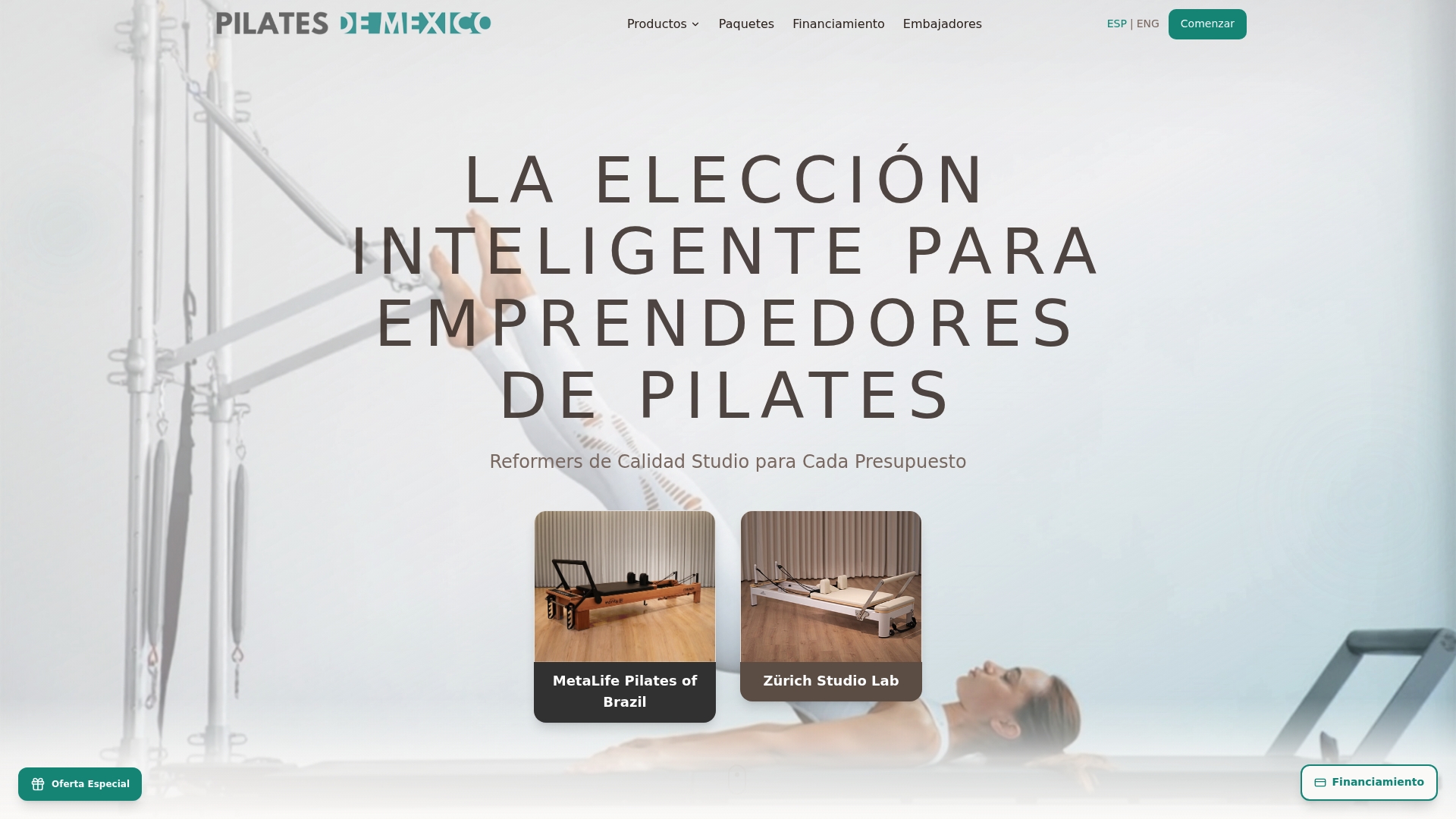
Changing brands shouldn't mean shouldering all the risk alone. We offer the Infinity line and the Advanced line to cover everything from boutique studios to gyms with high class turnover, as well as MetaLife for those seeking a premium option with certified materials.
- Direct financing adapted to your studio's cash flow, without relying solely on initial savings.
- Professional installation and training included so your staff can operate the equipment from day one.
- Studio packages with special conditions when outfitting multiple units at once.
- Opening consultancy that covers everything from studio design to operational procedures.
To request a quote, review our catalog of lines and products and tell us your projected class volume. From there, we will put together a proposal with clear delivery times and financing conditions from the very first conversation.
Useful Links and Pages for Specifications, Spare Parts, and Purchases
Before deciding, it's worth directly reviewing the specifications and guides that support this comparison. The reformer spare parts guide details which parts wear out first and how to plan for their replacement. If you are still defining your initial budget, the guide on what to buy first when equipping a studio prioritizes investment before requesting quotes.
Frequently Asked Questions
What are the best alternatives to Merrithew for a new studio?
It depends on your budget and expected usage: MetaLife offers premium materials for those planning to operate the equipment for many years, while the Infinity and Advanced lines cover the accessible professional segment for growing studios. Affordable imported options are valid for an initial trial room, though with more risk regarding spare parts and warranty.
What should I check before buying a reformer other than Merrithew?
Check the construction and material of the carriage and rails, the range of the spring system, and the actual availability of spare parts in your country. Also, ask about the exact warranty conditions and whether the supplier offers included installation and training.
Is it worth paying more for a premium line like MetaLife?
It makes sense when the studio operates with intensive daily classes, because MetaLife is built with certified Lyptus® FAS wood and stainless steel hardware, designed to withstand more than 200 exercises and years of continuous use. For a room with less turnover, an accessible professional line can meet the same need with less initial investment.
How can I finance the purchase of reformers for my studio?
Direct financing adjusted to the studio's cash flow is available for both individual equipment and multi-unit packages. You can check the specific conditions on the financing page before requesting a formal quote.