Lyptus Wood in Reformers: When It’s Convenient and How to Choose

Lyptus Wood in Reformers: When It's Right and How to Choose
Lyptus provides a professional reformer with greater density and resistance, making it a solid option for studios with intensive use. Its density of 850 kg/m³ and Janka hardness of 1,420 lb-f place it among the most resistant hardwoods for commercial structures. Compared to cheap imports, buying with a local warranty and support reduces operational risks.
In summary:
- If you're buying a few units, the local option is usually more convenient; importing becomes more attractive with large volumes and the capacity to handle logistics, taxes, and potential delays.
- Inspect hardware, screws, straps, and ropes weekly; schedule full service every 1–2 years and replace springs approximately every two years with intensive use.
- Lyptus can contract and expand with seasonal changes; proper drying and finishing, along with avoiding extreme humidity, reduces this risk.
- Before purchasing, demand a written warranty detailing covered parts, duration, and local support; also check for the availability of springs, hardware, and wheels.
Table of Contents
- What is Lyptus and why does it matter in a reformer?
- Lyptus, maple, oak, or a cheap imported reformer?
- Price Ranges and Total Cost of Ownership
- Checklist for Choosing a Lyptus Wood Reformer
- Maintenance and Lifespan of a Wood Reformer
- Financing to Equip Your Studio: What Options Are There?
- Packages and Consulting for Opening or Expanding a Studio
- How to Evaluate Suppliers and Recognize Imitations or Low-Quality Imports
- MetaLife in Lyptus Wood: Equipment, Installation, and Financing for Your Studio
- Frequently Asked Questions
- Sources
What is Lyptus and why does it matter in a reformer?
Lyptus is a hybrid of Eucalyptus grandis and Eucalyptus urophylla grown in plantations. Its name is a registered trademark, and the brand itself highlights its uniform finish and good workability. In a reformer, the wood supports the student's body, withstands the back-and-forth motion of the carriage, and absorbs years of daily classes, so density stops being just a spec sheet detail and becomes an operational advantage.
Here's what you should know before buying:
- Load and wear resistance: dense wood maintains a stable structure with group classes running many hours a day.
- Uniform finish: the even grain facilitates varnishes and coatings that look good in a professional studio.
- Controlled origin: coming from plantations, the supply is more predictable than with native forest woods.
- Seasonal movement: Lyptus technical documentation warns of shrinkage and expansion, and dust when machining, so finishing and handling matter.
Density of 850 kg/m³ and Janka hardness of 1,420 lb-f, according to The Wood Database. These are figures for commercial-grade hardwood, designed for pieces that work every day.
Lyptus, Maple, Oak, or a Cheap Imported Reformer?

Compared to common woods, Lyptus competes well in durability and finish. Maple and oak are well-known options, and commercial catalogs show everything from industrial manufacturers to suppliers that manufacture in China. Where Lyptus may draw even or give way is in seasonal movement, which is controlled with proper drying, good finishing, and a space without extreme humidity.
The real difference is often in the supplier. A cheap imported reformer saves on the initial price but adds risks:
- Customs and logistics: costs and times that rarely appear in the original quote.
- No local warranty: if something fails, the claim crosses borders and the studio is out of commission.
- Hard-to-find spare parts: springs, hardware, and wheels of different specifications or unavailable.
- Higher total cost in the long run: Klasius' analysis for the Mexican market indicates that initial savings can disappear with these extras.
There is a less visible effect on the business. A sticky carriage or a creaky structure is noticeable in every class. The quality of the equipment can influence students' comfort and confidence.
Price Ranges and Total Cost of Ownership
The sticker price tells only part of the story. To decide between importing and buying with local support, it's advisable to calculate the total cost of ownership, which is the sum of everything you pay to keep the reformer functioning for years. The exact figures for each line are confirmed in a quote, and Klasius offers a comparison of brands and prices that serves as a general reference.
To build your calculation, follow this order:
- Start with the price of the equipment, with the configuration and accessories you need.
- Add transportation, taxes, and customs if the equipment comes from abroad.
- Include professional installation and initial training for your team.
- Reserve a budget for spare parts, especially springs, which will need replacement with use.
- Consider downtime if there's a fault without nearby support.
- Divide the total by the expected years of useful life and compare with other offers.
As a practical rule, if you buy a few units, buying locally usually makes more sense: importing becomes attractive when the volume is large, and you can absorb logistics and risk.
Checklist for Choosing a Lyptus Wood Reformer
Before requesting a quote, define how you will use the equipment. A group class studio with many hours daily demands more than a private session studio. With that clear, these questions separate a solid offer from a dubious one:
- Use and load: how many hours a day and how many people per class, to size the model and parts.
- Local warranty: what it covers, for how long, and who services it in your city.
- Technical service and spare parts: if there's stock of springs, hardware, and wheels, and how long they take to arrive.
- Installation and training: most Pilates accidents arise from improper use or not knowing the adjustments, so initial training protects your students and your business.
- Maximum admitted weight: the actual capacity of the reformer and its springs.
- Hardware: stainless steel on parts exposed to friction and sweat.
- Wood coating: type of finish and how it's repaired if it wears out.
- Spring replacement policy: how often and at what cost.
Pro tip: ask for the warranty in writing and compare what parts it includes; a broad warranty on the frame that excludes springs and hardware covers less than it seems.
Maintenance and Lifespan of a Wooden Reformer
A well-maintained reformer works for many years, and preventive maintenance costs much less than a repair. The Pilates Journal recommends checking reformers weekly, performing a full service every 1–2 years, and replacing springs approximately every 2 years with intensive use. With that rhythm, your studio's routine becomes clear:
- Every week, check hardware, screws, straps, and ropes, and look for looseness or wear.
- Clean the rails and carriage wheels so it slides smoothly.
- Control carriage friction and room humidity, which affects the wood.
- Replace springs when due and don't wait for them to fail.
- Schedule a full service every 1–2 years with a technician familiar with the brand.
The lifespan depends on this care and the warranty that backs the equipment. For commercial use, many brands recommend longer warranties, from 5 to 10 years, and it's advisable to demand them. If you want to delve deeper, check out our guide on maintenance that prevents expensive repairs and the article on the durability of a professional reformer.
Financing to Equip Your Studio: What Options Are Available?
Equipping a complete studio is a significant investment, and financing allows you to open or expand without depleting working capital. On our financing page, you can see the available payment options and packages designed for studios. We confirm amounts, terms, and conditions in a quote.
When comparing plans, it's advisable to look at four things:
- What the plan includes: just the equipment, or also installation and accessories.
- Term and monthly payment: ensure the payment fits within the actual income from your first classes, not ideal projections.
- Volume payments: how conditions change if you purchase several reformers in one package.
- Total credit cost: beyond the monthly payment, sum everything you will pay until it's settled.
Financing equipment with a local warranty and technical support has an additional advantage. Equipment that is idle due to lack of spare parts continues to accrue payments but stops generating income.
Packages and Consulting to Open or Expand a Studio
A studio doesn't open with just reformers. You need to decide how many beds fit, what mix of equipment attracts your clientele, and how to distribute the space for smooth classes. That's why we offer packages of multiple equipment pieces with discounts and consulting for those opening or expanding a studio.
Consulting resolves the most underestimated work when starting:
- Studio configuration: how many reformers and what complements, such as Cadillac or accessories, fit in your available square footage.
- Training your team to know the equipment adjustments from day one, a point that, as we've seen, is crucial for safety.
- Investment planning: what to buy now and what to leave for a second stage, according to actual demand.
When all this is well-structured, the cost of opening decreases, as does the risk. You can see available complements in our accessories section.
How to Evaluate Suppliers and Recognize Imitations or Low-Quality Imports
A good supplier provides concrete answers before the sale and support afterward. A reformer distinguished only by price usually hides precisely what matters most with use. These signs help you differentiate a reliable offer from a questionable one:
- Written warranty with real coverage: demand to know what parts are covered and who is responsible in your city. Our guide on warranties details what to ask for before buying.
- Verifiable specifications: wood type, hardware, maximum weight, and spring policy explained straightforwardly.
- Local spare parts and technical service: if the supplier cannot tell you where and when they will arrive, a broken part will be your problem.
- Installation and training included: a serious supplier supports the setup process.
- Equipment traceability: ask who manufactures it and if there is a clear technical sheet. Equipment without this information is difficult to claim.
- Price misaligned with the market: an offer significantly below others almost always cuts corners on materials, hardware, or support.
Always ask to see the equipment, try it out, and speak with someone who already uses it in a studio. That conversation is worth more than any brochure.
MetaLife in Lyptus Wood: Equipment, Installation, and Financing for Your Studio
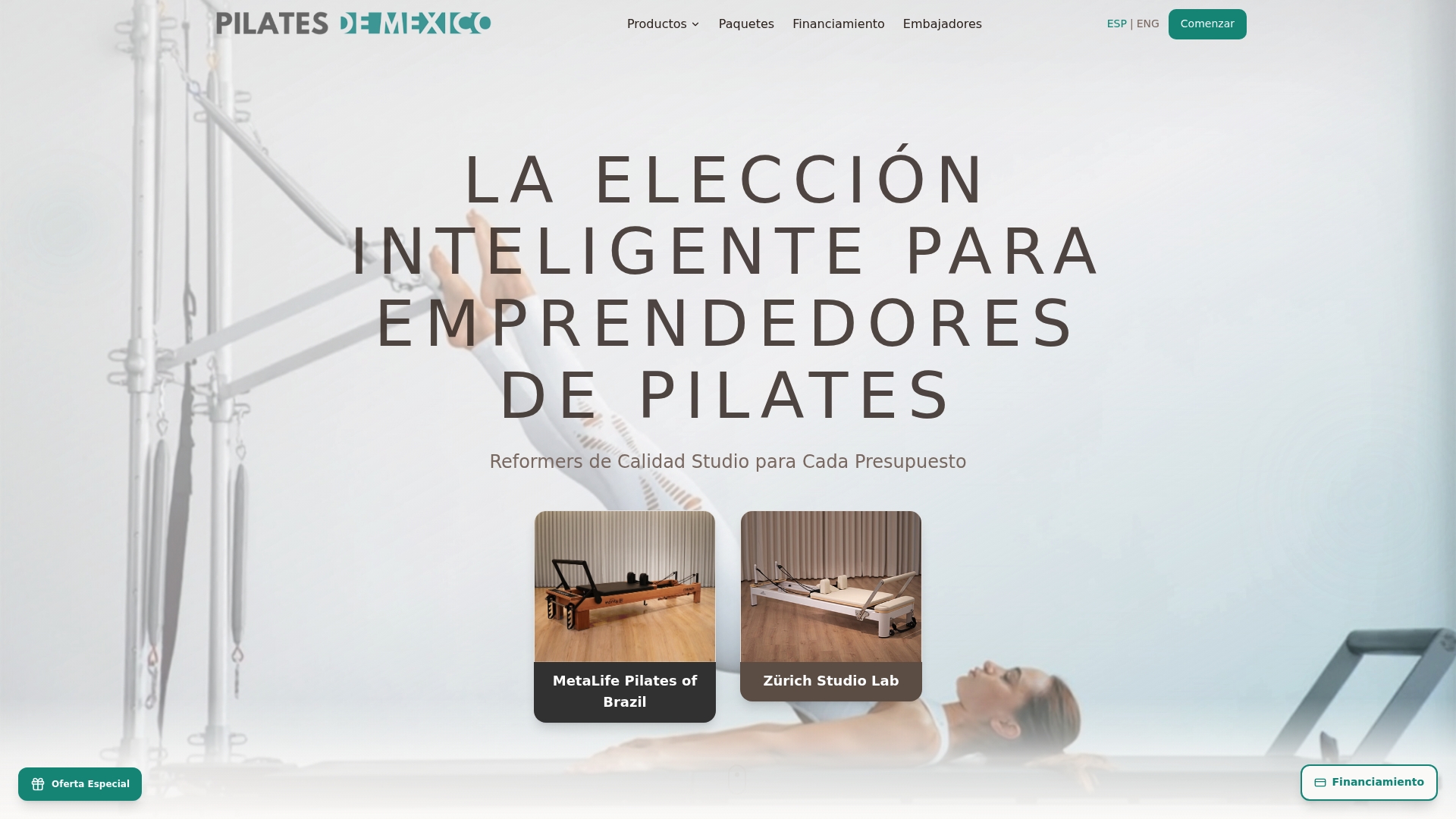
We are an option to equip your studio with MetaLife reformers, a line available in Mexico. We build your studio with local support, from purchase to installation, so you can open with less risk and retain resale value when it's time to grow.
- Infinity Line and Advanced Line: professional reformers with certified Lyptus® FAS wood and stainless steel hardware.
- Professional installation and local warranty: support in Mexico.
- Financing and packages: payment options and volume discounts to open or scale.
Learn about our Infinity and Advanced lines and review financing options to request your quote today.
Frequently Asked Questions
What is a Pilates reformer and what are its benefits?
It's a machine with a sliding carriage, springs, and straps that allows for work with adjustable resistance. It's used to strengthen, gain flexibility, and improve movement control, and it's suitable for both beginners and advanced practitioners.
How much does a Pilates reformer cost?
The price depends on the brand, material, and whether it includes installation and warranty. Professional equipment costs more than economical ones, but the total cost includes spare parts, logistics, and support. Request a quote and compare what each offer includes.
Why choose Lyptus wood for a reformer?
Lyptus is a plantation hardwood with a density of 850 kg/m³ and a Janka hardness of 1,420 lb-f, suitable for intensive commercial use. Additionally, it offers a uniform finish and controlled origin.
How often should a studio reformer be inspected and maintained?
A weekly inspection and a complete service every 1–2 years are recommended. With intensive use, springs are replaced approximately every 2 years, always by a technician who knows the equipment.
Sources
- Lyptus® | The Wood Database (Hardwood)
- How to choose Reformers for your studio: brand comparison, prices and when to import from China or EU — Klasius Blog
- Keep your clients safe and your studio sound — The Pilates Journal