How to Reduce Noise in a Pilates Studio Without Costly Renovations

How to Reduce Noise in a Pilates Studio Without Costly Construction Work
Prioritize noise control at the source: purchase quiet reformers and isolate each base with dense pads. This two-step approach resolves most noise complaints before spending a dime on structural work. Only if there are neighbors below or next to the studio should a decoupled floor or wall reinforcements be considered, and that decision must be based on measurements, not assumptions.
In summary:
- Choosing reformers with steel frames and sealed bearings, along with periodic maintenance, significantly reduces vibrations and noise in the studio.
- Dense rubber pads under the bases and resilient layers in the flooring help reduce impact transmission before resorting to costly construction work.
- Distributing reformers away from shared walls and using absorbent panels on the ceiling and walls reduces echo and improves the acoustic perception of the room.
- Measuring impact and noise levels before and after interventions ensures that the applied solutions truly improve sound insulation.
- Initial investments in specific isolation and reverberation treatment are key, and only after these should decoupled floor systems be considered in cases of sensitive neighbors.
Table of Contents
- 1. Reformer Selection and Maintenance to Address Noise at the Source
- 2. Floor and Base Isolation Systems: From Specific to Structural
- 3. Studio Layout and Conditioning to Control Echo and Airborne Noise
- 4. Measurement and Maintenance: How to Verify Solutions are Working
- 5. Budget and Phases: What to Resolve First According to Cost and Risk
- 6. What We Learned from Studios That Opened and Later Had to Correct Issues
- How Pilates de México Supports You with Equipment and Financing
- Sources
- Frequently Asked Questions
1. Reformer Selection and Maintenance to Address Noise at the Source
Noise in a Pilates studio almost always originates from the machine, not the room itself. A reformer with a steel frame, sealed bearings, and polymer rails transmits much less energy to the floor than one with loose plastic parts or bearings exposed to dust. Spring quality also matters: a worn spring generates additional vibration with each repetition.
The difference between a basic and a well-maintained premium equipment can be significant at the source, and maintenance alone can notably influence it depending on how it's lubricated and adjusted. This is the biggest gap you'll find in this entire guide, and it's better to address it before buying than after.
- Place dense rubber isolation pads under each reformer leg.
- Lubricate rails and bearings monthly in high-use studios.
- Adjust carriage stops to prevent hard impacts at the end of the travel.
- Check springs seasonally and replace any that sound different from the rest.
When the budget is limited, a well-maintained affordable line can perform almost as well as a newly purchased, neglected premium machine. What you cannot fix with maintenance is a poorly welded frame or unsealed bearings: that manufacturing defect is permanent. You can review more detailed selection criteria in our reformer guide.
Pro tip: Mark the last lubrication date for each machine on your calendar; a reformer that starts to sound different is usually giving a warning before it fails.
2. Floor Isolation Systems and Bases: From Spot Solutions to Structural
Not all flooring solutions solve the same problem. The logical order goes from the cheapest and most reversible to the most expensive and permanent.
- Spot isolation: dense rubber pads or isolators under reformer legs, the first line of defense and the most economical.
- Underlay and membranes: resilient layers under the finished floor that reduce transmission at medium and high frequencies, useful when noise is an issue but there are no direct neighbors below.
- Decoupled floors (floating slab or on springs): the most effective option against structural vibration, but its low-frequency behavior depends on the specific design of the resilient layers.
The isolation objective between a reformer studio and occupants below is usually set at a high IIC level to minimize impact transmission when there are sensitive neighbors, as recommended by a specialized guide on Pilates studio soundproofing. This criterion only makes sense if accompanied by actual measurement, not just the manufacturer's data sheet.
An experimental study on impact noise attenuation in fitness centers tested over sixty floating floor compositions and found that not all work equally below 100 Hz, precisely the band where the impact of a reformer in motion resides. Before demanding IIC 55+ in a construction contract, ask the supplier to document how their system performs in that specific band, not just the overall number.
Commercial modular systems like those described in the GenieMat technical specification offer measurable reductions in impact transmission when combined with additional mass and well-specified resilient layers.
3. Room Layout and Conditioning to Control Echo and Air Paths
The way you arrange reformers within the room changes both perceived noise and what is actually transmitted to the structure.
- Move reformers away from shared walls and avoid rigidly fixing any piece against a wall shared with another premises or dwelling.
- Install absorbent panels or clouds with an NRC of 0.80 to 0.85 on the ceiling and critical areas to reduce echo without the instructor having to raise their voice.
- Seal doors and thresholds and check that air return grilles do not allow direct sound passage between adjacent rooms.
- Center machines in the space when the design allows, instead of lining them all up against a single wall.
For a typical studio with six to ten reformers, this order of work (distance to walls, panels, seals) usually reduces the perception of noise before even addressing the floor. We delve deeper into this logic in our note on acoustics in a reformer studio.
4. Measurement and Maintenance: How to Verify that Solutions Work
No intervention is worth anything if not measured before and after. Two metrics do most of the work: Lmax, which captures the peaks of a punctual impact, and Leq, which averages noise during an entire class.
- Record Lmax and Leq before any intervention, to have a real baseline.
- Repeat the exact same test after installing pads, underlay, or decoupled flooring.
- Use representative impact events (a controlled weight drop or an actual series of exercises) instead of generic noise.
The ProPG technical guide for gym acoustics recommends focusing measurement on high-impact events and documenting the response in frequency bands down to 10 Hz when sensitive occupants are nearby. Supplement this with a fixed schedule of monthly lubrication and annual spring review, which you can follow in our reformer studio operational safety guide.
Pro tip: Save each measurement with date and associated machine; that history is the strongest argument when negotiating with a landlord or a complaining neighbor.
When measurements don't improve after two or three interventions, it's time to escalate to an acoustic consultant and request a report with measured Lmax, not just estimated.
5. Budget and Phases: What to Solve First Based on Cost and Risk
- Spot isolation (pads, isolators under legs): the lowest investment and always the first step, without exception.
- Reverberation treatment (panels, door seals): moderate cost, immediate improvement in perceived noise and voice clarity.
- Underlay or membrane under finished floor: medium investment, appropriate when noise persists after the previous steps.
- Decoupled floor or wall reinforcement with higher STC: the highest investment, reserved for cases with direct neighbors and proven risk of complaint or litigation.
Before approving costly construction, verify that you have exhausted steps one and two, that you have documented measurements, and that the lease agreement specifies who pays for structural modifications. If you are negotiating a new space, now is the time to request that clause in writing. You can review full initial investment ranges in our Pilates studio equipment guide.
6. What We Learned from Studios That Opened and Then Had to Correct
The most common complaint does not come from the reformer itself, but from machines placed directly against a shared wall, without any pad underneath. It's a cheap mistake to correct if detected before signing the construction contract, and very expensive if detected after the downstairs neighbor calls for the first time.

Another common pattern: underestimating low frequency. A studio can sound quiet to the ear and still transmit structural vibration that is only noticed on the floor below. A single intervention (changing pads or relocating machines) usually resolves airborne noise, but rarely suffices against structural vibration when there are occupants below.
A minimum checklist before opening a reformer studio: verified quality equipment, pads under each base, no machine against a shared wall, defined maintenance schedule, documented baseline measurement, clear construction clause in the contract, and an escalation plan to an acoustic consultant if something doesn't improve. We've gathered more opening mistakes in this analysis of common failures.
How Pilates de México Supports You with Equipment and Financing
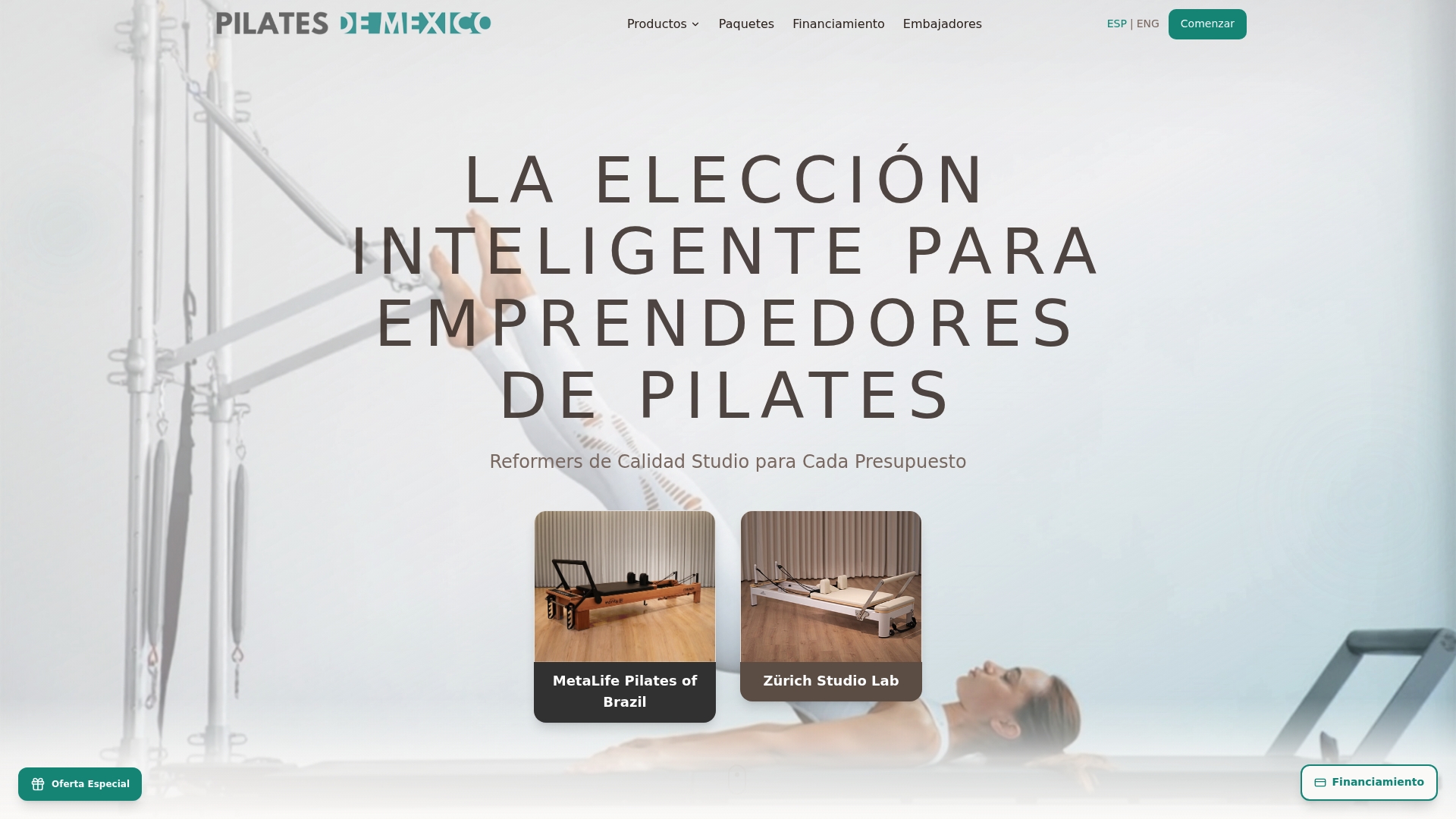
Solving noise starts with buying well, and that's where Pilates de México comes in. We offer equipment with certified wooden frames and stainless steel hardware designed for long-term use, along with renowned lines and more accessible options for those opening their first studio.
- Infinity and Advanced lines with different investment levels according to your budget.
- Accessories that include isolation solutions for bases and legs.
- Direct financing to scale your equipment without committing all your initial capital.
| Need | Recommended Line or Service |
|---|---|
| Tight opening budget | Advanced Line |
| Premium studio with lower acoustic maintenance | Infinity Reformer with Tower |
| Expansion with multiple pieces of equipment | Studio Packages |
Before deciding between pads, underlay, or major construction work, request a prior measurement and a quote that specifies exactly what your room needs, to avoid expenses that don't translate into fewer complaints. Explore the full catalog at Pilates de México and schedule your consultation.
Sources
To specify flooring requirements, consult the GenieMat datasheet; to verify legal limits, the regulations of the Official Gazette of the Federation.
- How to Soundproof a Pilates Studio
- Experimental Analysis of Flooring Structures for Low-Frequency Impact Noise Attenuation in Fitness Centres
- GenieMat FIT technical specification
Frequently Asked Questions
Which is more important: the Reformer or the studio floor?
The Reformer almost always weighs more. Improving the machine and its maintenance reduces the energy transmitted at the source before it reaches the floor, while flooring work only makes sense when those measures have already been exhausted.
What IIC should I demand if I have neighbors below the studio?
An IIC of 55 or higher is the usual benchmark for Reformer studios with sensitive occupants below, as indicated by this soundproofing guide. Always ask the supplier to document the system's low-frequency performance, not just the general number.
Are pads under the Reformer sufficient, or do I need underlay?
Dense rubber pads solve most cases without direct neighbors below. Underlay is justified when noise persists after isolating each base and reorganizing the room.
How often should I check the Reformer's maintenance for noise?
Monthly lubrication and seasonal spring checks are a reasonable schedule for heavily used rooms. A change in a machine's sound often anticipates a mechanical problem before it becomes bothersome noise.
When is it worthwhile to buy MetaLife equipment instead of a more economical option?
MetaLife makes sense when prioritizing lower long-term acoustic maintenance and resale value, thanks to its certified frame and stainless steel hardware. A more accessible line is still valid for a first studio if maintained with discipline.