How to integrate Pilates into your gym without risking your investment

How to Integrate Pilates into Your Gym Without Risking Your Investment
Yes: integrating Pilates into your gym is a practical investment that improves retention and expands your offerings. If your space is limited or you want to validate demand, start with mat Pilates classes; if you're looking to differentiate yourself from day one, one to three reformers are enough. First, assess your available space and the real demand from your members before committing capital to a full studio.
In summary:
- Investment in Pilates equipment should be adjusted to demand and available space, starting with mat classes if the area is limited.
- Pilates complements other workouts and attracts segments that avoid traditional gyms, improving retention and generating income from private classes.
- It is recommended to schedule Pilates once or twice a week and sell session packages to ensure profitability and facilitate management.
- Initial equipment includes mats and light accessories, and if reformers are chosen, dedicated space, greater investment, and attention to equipment durability are required.
- The proper selection and training of certified instructors, as well as compliance with safety regulations, are key to offering a quality service and ensuring safety.
Table of Contents
- Why Integrate Pilates: Benefits for Users and for the Business
- Practical Modalities and Combinations: Mat, Reformer, and How to Integrate Them
- Weekly Programming and Operational Examples for Different Profiles
- Equipment, Space, and Initial Budget: From Minimum Viable to Fully Equipped Studio
- Staff, Training, and Protocols: How to Hire and Train Pilates Instructors
- Basic Regulations and Safety: What You Should Consider When Adding a Pilates Studio
- Author's Perspective and Practical Opening Learnings
- Direct Option: Equip, Finance, and Launch Your Pilates Studio
- Frequently Asked Questions
- Sources
Why Integrate Pilates: Benefits for Users and for the Business
Pilates doesn't compete with your strength and cardio offerings; it complements them. For the user, health reviews describe improvements in core strength, posture, and mobility, in addition to reported benefits in anxiety reduction when practiced weekly, according to Infobae. For your gym, Pilates opens the door to segments that typically don't train for strength: older adults, people in rehabilitation, and those seeking postural work.
The commercial impact is noticeable on three fronts:
- Retention: Members who combine modalities tend to stay longer because they diversify their routine.
- New memberships: Pilates attracts those who avoid traditional gyms due to intimidation or previous injuries.
- Private classes: The reformer enables personalized sessions with a higher ticket price than standard group classes.
Up to 9 documented benefits of Pilates include mobility, functional strength, mental health, and support in rehabilitation processes, according to Infobae, which explains why more and more gyms are adding it as a permanent service instead of an occasional class.
Modalities and Practical Combinations: Mat, Reformer, and How to Integrate Them

The decision between mat Pilates and reformer Pilates depends on your space and budget, not on aesthetic preference. Mat Pilates only requires mats and light accessories, fits in any multi-purpose room, and allows you to start with minimal investment. The reformer requires dedicated space, represents a larger per-unit investment, and justifies charging more per class because it offers variable resistance and more precise progression.
Combining Pilates with the rest of your offerings follows a simple logic:
- With strength training: Schedule Pilates once or twice a week as a complement, never a substitute, to improve stability and technique in loaded exercises, as recommended by YoSoyDeporte.
- With functional training: Use the reformer for movement patterns that then transfer to functional free-weight exercises.
- With rehabilitation: Coordinate with physical therapists so that Pilates can be the bridge between clinical discharge and return to regular training.
A practice that works well in gyms with limited space is micro-sessions of ten to twenty minutes before or after the main workout, designed to activate the core or release tension, according to YoSoyDeporte. This approach avoids blocking full time slots and makes it easier for members to try the discipline without committing to a full-hour class.
Weekly Scheduling and Operational Examples for Different Profiles
The Pilates schedule depends on the type of business you operate, not a single formula. A boutique studio can thrive on one-hour classes, small groups, and closed monthly packages. A general gym works better with open thirty to forty-five minute classes integrated into the general schedule, plus some private reformer slots for those willing to pay more. A rehabilitation clinic needs individual or partner sessions, with flexible schedules coordinated with the physical therapy team.
Some practical rules that facilitate operations:
- Offer at least two classes per level weekly so beginners don't feel lost among advanced students.
- Sell session packages instead of single classes: improves cash flow and reduces last-minute cancellations.
- Reserve peak morning and evening hours for group classes, and leave intermediate hours for private reformer sessions.
- Use a simple booking system to prevent a spot from remaining empty while another member is on a waiting list.
Equipment, Space, and Initial Budget: From Minimum Viable to Fully Equipped Studio
Starting with mat Pilates requires mats, resistance bands, Pilates rings, and small weights: a low investment that allows you to validate demand before committing more capital. If you decide to take the leap to a reformer, you need at least one robust machine, dedicated space with good ventilation, and appropriate flooring to absorb the carriage movement.
Before deciding, it's worth reviewing how to choose between a reformer or a mixed studio based on your floor plan and commercial objective, and what to buy first when setting up a Pilates studio so you don't spend on accessories before addressing the essentials.
When choosing reformers, prioritize:
- Material durability: stainless steel structures and certified wood better withstand daily use.
- Local technical support and documented warranty, so you don't have to rely on international shipping when a part fails.
- Resale value: well-maintained equipment from a recognized brand retains value when you decide to renew or expand.
If cash flow is the limiting factor, direct financing with the supplier can help shorten the time between the purchase decision and the first billed class.
Pro tip: before buying, calculate how many classes you need to sell per month to cover the equipment cost within a reasonable timeframe; that number tells you whether it's better to start with one or several reformers.
Staff, training, and protocols: how to hire and train Pilates instructors
Hiring the right instructor is the decision that most impacts the perceived quality of the service. Look for recognized certification in the method you'll offer, experience teaching group classes, and, if your gym caters to rehabilitation, specific training to work with injuries.
A solid induction plan reduces errors from the first week:
- Dedicate twenty to forty hours of supervised practice on the studio's actual equipment before the instructor teaches classes alone.
- Evaluate their group management and their ability to correct technique without interrupting the class rhythm.
- Document clear protocols for members with injuries, including when to refer to physical therapy instead of modifying the exercise on their own.
Review this guide to hiring Pilates instructors if you need a more detailed recruitment process before posting the vacancy.
Basic regulations and safety considerations when adding a Pilates studio
Before opening the studio, review the civil protection regulations required for gyms. NOM-002-STPS-2010 mandates one fire extinguisher per 300 square meters in ordinary risk areas, clearly marked evacuation routes according to NOM-003, and a documented annual drill.
A quick checklist to avoid being late for an inspection:
- Verify that fire extinguishers are current and visible, not just present.
- Confirm that evacuation routes are not blocked by new reformer equipment.
- Register the Internal Civil Protection Program when required by your municipality or state.
- Keep photographic evidence and drill logs to present if an inspection occurs.
Author's perspective and practical opening lessons
I've seen the same three mistakes repeat: buying more reformers than initial demand justifies, underestimating instructor induction hours, and launching the studio without calculating the monthly break-even point. Consulting and financing are not a luxury; they are what separates an organized opening from an improvised one.
Direct option: equip, finance, and launch your Pilates studio
If you've already decided to integrate Pilates, the next step is choosing the right equipment without compromising your cash flow.
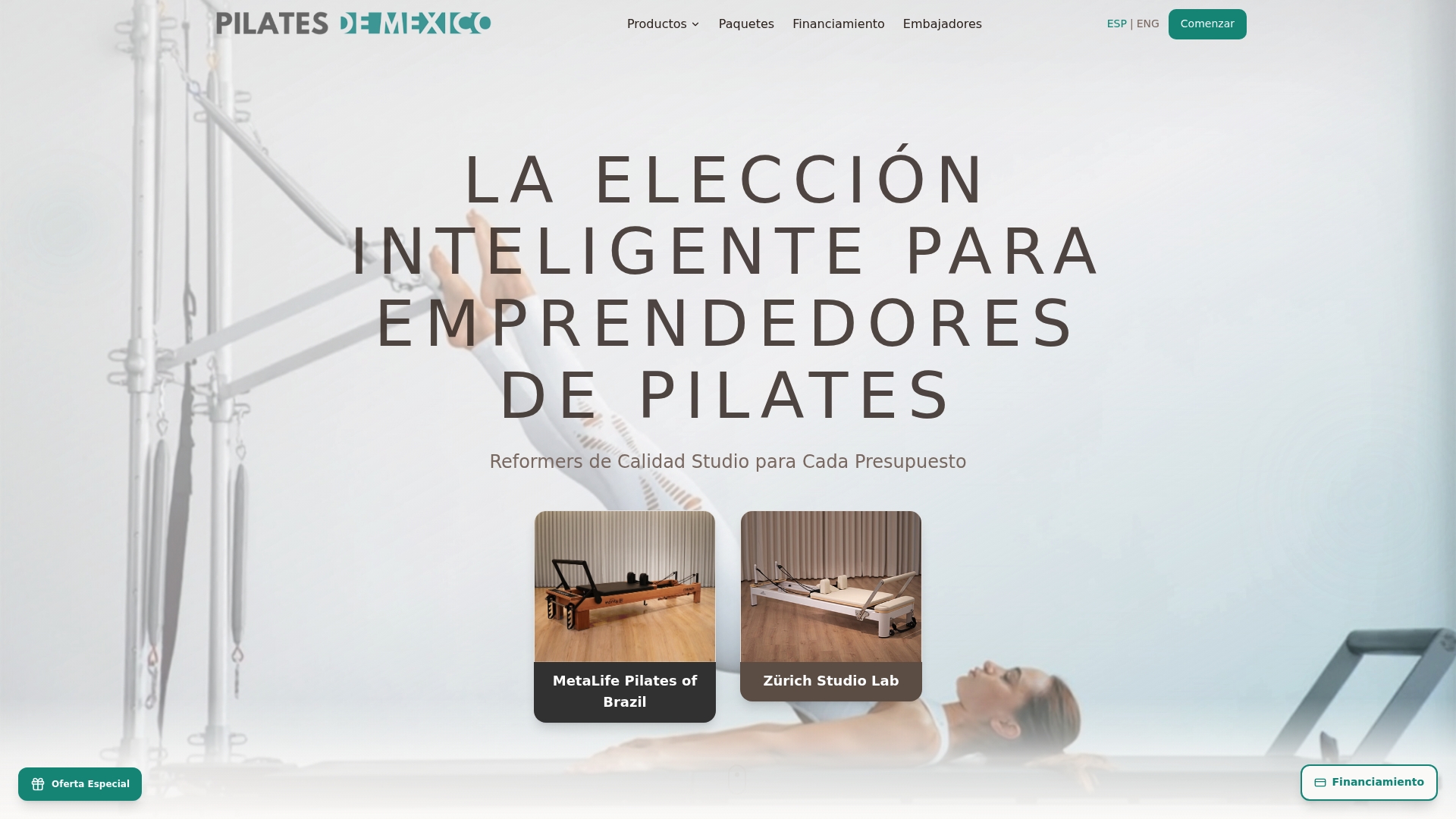
Our catalog includes ready-to-install equipment and accessories, packages that combine equipment and installation, and financing options to adapt the investment to your launch timeline.
Review the product catalog or consult the complete studio packages to see which configuration fits your gym.
Frequently Asked Questions
What happens if I combine Pilates with a gym?
Combining Pilates with gym training improves stability and technique in loaded exercises, because Pilates strengthens the core control that supports strength movements. It also expands your member base by attracting those seeking postural work or rehabilitation.
How to combine gym and Pilates in the same week?
It's common to schedule Pilates once or twice a week as a supplement to strength training, not as a substitute, as suggested by YoSoyDeporte. Micro-sessions of ten to twenty minutes before or after training also work well when time is tight.
What is the 3-3-3 rule for training?
There isn't a single, verified definition of the 3-3-3 rule applied to training; different sources use it with various meanings depending on the discipline. Before applying it to your Pilates programming, confirm the specific source that proposes it and its context of use.
Can Pilates be combined with weights?
Yes, Pilates and weight training complement each other well when scheduled on different days or blocks. Pilates improves stability and technique, which then transfers to loaded exercises.
Sources
- Obligations for gyms and salons in EdoMex | MESECI
- The 9 benefits of doing Pilates that transform body and mind - Infobae
- Pilates and gym: the perfect combination to boost your training - YoSoyDeporte