How to Integrate Pilates into a Hotel: Equipment, Regulations, and Costs

How to integrate Pilates into a hotel: equipment, regulations, and costs
To integrate a Pilates studio into a hotel, you need three things resolved before signing any order: a well-dimensioned space, professional equipment suitable for the guest profile, and valid liability insurance. The next practical step is to assess the space and consult with a specialized provider who understands both the equipment and financing. We offer packages and consulting designed to open and fill a studio without guessing as you go.
In summary:
- As a reference, 6 to 8 machines fit in 40 to 80 square meters; adjust the quantity to the hotel's occupancy and profile.
- The draft standard links minimum civil liability coverage to the number of rooms; the studio also needs an updated Internal Civil Protection Program.
- Before confirming the order, check the floor load capacity at each location and coordinate assembly, ventilation, lighting, and sound insulation with maintenance.
- Luxury hotels can prioritize the Infinity Line; high-turnover hotels can choose the Advanced Line and finance the purchase with staggered payments.
Table of Contents
- Technical checklist: what equipment and how much space do I need?
- Compliance, insurance, and civil protection affecting a hotel with a Pilates studio
- Installation and layout: how to arrange equipment and what to verify during construction
- Budget and financing options for equipping the studio
- Daily operation: hiring instructors and managing schedules
- Typical timeline and pre-opening checklist
- Strategies for integrating Pilates into hotel services
- Considerations for internal promotion targeting guests
- Adapting schedules to the dynamics of hotel guests
- Benefits of having Pilates in a hotel for the customer experience
- Provider's perspective: why choose a specialized partner
- Practical offer: packages, financing, and contact
- Frequently asked questions
- Sources
Technical checklist: what equipment and how much space do I need?
The starting point is the available area. As a practical reference, 6 to 8 reformers fit efficiently in 40 to 80 square meters when the layout is planned with clear aisles and instruction zones. A boutique hotel with low turnover can operate with fewer high-end machines; a property with higher occupancy usually benefits from more accessible units and rotating schedules.
Minimum equipment to open includes:
- Enough reformers for the expected occupancy, with maneuvering space around each one.
- Mats, Cadillac or combo chairs, and complementary accessories like bands, weights, and rings.
- Closed storage furniture to protect hardware and upholstery from the typical humid spa environment.
To decide between the premium Infinity line, built from certified Lyptus® FAS wood and designed to withstand years of daily use, or a more accessible option like the Advanced Line, it's worth considering the hotel's positioning: a luxury property justifies the expense for brand perception, while a high-volume hotel prioritizes durability at the lowest cost per unit.
Pro tip: Check the condition of hardware and pulleys quarterly; in a high-humidity hotel environment, premature wear reduces the equipment's resale value.

Compliance, insurance, and civil protection affecting a hotel with a Pilates studio
Before opening the studio, the hotel must review its insurance coverage. The draft Official Mexican Standard on civil liability insurance for lodging services requires lodging service providers to contract a policy with minimum coverage linked to the number of rooms, and to inform guests of its existence.
Key fact: the same draft standard conditions the minimum coverage limits to a percentage of rooms multiplied by the UMA value, meaning each property must calculate its own minimum based on its installed capacity.
Furthermore, the General Civil Protection Law mandates that properties such as permanent exercise rooms must have an Internal Civil Protection Program that identifies risks and evacuation routes.
For opening, it's advisable to gather:
- Current civil liability policy and proof of payment.
- Updated Internal Civil Protection Program for the new facility.
- Contracts with instructors or subcontractors that include a clause for their own current policy.
Installation and layout: how to distribute equipment and what to check during construction
The distribution of reformers determines both safety and class quality. Before moving a single machine, follow this order:
- Align reformers in rows or a semicircle with full visibility to the instructor, leaving adequate aisles for maneuvering between equipment, recommending a comfortable and safe distance.
- Verify that the floor supports the dynamic weight of the reformer in use and that anchors, when required by the model, are firmly secured on a level surface.
- Check ventilation, adjustable lighting, and acoustic insulation, because a hotel studio often shares walls with rooms or lounge areas.
- Coordinate installation with the hotel's engineering or maintenance department, and supervise assembly with personnel trained by the supplier.
Pro tip: Ask the construction team for a load test at the exact point where each reformer will go before confirming the final order; relocating a machine after installation costs more than adjusting the plan in time.
For those designing the space from scratch, a firm with experience in hotel interior design, such as BOOM Studio, can help resolve flow and materials before the equipment arrives.
Budget and financing options for equipping the studio
The budget for a Pilates studio in a hotel is comprised of several items: equipment cost, transportation and installation, VAT, local permits, and the aforementioned insurance policy. The investment varies depending on the range: opting for the Infinity Line implies a higher outlay per unit than choosing the Advanced Line, but usually results in lower long-term corrective maintenance.
To facilitate the decision without requiring full upfront payment, we offer direct financing and wholesale packages that allow for staggered payments as the studio begins to generate income.
Points to consider before finalizing the budget:
- Compare the total cost of the equipment against the projected revenue per class and per guest.
- Include initial staff training and signage material in the budget.
- Reserve a margin for frequently replaced accessories such as bands and straps.
Key fact: to estimate the break-even point, it's convenient to divide the total investment by the margin per class, a calculation detailed with real variables in our Pilates studio profitability analysis.
Daily Operations: Hiring Instructors and Managing Schedules
Hiring the right instructor defines the experience as much as the equipment itself. Follow these steps when assembling your class team:
- Look for recognized Pilates method certification with reformer and previous experience in hospitality or spa environments.
- During the interview, ask how they would adapt a class for a guest with no prior experience and limited time.
- Decide between direct hiring, a freelance per-class scheme, or subcontracting with an associated studio, depending on the expected guest turnover.
- Establish clear protocols with reception, housekeeping, and security for bookings, cleaning between classes, and after-hours access to the room.
- Schedule quarterly class quality evaluations and update staff training.
Our guide on hiring Pilates instructors delves deeper into profiles and interview questions applicable to this context.
Typical Timeline and Pre-Opening Checklist
From order to inauguration, the process usually follows this sequence:
- Space diagnosis and equipment definition: one to two weeks, handled by the hotel and the supplier.
- Equipment order and manufacturing or transfer: varies by product line and inventory availability.
- Installation and functional testing: coordinated between the installer and the hotel's maintenance department.
- Staff training and pilot class rehearsals before opening to the public.
- Opening with final checklist: current insurance policy, updated Internal Civil Protection Program, safety signage, and documentation displayed according to the Lodging Establishments Regulations.
Our guide on what equipment to buy first helps prioritize orders when the timeline is tight.
Strategies for Integrating Pilates into Hotel Services
A Pilates studio yields more when it becomes part of the hotel's commercial offering, not just an isolated amenity. Wellness packages combining an overnight stay with reformer sessions work especially well for guests traveling for leisure or corporate events with flexible schedules.
Low-season promotions can include a complimentary trial class on the first day and preferential rates for booking the rest of the stay. For long-term guests, an unlimited class package during the week often justifies the room price compared to options without this amenity.
It's also advisable to design specific experiences: a private sunrise class with a garden or pool view adds perceived value without requiring more equipment than what is already installed. These experiences are best marketed when the hotel's sales staff knows the exact script of the package and can offer it at the time of booking, not just upon guest arrival.
Integrating the studio with an existing spa, sharing reception and changing rooms, reduces operational costs and makes it easier for guests to discover the service without additional steps.
Considerations for Internal Promotion Aimed at Guests
Promotion of the studio begins within the hotel, before the guest even thinks about searching for it online. Lobby signage, in-room directories, and email booking confirmations are the most effective touchpoints because they reach the guest after they have already decided to stay.
Reception staff should be able to explain in one sentence what the studio includes and how to book a spot, without redirecting the question to another department. A courtesy pass for the first class, mentioned at check-in, generates product trial without additional acquisition cost.
Digital screens in common areas and the hotel's social media content work best when they show the actual studio with real instructors, not generic stock images. For business guests, a pre-arrival email with the class schedule available during their stay turns the studio into part of their travel planning, not a last-minute discovery.
Adapting Schedules to the Hotel Guest's Dynamic
The hotel guest has a different relationship with time than a regular neighborhood studio client: their stay is short, their schedule changes daily, and their willingness to commit to a fixed schedule is low. Therefore, class schedules should offer multiple short slots instead of a few long classes.
Early mornings work well for business guests seeking exercise before meetings, while mid-afternoon slots attract leisure travelers who prefer to move after a leisurely breakfast. Allowing last-minute reservations, instead of requiring sign-ups days in advance, respects the unpredictable nature of a hotel stay.
For group or convention guests, offering an exclusive closed class within the event's activity block usually generates better attendance than opening the spots for individual reservations. Maintaining flexibility in class duration, with twenty-five and fifty-minute versions, also helps guests find a slot that fits their actual itinerary.

Benefits of offering Pilates in a hotel for the customer experience
A well-operated Pilates studio changes the guest's perception of the entire hotel, not just the gym. Guided exercise during a trip addresses a need that guests often neglect when away from their routine, and solving it within the property prevents them from seeking that experience elsewhere.
For wellness-oriented hotels, the reformer studio complements the spa and healthy food offerings, building a coherent proposal that justifies higher rates compared to competitors without this amenity. Guests who take a class during their stay also tend to spend more time on hotel premises in general, which boosts consumption at the restaurant and spa.
For the hotel, the studio also represents a key differentiator that is easy to communicate in corporate and group bookings, where team well-being is part of the event selection criteria.
Provider perspective: why choose a specialized partner
A hotel opening its first Pilates studio shouldn't have to solve equipment, layout, and compliance decisions from scratch and alone, as a specialized distributor has already solved these with hundreds of studios. The real advantage of working with a partner like ours is not in the catalog, but in the fact that support, local warranty, and financing come packaged with the equipment, reducing the margin of error in the initial purchase.
— Armen
Practical offer: packages, financing, and contact
Equipping a hotel studio shouldn't mean choosing between paying everything upfront or postponing the project. We combine equipment, installation, and financing into a single process, so the purchase decision depends on the project, not on the liquidity available that month.
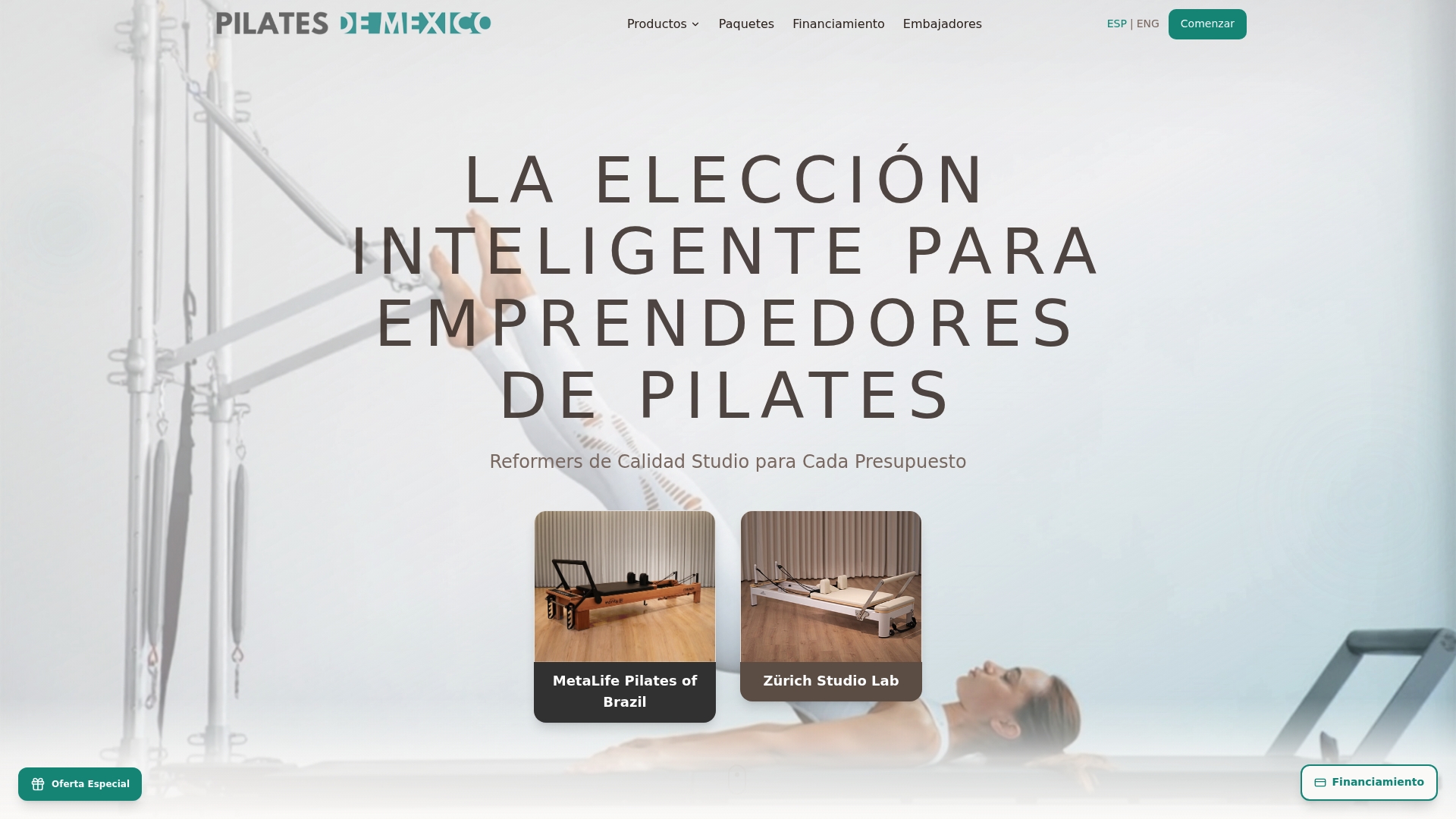
We work with:
- Complementary accessories to complete the studio without purchasing from another provider.
- Wholesale studio packages that bundle several reformers and accessories into a single quote.
| Hotel Need | What we solve |
|---|---|
| Choosing equipment range based on positioning | Catalog with Infinity Line and Advanced Line |
| Financing the purchase without decapitalizing the hotel | Direct financing |
| Purchasing multiple pieces of equipment in one process | Wholesale studio packages |
If you already have the space measured or need help defining it, the first step is to request a Pilates studio consultation and from there receive a quote tailored to your property at Pilatesdemexico.
Frequently Asked Questions
How many reformers does a hotel need to open a functional studio?
A practical reference is 6 to 8 reformers in 40 to 80 square meters (approx. 430 to 860 sq ft), adjusting up or down depending on the hotel's expected occupancy. Properties with lower guest turnover can operate well with a smaller quantity of high-end equipment.
What insurance does a hotel need to operate a Pilates studio?
The hotel must have a civil liability policy that meets the requirements of the Official Mexican Standard project for lodging services, with minimum coverage linked to the number of rooms. It must also inform guests of the existence of this policy.
Should a hotel buy premium or accessible equipment?
It depends on the property's positioning: a luxury hotel typically justifies the investment in the Infinity Line for durability and brand perception, while a high-volume property might prioritize the Advanced Line to equip more space within the same budget.
Are there financing options to equip the studio?
Yes, we offer direct financing and wholesale packages that allow you to scale equipment payments as the studio begins operation, instead of requiring the full outlay upfront.
What documents must the hotel display before opening the studio?
The hotel must display its internal regulations in accordance with the Regulations for Lodging Establishments, in addition to a current civil liability policy and an updated Internal Civil Protection Program for the new facility.
Sources
- DOF — Draft Official Mexican Standard on civil liability insurance for lodging tourism services
- General Civil Protection Law (extracts)
- Regulations for Lodging Establishments, Camps, and RV Parks (CDMX)