Electrical Safety Around the Reformer: A Guide for Studios in Mexico

Electrical Safety in the Reformer: A Guide for Studios in Mexico
A conventional Pilates reformer does not use electricity. It works with springs, pulleys, straps, and body weight. The electrical risk is not in the machine itself, but in the room where you install it: outlets, power strips, wiring, lighting, climate control, speakers, and the humidity generated by a full class. This guide explains what to check, what Mexican regulations require for a sports facility, and how to separate electrical safety from mechanical equipment safety.
In Summary
- The traditional reformer is mechanical equipment: it operates without electricity and relies on springs and body weight.
- Electrical risks in your studio stem from overloaded power strips, damaged cables, and unprotected outlets in damp areas.
- In Mexico, a public gathering venue for sports activities must submit a verification certificate to CFE confirming compliance with NOM-001-SEDE.
- A high-quality reformer reduces mechanical risk, but your facility defines the electrical setup: plan it before placing the equipment.
- Schedule regular inspections of both the electrical layout and the mechanical equipment, and log each one.
Table of Contents
- A reformer doesn't need power, but your studio does
- Where electrical risks arise in a reformer studio
- What to check weekly and monthly
- What Mexican regulations require from your studio
- Plan your studio to keep the floor clear
- Warranty and voltage fluctuations: what you need to know
- Mechanical safety: the other half of the inspection
- How to choose equipment that enhances your studio's safety
- Equip your studio with design-to-launch guidance
- Final checklist for your studio
- Frequently Asked Questions
- Sources
A reformer doesn't need power, but your studio does
The reformer was designed by Joseph Pilates as a mechanical piece of equipment. Its carriage glides on rails and resistance is provided by springs, as described in this guide to the reformer in the Spanish press. That means there is no motor, transformer, or power cord to inspect on the equipment itself.
So why do people search for “electrical safety” alongside “reformer”? Because anyone opening or renovating a studio faces practical questions:
- Where should I place outlets so cables don't run across the floor between reformers?
- Do I need an electrical permit to operate?
- What about air conditioning, sound systems, screens, and heaters?
- Does a faulty electrical installation void the equipment warranty or affect my commercial lease?
The answers lie in your studio layout and electrical setup. A premium reformer like those in the Infinity Line is chosen for durability and mechanical performance, and it belongs in a room where electrical elements stay out of the workout zone. That is the core principle of this guide: electricity stays on the walls, not on the floor.
Where Electrical Hazards Arise in a Reformer Studio
A Pilates studio might seem like a low-risk environment, but it brings together several factors that require careful management: barefoot clients, wet mops, sweat, plugged-in equipment, and multiple people moving around at the same time.

Electrical safety guidelines from a US university list the typical hazards found in any workspace: overloads from multiple adapters, electrical shock or fire hazards from damaged cords, and a lack of GFCI protection in damp environments. While these are US guidelines, the physical risks are identical in your studio. In Mexico, the functional equivalent of a GFCI is a ground-fault circuit interrupter (interruptor de falla a tierra), required as part of the safety protections outlined in official electrical installation standards.
High-Priority Areas
| Area | Typical Hazard | What to Do |
|---|---|---|
| Floor space between reformers | Extension cords causing tripping hazards and wear | Route outlets to walls or properly installed flush floor boxes |
| Outlets near showers, sinks, or water dispensers | Moisture and electrical shock | Have your electrician install ground-fault protection (GFCI) in these areas |
| Power strips and multi-outlet adapters | Overloading and overheating | Use one power strip per application; never daisy-chain them together |
| HVAC and heating units | High power draw on shared circuits | Install a dedicated circuit properly sized by a professional |
| Audio, screens, and device charging stations | Dangling cords in walkways | Place outside of active zones with securely fastened cables |
| Electrical panel | Blocked access, unlabeled circuit breakers | Keep it unobstructed and clearly label every circuit |
What to Inspect Weekly and Monthly
The checklist from the cited university's safety guidelines is straightforward and easily adapts to a studio environment. It calls for checking that outlets are undamaged, cords show no cracks or fraying, GFCI protection is installed in wet areas, and power strips are neither damaged nor overloaded.
Translated into your studio's daily and maintenance routines:
- Before opening (daily). Check the floor: no cord should cross a walkway or run underneath a reformer. Verify that lighting and climate control systems run without unusual noises or burning smells.
- Weekly. Inspect outlets, faceplates, and plugs: look for cracks, discoloration, or warmth to the touch. Unplug anything not actively in use.
- Monthly. Thoroughly inspect all cords and power strips, check the breaker panel (ensuring no breakers trip frequently), and check audio and climate control equipment.
- Whenever you change the floor plan. If you rearrange reformers or add a tower, double-check cord routing throughout the space.
If something fails, take it out of service immediately and call a licensed electrician. Avoid makeshift repairs—electrical work should always be handled by qualified professionals.
What Mexican Regulations Require for Your Studio
The standard reference is NOM-001-SEDE, Mexico’s official standard for electrical installations (utilization). The version cited in this analysis is NOM-001-SEDE-2012. The standard itself clarifies that it is not intended as a design guide or an instruction manual for untrained individuals. In other words, you don't read it to handle the wiring yourself, but rather to hold a certified professional accountable. Before hiring, verify with your inspection agency (Unidad de Verificación de Instalaciones Eléctricas, or UVIE) which version is currently enforced for your commercial space.
Two specific points from the standard are especially relevant for a Pilates studio:
- Environment. All electrical equipment must be selected and installed so that it safely withstands the environmental conditions of its location. In a room with sweat, disinfectants, and humidity, this matters much more than in an office setting.
- Verification Certificate. According to the CFE contracting website, businesses operating as public assembly areas designated for sports activities must provide a verification certificate issued and signed by an inspection unit approved by the Ministry of Energy, certifying compliance with NOM-001-SEDE.
How to Navigate the Process Without Surprises
- Finalize your commercial space before purchasing equipment: determine square footage, ventilation, and available electrical capacity.
- Hire a licensed electrician or engineer who understands the standard and can design the electrical project.
- Request an inspection from an approved verification unit and keep the certificate with your studio records.
- Check the CFE website for current service contract requirements, as regulations can change.
If your location previously operated as a gym, clinic, or studio, ask the property owner for the previous verification certificate. If you are starting from scratch, include this step in your opening timeline. Among the common mistakes made by new owners is leaving bureaucratic paperwork for last—and electrical installation is often the one that takes the longest.
Plan the Room to Keep the Floor Clear
The best electrical safety starts with design. Before placing your first reformer, draw a floor plan with three layers: equipment, traffic flow, and outlets.
- Separate the reformer area from outlet zones. Reformers require clear perimeter space for getting on, off, and adjusting springs. Outlets and plugged-in equipment belong along the walls.
- Think about climate control. A properly sized HVAC system eliminates the need for portable fans and extension cords in the middle of the workout floor.
- Dedicate a charging and audio station. A single control point for music and devices prevents loose, tangled cables.
- Pay attention to signage. A visible electrical panel, a clear emergency exit, and a first aid kit must have legible markers. You can find practical ideas in our guide on Pilates studio signage.
- Manage acoustics without improvised wiring. If you are adding soundproofing or audio equipment, consult our guide to reducing noise in a studio and coordinate any changes with your electrician.
Warranty and Voltage Fluctuations: What You Need to Know
Even if a reformer does not use electricity, your facility's wiring does affect what is covered under warranties for plugged-in equipment. For example, an extended warranty from a Mexican fitness equipment distributor typically excludes damage caused by improper voltage, defective electrical installations, or power surges. This is standard across gear with electrical components, and it is worth reading carefully for any purchase: everything electrical in your space (screens, speakers, air conditioning) depends on your installation being up to code.
For a mechanical reformer, what matters is entirely different: materials, hardware, structural support, and replacement parts. Before purchasing, check out our guides on what to look for in a Pilates equipment warranty and after-sales support.

Mechanical Safety: The Other Half of the Inspection
If your studio only uses traditional reformers, your most critical inspections are mechanical. A flawless electrical setup cannot make up for a worn-out spring. Here is a sensible visual and functional inspection routine based on standard studio practices:
- Springs. Look for deformities, rust, loose hooks, or loss of tension. Replace them in full sets when they show wear. Here is how to replace reformer springs.
- Ropes and straps. Check for fraying, unraveled stitching, and wear at anchor points. Any damaged component must be removed before the next class.
- Pulleys and carriage wheels. They should glide smoothly without catching or making noise. Regularly clean any debris off the rails.
- Hardware and fasteners. Tighten anything that loosens from daily use. Stainless steel hardware better resists sweat and cleaning solutions.
- Headrest, shoulder rests, and footbar. Confirm that adjustments engage properly and lock into every position.
- Upholstery. Cracks trap moisture and dirt, compromising hygiene.
For a complete schedule, check out maintenance that prevents costly repairs and, to keep spare parts on hand, our guide to reformer replacement parts. Class volume sets the pace: a boutique studio with moderate use won't require the same maintenance frequency as a facility running sessions from morning until night. If you have questions about day-to-day operations, our reformer room safety operational guide covers supervision, room capacity, and client instruction.
How to Choose Equipment That Enhances Your Studio's Safety
When comparing reformers, electrical safety isn't an equipment feature, but components that reduce day-to-day risk certainly are. At Pilates de México, we work with the MetaLife line, crafted from certified Lyptus® FAS wood, stainless steel hardware, and a frame engineered for over 200 exercises and years of daily classes. We also offer accessible options so equipping your first studio doesn't have to start at the highest price point.
Durable equipment streamlines your inspection routine: less play, fewer emergency adjustments, and less studio downtime. If you want to know how long an investment like this can last, read about professional reformer durability.
Outfit Your Studio with Expert Guidance from the Design Stage
At Pilates de México, we support you from studio layout planning all the way through professional equipment installation, backed by a local warranty and tailored financing. Discover our Infinity and Advanced line models, explore our accessories, or look into our financing options to launch or expand your studio with minimal risk.
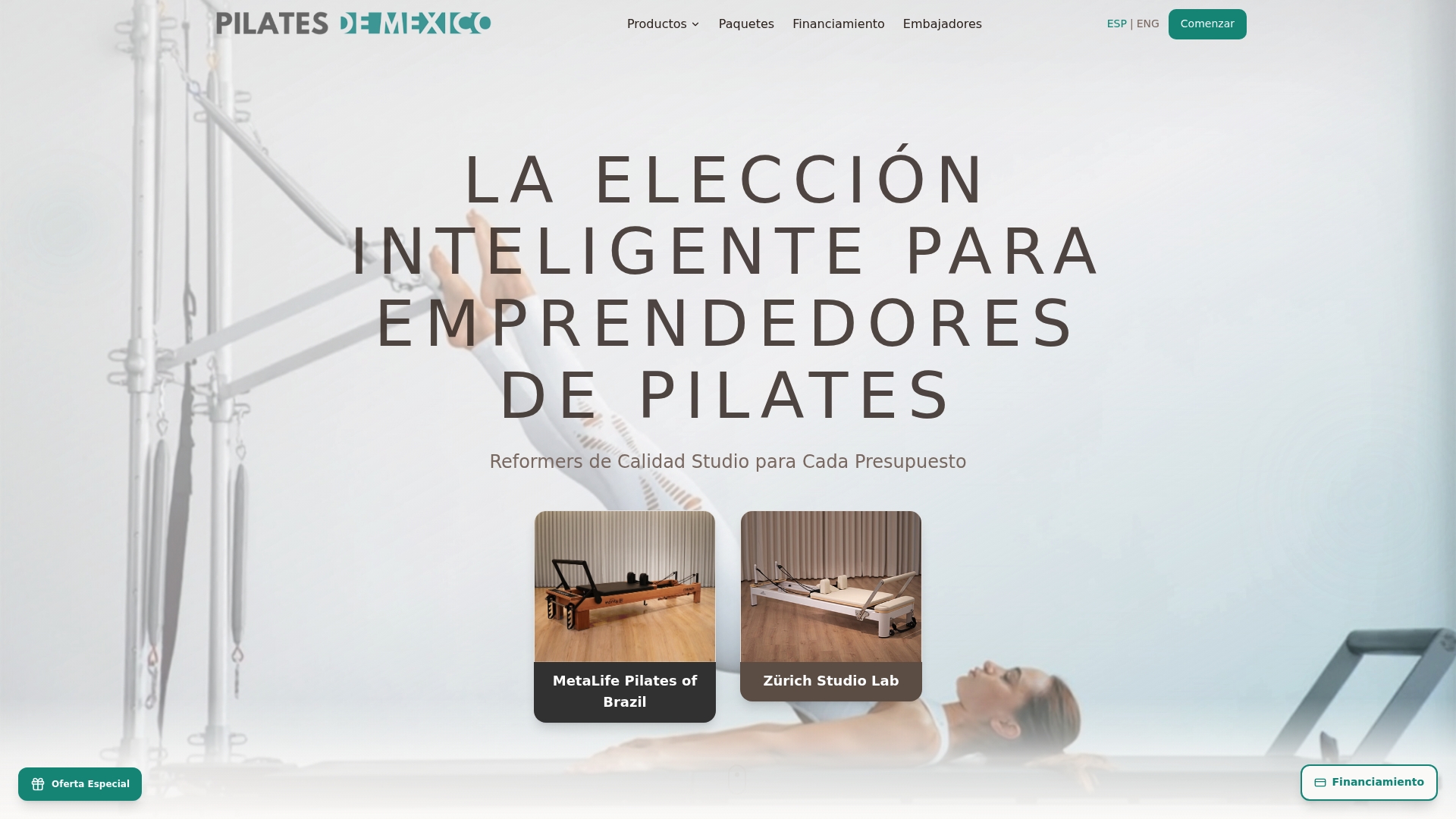
If you're deciding between a standalone reformer or one with a tower, the Infinity Reformer with Tower broadens your exercise repertoire without taking up extra floor space. For more compact studios, check out the Advanced Reformer.
Final Checklist for Your Studio
- Studio layout with perimeter outlets and cable-free floors.
- Electrical compliance inspection certificate (dictamen de verificación) for the commercial space, if required for your activity, with a copy on file.
- Adequate protection in moisture-prone areas, specified by a qualified electrician.
- Accessible electrical panel, labeled circuits, and no daisy-chained power strips.
- Written daily, weekly, and monthly routines, with designated personnel and maintenance logs.
- Mechanical reformer inspection: springs, ropes, pulleys, hardware, and upholstery.
- Equipment backed by local support, warranty coverage, and readily available replacement parts in Mexico.
Frequently Asked Questions
Does a reformer require an electrical connection?
No. A conventional reformer is purely mechanical equipment operated by springs and body weight, without electricity. Only the room housing it requires electrical installations: lighting, climate control, sound systems, and wall outlets.
What standard governs electrical installations for a Pilates studio in Mexico?
The governing standard is NOM-001-SEDE, covering electrical installations (utilization). For public gathering venues hosting sports and fitness activities, CFE requires an electrical compliance certificate (dictamen de verificación) issued by an inspection unit certified by the Ministry of Energy (Secretaría de Energía). Check with them to confirm the current active version.
Can I use extension cords and power strips between reformers?
It's best to avoid it. Cords on the floor create tripping hazards and wear down from foot traffic, and overloaded power strips are a fire hazard. Ask your electrician for properly installed wall outlets or floor boxes.
How often should I inspect the studio?
Perform a visual inspection daily, check outlets and plugs weekly, and inspect cables, power strips, and the electrical panel monthly. Adjust the frequency based on how many classes you teach. Call a qualified electrician immediately if you notice any burning smell, abnormal heat, or tripping circuit breakers.
Does electrical safety affect my equipment's warranty?
It can affect equipment with electrical components, as some warranties exclude damage caused by improper voltage or faulty installations. Review the terms before purchasing and consult our guide on Pilates equipment warranties in Mexico.
Sources
- A Guide to Reformer Pilates: The Favorite Workout (El Mundo)
- Electrical Safety Guidelines (UC San Diego)
- New Service Contract (CFE)
- Official Mexican Standard NOM-001-SEDE-2012