Costs to Open a Pilates Studio in Mexico
Costs to open a Pilates studio in Mexico
A basic mat studio can start from $150,000 MXN; a small reformer studio (6-8 machines) ranges from $500,000 to $900,000 MXN; and a premium reformer studio with 10-12 units can exceed one and a half million. According to data from Amyra, the four categories that most influence this range are:
- Equipment: reformers and accessories, the most variable category
- Premises adaptation: construction, flooring, lighting, and ventilation
- Rent and deposit: generally two or three months in advance
- Working capital: a minimum of three months of fixed operating expenses
Set aside at least three months of fixed costs as a buffer before opening. Online figures are starting points, not budgets. Quoting each item locally can change the total by 30% or more.
Key points
| Point | Details |
|---|---|
| Initial investment ranges | Mat: $150,000–$373,000 MXN; small reformer: $565,000–$1,175,000 MXN; premium: up to $1,720,000 MXN. |
| Minimum working capital | Reserve at least three months of fixed costs before opening to cover the ramp-up period. |
| Mandatory procedures | Registration with SAT, municipal license, civil liability insurance ($8,000–$20,000 MXN/year), and land use verification. |
| Break-even point | With 10 reformers and a $350 MXN ticket, you need an occupancy of 25–33% to cover operating costs. |
| Pilates de México | Offers MetaLife reformers and accessible lines, full studio packages, direct financing, and opening consulting. |
Table of contents
- Which studio model fits your budget?
- Breakdown of initial costs by studio type
- How much does it cost to operate the studio month by month?
- Mandatory procedures and insurance to operate in Mexico
- How many square meters do you need and how does rent affect it?
- What equipment is available in Mexico and how much does it cost?
- Budget template for a 10-reformer studio
- What no one tells you about opening a Pilates studio
- Pilates de México: equipment, packages, and financing in one place
- Sources
Which studio model fits your budget?
The three dominant models in Mexico differ more in average ticket and recovery time than in daily operation.
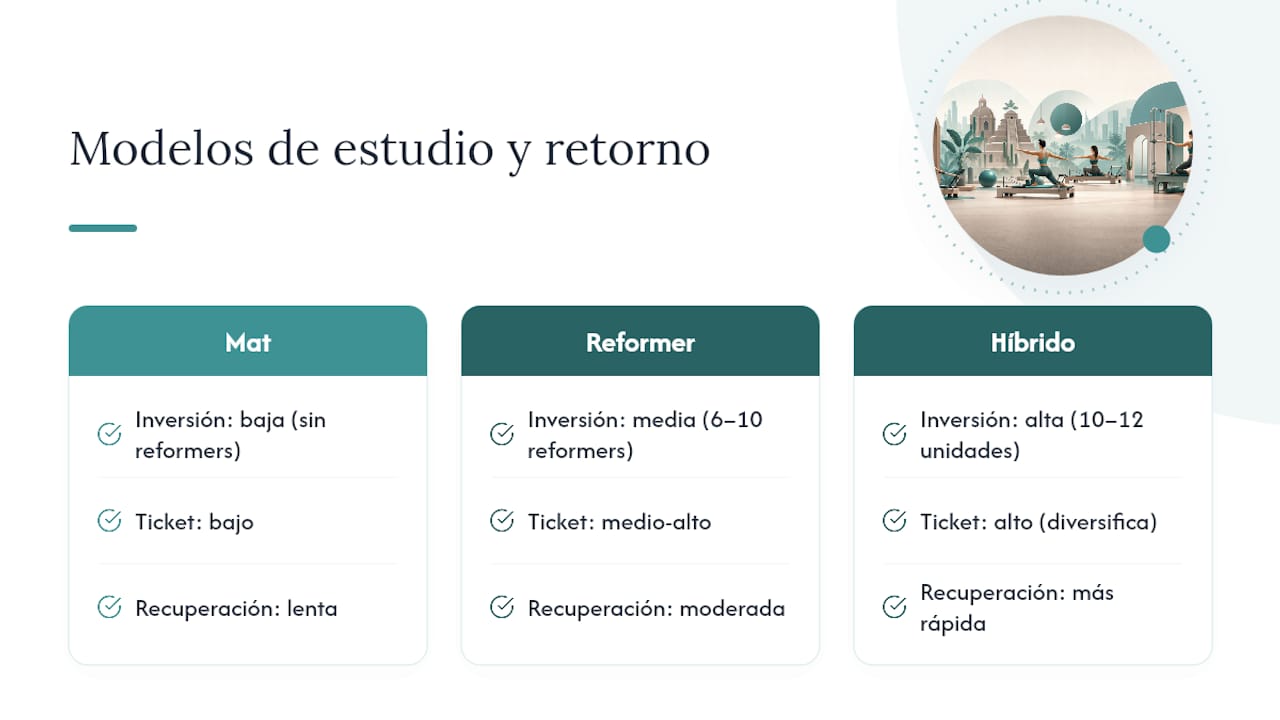
Mat studio. Without reformers, the equipment cost drops drastically: mats, blocks, bands, and accessories. The initial investment focuses on adaptation and marketing. The ticket per class is usually lower, requiring a higher volume of students to reach the break-even point. Ideal for instructors starting with a limited budget or wanting to validate demand before buying machines.
Reformer studio (6-10 units). The most common model in medium and large cities. The average ticket per class is higher, which improves the margin per student.
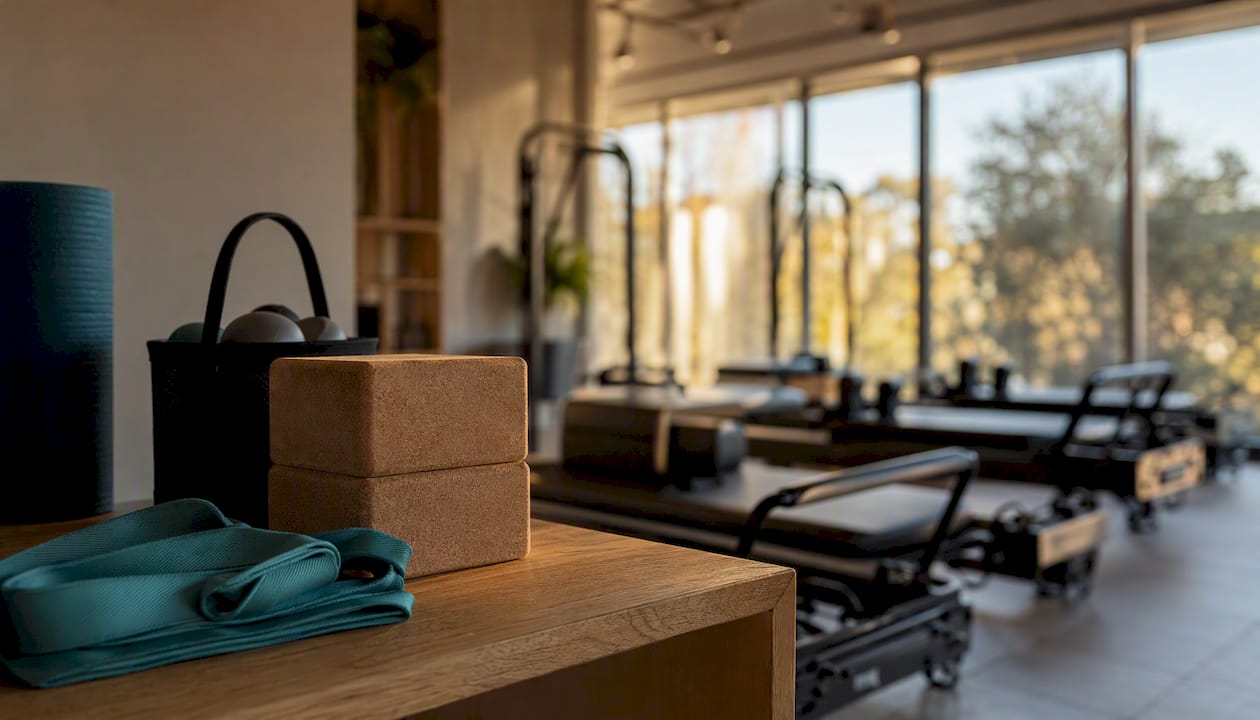
Hybrid or premium studio (10-12 units + complementary equipment). Adds reformers with chairs, barrels, and towers. Allows for diversification of services, such as physical therapy or functional training, which increases the average ticket and reduces dependence on a single format. Diversifying income with related therapies improves space utilization and shortens the investment recovery time.
Breakdown of initial costs by studio type
The mandatory line items are the same for all models; what changes is the amount of each one.
Mandatory line items:
-
Equipment (reformers, accessories, mats)
-
Premises adaptation (flooring, paint, lighting, ventilation, bathrooms)
-
Reception and changing room furniture
-
Booking system and point of sale (software)
-
Insurance and legal procedures
-
Launch marketing
-
Working capital (minimum three months of fixed expenses)
-
Sound and stage lighting (premium)
-
Signage and interior branding
-
Security cameras
-
Complementary equipment: Wunda chairs, barrels, towers
The following table shows estimated ranges in MXN for three studio profiles. Use them as a starting point and adjust them with real quotes in your area, as recommended by Creare Ride.
Direct financing with the supplier preserves cash flow during the first months, when occupancy is still growing.
How much does it cost to operate the studio month-to-month?
The operating costs of a 10-machine reformer studio in a medium-sized Mexican city are distributed approximately as follows:
- Monthly rent: varies by area and square footage
- Payroll (1–2 instructors + reception): varies by size and staff
- Utilities (electricity, water, internet): $4,000–$8,000 MXN
- Equipment maintenance: variable cost depending on use and contracts
- Booking and point-of-sale software: variable cost depending on provider and features
- Insurance: monthly cost based on annual policy
- Recurring marketing: depends on strategy and reach
- Estimated monthly total: varies depending on the above variables
Revenue projection for 10 reformers. With an average ticket per class, four daily classes per machine, and adequate occupancy, gross revenues can cover the high range of operating costs with a positive margin.
The break-even point is reached when revenues equal fixed and variable costs. With operating costs of $90,000 MXN per month and a ticket price of $350 MXN, you need to sell approximately 257 monthly classes, or about 10 daily classes distributed among your 10 machines. A well-managed studio can report net margins of between 25% and 40% on sales once operations are stabilized.
Mandatory procedures and insurance to operate in Mexico
Operating without the proper permits exposes the business to fines and closures. The process has concrete steps and an estimable cost.
- Registration with SAT: registration as a sole proprietor with business activity or a legal entity (S.A. de C.V. or S.A.S.). The simplified trust regime (RESICO) may be suitable for small studios with annual revenues of less than $3,500,000 MXN. The procedure is free and can be done online or at a SAT module.
- Land use permit: before signing the lease agreement, verify that the premises have a land use compatible with sports or wellness activities. The cost varies by municipality: in cities like Aguascalientes, Guadalajara, or CDMX, it ranges from $1,500 to $8,000 MXN.
- Municipal operating license: process with the corresponding city council. Requires land use permit, official identification, articles of incorporation (if applicable), and proof of business address. Estimated cost: $2,000–$6,000 MXN depending on the municipality.
- Sanitary notice to COFEPRIS: applies when the studio offers services with physical contact (massages, physiotherapy). For pure exercise studios, it is generally not required, but it is advisable to verify with the local COFEPRIS delegation.
- Civil liability insurance: covers student injuries within the premises. The annual cost ranges from $8,000 to $20,000 MXN depending on the size of the studio and the services offered. It is not optional if you want to operate with legal peace of mind.
- Registration with IMSS: mandatory from the first formal employee. The cost depends on the base contribution salary of each worker.
Before signing the lease agreement, confirm the land use with the municipality, review the clauses for rent increases and penalties for early termination, and verify that the premises have sufficient electrical capacity for the reformers and the air conditioning system.
How many square meters do you need and how does it affect rent?
The practical rule in the industry is to allocate between 12 and 15 m² per reformer, including circulation space between machines. A room with 10 reformers requires between 120 and 150 m² just for the practice area. Add reception (10–15 m²), changing rooms (15–25 m²), and storage (5–10 m²): the minimum recommended total is 150–200 m².
- Mexico City (premium neighborhoods like Polanco, Condesa, Santa Fe): $350–$700 MXN/sqm per month
- Mexico City (mid-range areas): $150–$300 MXN/sqm
- Guadalajara and Monterrey (commercial areas): $120–$280 MXN/sqm
- Medium-sized cities (Aguascalientes, Querétaro, León): $80–$180 MXN/sqm
A 160 sqm space in a commercial area of Aguascalientes can cost between $12,800 and $28,800 MXN per month, while the same size in Polanco can exceed $80,000 MXN. Location not only determines rent: it also defines the client profile, the price you can charge, and how quickly you'll fill classes. A neighborhood with a high concentration of professionals aged 30–50, with medium-high purchasing power, is the environment where the reformer model works best.
Investing in the space experience, such as warm lighting, efficient ventilation, and careful interior design, allows you to charge premium prices and improves student retention. This investment should be calculated as part of the initial adaptation budget, not as a subsequent expense.
What equipment is available in Mexico and how much does it cost?
The price of a professional-grade reformer ranges from approximately $54,000 to $126,000 MXN per unit, before tariffs and freight.
Options available in Mexico:
- Accessible line (manufactured in China or other countries): $45,000–$70,000 MXN per unit. Suitable for studios starting out and needing to control initial investment. Quality varies; ask for a written warranty and check for spare parts availability in Mexico.
- Mid-range professional line: $70,000–$100,000 MXN per unit. Better finish, greater durability, and more accessible technical support.
- Premium MetaLife line: constructed with certified Lyptus® FAS wood and stainless steel hardware, designed to withstand more than 200 exercises and years of intensive daily use. The MetaLife Reformer Advanced and Infinity line represent the upper end in durability and resale value.
New vs. Used vs. Financing:
- Buying new with a warranty eliminates the risk of early failures and protects cash flow with available spare parts.
- Used equipment can reduce initial cost by 30–40%, but without warranty and with uncertain lifespan; check usage history before buying.
- Direct financing with the supplier distributes the cost into monthly payments, preserving capital for marketing and operations during the critical first months.
Professional tip: Ask the supplier to confirm in writing the availability of spare parts in Mexico and the response time for technical service. A reformer out of service for a week during high season can cost you more than the price difference between lines.
When purchasing full studio packages, volume discounts can significantly reduce the unit cost compared to individual purchases. Include necessary accessories (mats, bands, jump boards) in the initial budget to avoid surprises.
Budget template for a 10-reformer studio
Break-even and recovery calculation:
With monthly operating costs of $90,000 MXN (optimistic scenario) and a $350 MXN ticket, you need 257 classes per month to cover expenses.
Three concrete actions before committing capital:
- Get quotes for at least three suitable commercial spaces and confirm land use.
- Request three reformer quotes (one accessible, one mid-range, and one premium) to compare total cost including freight and warranty.
- Consult the cost of the operating license in your municipality before choosing the final location.
What no one tells you about opening a Pilates studio
The most expensive mistake entrepreneurs make is not choosing the wrong reformer. It's arriving at opening day without confirmed students.
The result is a beautiful studio that takes six months to fill its first classes, while fixed costs continue to run. Pre-launch marketing, waiting lists, free trial classes, and alliances with neighborhood doctors or physical therapists should start at least eight weeks before opening the doors.
Another recurring mistake is budgeting with generic internet figures without getting local quotes. As Connect Gym points out, the difference between an online figure and the actual price in your area can exceed 30%. A rent that appears as $20,000 MXN in a blog could be $45,000 MXN in the neighborhood you're interested in.
Regarding equipment: buying the most accessible line is not a mistake if the savings are redirected to marketing and working capital. Buying the most expensive line without confirmed students is. The right equipment is what you can afford without draining your operating cushion. When the studio is full and you want to grow, you can always upgrade.
Pilatesdemexico: equipment, packages, and financing in one place
Equipping a reformer studio in Mexico involves real friction: coordinating imports, tariffs, freight, warranties, and technical service from scratch consumes time and money you could invest in filling your classes.
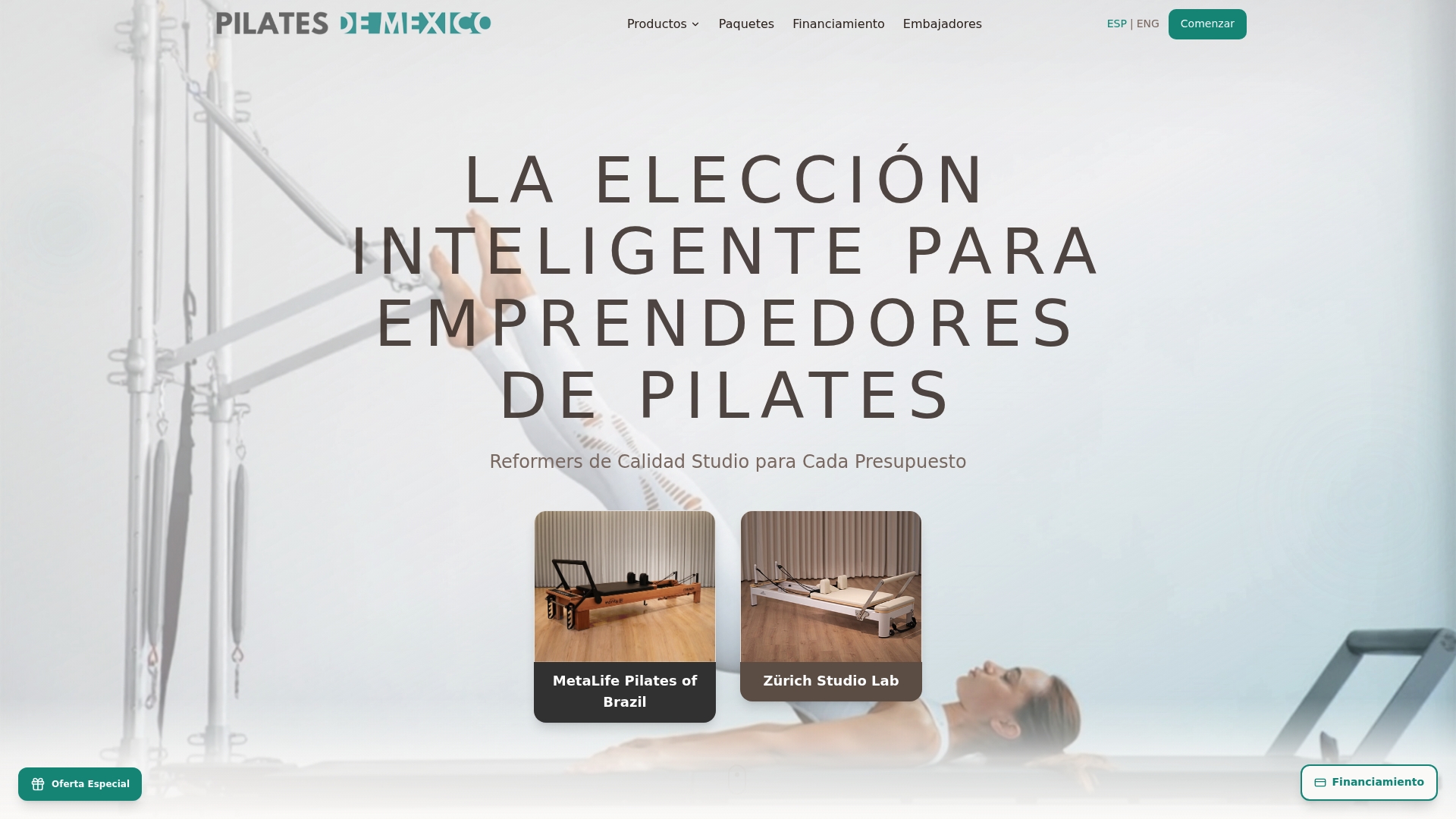
Pilatesdemexico solves this with a catalog ranging from accessible lines to the premium MetaLife line, with full studio packages that include volume discounts, and with direct financing options that distribute the cost of reformers into monthly payments. Review the complete catalog and request a quote at Pilatesdemexico.
Sources
- How to open a Pilates or Yoga studio in Mexico | Amyra
- How much does it cost to open a gym in Mexico in 2026 | Connect Gym
- How much does it cost to open a Pilates studio? Profitability | Instituto DYN
- How much does it cost to open a Pilates studio in Mexico? | Creare Ride
- Guide to Starting a Yoga/Pilates Studio Business: Investment, Recommendations, and Strategies | Negocios Rentables Hoy
This article provides general information and does not substitute the advice of a qualified financial advisor. Consult a qualified financial professional about your particular case before acting on this content.
Recommendation
- Pilates Certification in Mexico — Instructor Training Programs
- Pilates de Mexico — Professional Pilates Equipment
- Pilates de Mexico — Professional Pilates Equipment
- Balanced Body Zürich Labs Reformers — Pilates de Mexico
Why studios across Mexico equip with Pilates de México
- MetaLife reformers — our flagship line: manufactured in Brazil from Brazilian hardwood and the number one selling Pilates Equipment brand in all of South America, featured in over 40,000 studios. Pilates de México is the exclusive distributor of MetaLife in Mexico: local stock, local technicians and a 3-year frame warranty.
- Advanced and Infinity Reformers by MetaLife — the two MetaLife lines most studios in Mexico choose, with towers, accessories and studio-grade upholstery.
- Zürich Labs — our accessible alternative when the budget is tighter.
- Studio packages — complete studio setups, with discounts on packages of 5+ reformers.
- Financing — equipment financing so your opening budget goes further.
- Certifications and workshops — instructor training and continuing education.
We own and operate studios throughout Mexico, so the advice comes from operators, not resellers. Request a quote.