Client Retention in a Pilates Studio: A Practical Guide

Client Retention in a Pilates Studio: A Practical Guide
Client retention in a Pilates studio is won on three fronts: the first few weeks for every new student, early detection of those who start missing classes, and an experience that gives them reasons to stay (community, schedules that fit, and a comfortable space). Here is how to measure it, what to do at each stage, and how to design packages and cancellation policies that protect attendance without driving anyone away.
In Summary
- Students rarely leave out of the blue: first they book less often, and dropping out is simply the end of a process. Take action on the first missed class, not at the cancellation.
- The first 30 days and the second booking make or break the outcome: prepare the first class well and schedule the second before the student walks out the door.
- Community (groups by schedule or skill level, challenges, events) makes canceling harder than continuing to show up.
- Track monthly churn and cohorts by sign-up month. Without data, you won't know if the issue lies in onboarding or down the road.
- A comfortable, well-equipped studio with available capacity sustains everything else.
Table of Contents
- Why students leave a Pilates studio
- The first four weeks: onboarding that retains
- Spot who is drifting away before they cancel
- Community: the reason to stay
- Instructors, facilities, and experience
- Packages, memberships, and schedules that encourage consistency
- Cancellation policies that protect capacity without penalizing
- How to measure retention
- Why equipment also drives retention
- 90-day action plan to get started
- Frequently asked questions
- Sources
Why Students Leave a Pilates Studio
Before designing tactics, it pays to understand the pattern. An analysis of gyms in Mexico explains that a member rarely stops training overnight: first they work out less, switch times, stop booking, and lose touch with instructors. It points out seven main causes:
- Working out never became a habit.
- They do not perceive progress.
- The schedule no longer works for them.
- The experience involves too much friction.
- They did not find their place in the space.
- The price no longer justified the usage.
- Life happened: moving, injury, work, travel, pregnancy, or finances.
In Pilates, factors unique to the limited-capacity format come into play. An industry guide highlights busy weeks, sold-out packages, overcrowded regular time slots with no alternatives, and feeling unrecognized by the instructor. Another points out that difficult bookings, long waitlists, and limited instructor availability also drive clients away.
There is one stat that shifts the focus: according to a booking software blog, 23% of membership cancellations happen because clients stop using their pass, not because they are dissatisfied. They gradually disengage until the monthly charge is hard to justify. The practical takeaway: don't wait for complaints. Monitor attendance.
What the Research in Mexico Shows
An academic study of eight fitness clubs in Acapulco, involving 192 members, found that 63% stayed for seven months at most. The management factors analyzed included management, service, communication, human resources/coaches, and facilities. The same study reports that in one of the clubs, average retention increased from 50% in 2016 to 72% in 2017. While these are gym statistics, not Pilates, they show that retention can improve when actively managed.
The First Four Weeks: Onboarding That Retains Clients
The first 30 days carry the highest risk of drop-off, but they also represent the greatest opportunity to build a habit, according to a Mexican retention guide. The core goal is simple: get the client to book their second visit.
Before the First Class
Send practical instructions: what to wear, where to park, what time to arrive, and what to expect. This information reduces anxiety for those who have never stepped on a reformer. A studio onboarding guide also recommends that the instructor learn the client's name and a relevant personal detail, such as a past injury or a fitness goal.
During and After Class
- Ask about the student's goal and reference it during the session: “Today we’re working on the lower back, just like you mentioned.”
- Introduce the new student to someone else in the group.
- Book the second class before they leave, with the same instructor and time slot if possible.
- Send a warm, personal message a few hours after class.
- If there is no second booking by day five, follow up again. The same guide notes that suggesting the same instructor and schedule lowers the friction of returning.
Weeks Two to Four
A Brazilian onboarding framework suggests combining WhatsApp follow-ups, introductions to peers, event invitations, a mini-reassessment, and a plan for the next three months. The goal is to move from welcoming clients to building a sense of belonging, while having an explicit conversation about progress. That mini-reassessment directly tackles one of the main causes of churn: not seeing results.
Spot Drifting Clients Before They Cancel
Attendance tracking is the most cost-effective retention tool available. A report on Mexican gym owners reveals broad agreement that the key is setting an alert when someone is absent for 7 to 10 days. It recommends reaching out to anyone who hasn't attended in more than 10 days, asking why they stopped coming, and offering genuine solutions—such as adjusting their routine or switching class times.

Early Warning Signs to Watch For
According to BookYourMat, the signs include:
- A dip compared to that person’s typical attendance pace.
- Consecutive late cancellations.
- A class package balance nearing expiration.
- Losing their anchor time slot—the specific session the client always used to book.
Compare each client against their own baseline, not just the studio average. Someone who used to come three times a week and now comes once is at risk, even if they're still above average. Another guide adds that having no upcoming bookings and no active class pack or membership flags clients most likely to leave within the next two to four weeks.
A simple three-touchpoint protocol
- Day 7 of absence: a short, personal message. Avoid sounding like a debt collector: “We missed you in the 7:00 AM class. Is everything okay with your schedule?”.
- Day 10 to 14: a call or message from the instructor with a concrete proposal, such as a different schedule, another location, or a welcome-back class.
- Before the package expires: a reminder showing their remaining class balance and a renewal proposal tailored to their actual attendance frequency.
Keep a record of the reason for each absence. In just a few weeks, you will see whether the issue is scheduling, pricing, or motivation.
Community: the reason to stay
A Mexican guide sums it up best: people don’t cancel communities. If your studio is just a room with equipment and classes, it’s easily replaceable. If a client has friends there, feels like part of something, and knows people are expecting them, canceling becomes much harder.
A marketing guide for studios in Mexico suggests monthly social events, WhatsApp groups organized by level or class time, community challenges, and publicly celebrating milestones. Another collection of best practices adds groups by level, monthly challenges, introducing new clients, and buddy systems.
A two-tier WhatsApp approach
A Latin American guide proposes combining individual messages for absences, welcomes, and milestones with a community group for announcements and events. The booking software provides structure; WhatsApp brings the human touch. Keep the group run by clear rules: announcements, events, and celebrations, without overwhelming members.
Low-cost ideas
- A 30-day challenge with an attendance goal (for example, 12 classes) and a simple reward.
- Bring-a-friend class: each client brings a guest, and the studio attracts new clients organically through its own community. If you want to dive deeper into acquisition, check out our guide on marketing for Pilates studios.
- Milestone celebrations: 50th class, 100th class, one-year anniversary.
- Introducing every new client at the beginning of class.
Instructors, facilities, and experience
Clients stick with people and spaces where they feel comfortable. Two of the key factors from the Acapulco study—human resources/coaches and facilities—point directly to this.
Instructors. An instructor who remembers past injuries, personal goals, and progress retains clients better than any discount ever could. This requires a stable teaching team with enough time to truly know their students. Our guide on how to hire Pilates instructors can help.
Atmosphere. Noise, lighting, and overall comfort define the experience. Discover how to reduce noise in a studio without costly renovations and how lighting scenes elevate the client experience.
Equipment. A sturdy, smooth, silent reformer that is easy to adjust builds confidence from the very first session. Furthermore, having enough machines prevents waitlists—one of the key friction points that drives clients away. Below, we explain how we solve this at Pilates de México.
Packages, memberships, and schedules that keep clients coming back
Your pricing and packaging structure is also a powerful retention tool. A Mexican blog on class packages highlights three main formats: single drop-in classes, class packages with expiration dates, and recurring memberships, which can be unlimited or offer a set number of classes per period. Their example aligns package size with attendance frequency: four classes for once-a-week clients, eight for twice a week, and twelve to thirteen for three visits per week over a 30-day period.

As a market benchmark, a Mexican studio advertises on its packages and plans page a single class for $380 MXN valid for 16 days, and an unlimited 30-day plan for $4,200 MXN without auto-renewal, allowing up to one class per day and access across multiple locations. These reflect prices from October and November 2026 and are subject to change.
How to design your offering
- Match the package to real attendance frequency. A package that is too large expires unused and leaves the client feeling like they wasted their money.
- Set a reasonable expiration period. Another Mexican studio sets expiration windows of 7 to 60 days depending on the package, counting from the first booked class with no refunds for unused sessions. Define something similar, but explain it clearly prior to purchase.
- Provide an upgrade pathway. Move from single drop-ins to a four-class pack, then to eight or an ongoing membership, based on the frequency the client is already maintaining.
- Offer scheduling alternatives. If their usual time slot fills up, suggest a nearby alternative before the client perceives it as a lack of availability.
- Consider an online format for hectic weeks. Combining in-person and online sessions can better accommodate busy schedules, according to the guide by Pepperoni Booking.
Cancellation policies that protect capacity without penalizing clients
No-shows take spots away from clients on the waitlist and erode the overall experience. However, your policy should protect the relationship. These examples from Mexican studios show the typical range in use:
| Policy | Cancellation Window | No-Show Fee |
|---|---|---|
| Subscription-based studio | At least 6 hours prior | $250 MXN per occurrence on monthly plans and recurring subscriptions, starting January 1, 2026 |
| Studio in CDMX | At least 8 hours prior | $150 MXN on unlimited memberships; in other plans, the class credit is forfeited |
| Package-based studio | Per studio rules | $50 MXN fee plus loss of one package credit; additional $50 fee after three late cancellations in a month |
A Mexican content creator suggests windows of 12 to 24 hours for group classes and 24 to 48 hours for private or small-group sessions. She notes that studios with standard penalties saw drops of up to 75% in no-shows. This is an anecdotal report, so treat it as general guidance rather than a guarantee.
Best practices for implementation
- Publish your policy on the booking page, in the contract, and in your client WhatsApp group.
- Apply the same rule consistently to everyone.
- Allow a grace period for first-time offenses, especially with new clients.
- Distinguish between an isolated miss and a pattern. If someone repeatedly cancels late, it is a churn risk indicator—and the right moment to reach out and offer an alternative schedule.
How to measure retention
What isn't measured is left to guesswork. Three core metrics are enough to get started.
Monthly churn
Calculated by dividing cancellations during the month by active clients at the start, multiplied by 100. If you began the month with 120 clients and 9 left, your churn is 7.5%. Also track client tenure, occupancy, attendance, cancellations, and reschedules to spot who is beginning to drift away.
Join-month cohorts
Group clients by the month they enrolled and track what percentage remains active at months 1, 3, 6, and 12. This approach, detailed in a metrics guide for fitness studios in Mexico, helps separate an onboarding issue (a sharp drop in month 1) from a medium-term retention problem (drops between months 3 and 6).
Attendance frequency
A marketing guide for studios in Mexico claims that a client who attends three times a week during their first month stays for two years, while someone who comes once a week leaves within two months (Shortway). While this is an observation from a blog rather than a formal study, the takeaway holds true: early frequency predicts long-term retention. That is why it pays to encourage that second and third weekly session during the client's first month.
A core monthly dashboard
- Active clients at the start and end of the month.
- Dropouts and churn rate.
- Cohort retention at 1, 3, and 6 months.
- Percentage of new clients who book their second class within 7 days.
- Clients with more than 7 days of absence and how many of them were contacted.
Why equipment also drives retention
As a studio grows, retention and capacity go hand in hand: without an open spot at their preferred time, clients will leave. If you are looking to add machines to open new time slots or renovate a studio space, at Pilates de México we offer the Infinity Line and the Advanced Line, by MetaLife, built for heavy, daily studio use. We also provide more accessible options so your first studio space doesn't have to start at the highest price point.
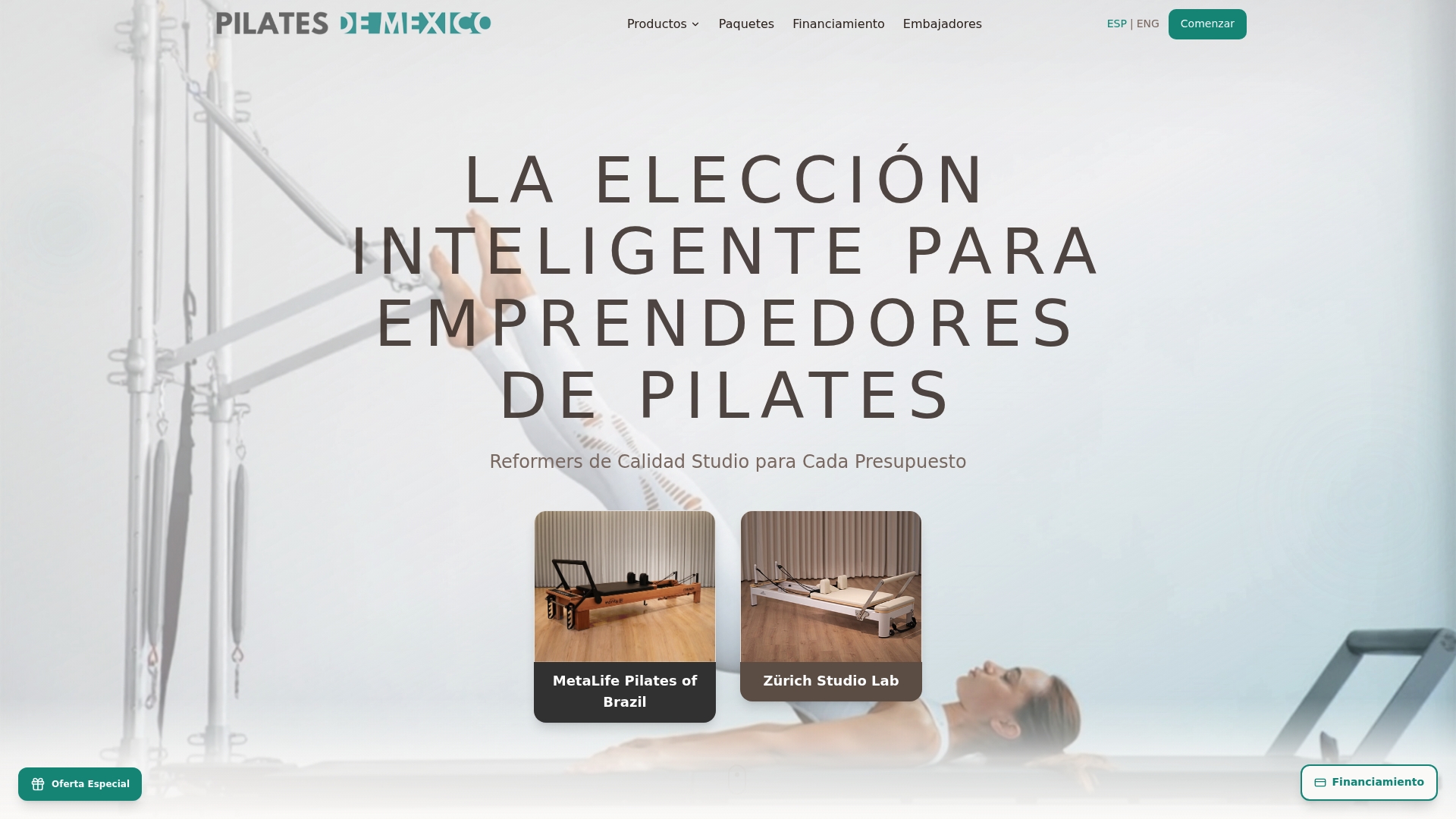
Every piece of equipment includes financing, package deals, and consulting from a team that understands the real costs of launching and filling a studio. Explore our financing options or visit Pilates de México to check out the catalog. If you are planning a new space, be sure to check our guides on Pilates studio equipment and common mistakes made by new owners beforehand.
A 90-Day Plan to Get Started
- Week 1: Define your welcome protocol (pre-class message, follow-up message, booking the second class) and train your team.
- Week 2: Set up your absence report and assign a team member to reach out to anyone who hasn't attended in 7 days.
- Week 3: Create WhatsApp groups by schedule or skill level and launch a 30-day challenge.
- Month 2: Review class packages and expiration dates against your clients' actual attendance frequency, and make adjustments.
- Month 3: Calculate your first churn rate and your first cohort, then compare them against the following month.
Frequently Asked Questions
When should I reach out to a client who stopped coming?
Between 7 and 10 days of inactivity. This is the sweet spot recommended by fitness business owners in Mexico, catching clients before an absence turns into a definitive decision to quit. Start with a warm, personal message and offer a concrete solution, such as a different schedule.
What is a good retention rate for a Pilates studio?
There is no single benchmark confirmed specifically for Pilates studios in Mexico. The most practical approach is to benchmark against yourself: track your monthly churn and analyze 1-, 3-, and 6-month cohorts, aiming for each new cohort to retain better than the last.
Should you charge a fee for no-shows?
Many Mexican studios do, implementing 6- to 8-hour cancellation windows and charging fees between $50 and $250 MXN depending on their business model. This works best when policies are clearly communicated at the time of purchase, applied consistently across the board, and flexible enough to offer a one-time courtesy exception for newcomers.
Which is better for retention: class packages or memberships?
It depends on client frequency. Class packs of four, eight, or twelve sessions are ideal for clients attending once, twice, or three times a week, while recurring memberships best serve regular attendees. The ideal approach is offering both, along with a clear upgrade path from one to the other.
How does building a community boost client retention?
It creates a social reason to show up: when clients make friends at the studio, skipping a class means letting someone down. Schedule-based group chats, monthly challenges, social events, and recognizing milestones are the most effective practices shared by top studio guides in Mexico.
Sources
- Crossfy: Why a Member Stops Working Out in Mexico
- BookYourMat: Client Retention in Pilates Studios
- BookYourMat: First 30 Days Onboarding
- Pepperoni Booking: The State of Pilates Studio Retention
- Pepperoni Booking: Retaining and Fostering Engagement
- Reservio: Scheduling Rules for Pilates Studios
- Inventio UAEM: Fitness Business Development in Acapulco
- FITMA: 10 Strategies to Retain Clients
- Fisio.Art: Onboarding in the First 4 Weeks
- Gymforce: 100 Gym Owners Reveal How to Retain Clients
- Bobclass: How to Build Client Loyalty in Pilates
- AnswerForMe: WhatsApp for Pilates and Wellness Centers
- Shortway: Marketing for Pilates Studios
- Pilaty: Pilates Packages and Memberships
- Fit Pilates: Packages and Plans
- Fit Pilates: Terms and Conditions
- Althea Pilates & Wellness: Studio Policy
- SOREMA: Terms and Conditions
- Studio65 Pilates: Studio Rules
- Cori Alquicira: How to Reduce Cancellations
- Syncro Fitness: Churn Rate and Student Retention
- Klasius: Key Metrics for Gyms