Buying Reformers in Bulk: A Guide to Outfitting Your Studio

Buying Reformers in Bulk: A Guide to Equipping Your Studio
The best way to buy multiple reformers in Mexico is to approach it as a single, turnkey project: an all-inclusive package quote covering equipment, shipping, installation, local warranty, spare parts, and a payment plan that doesn’t drain your working capital. At Pilates de México, we build that project alongside you: we carry the MetaLife line (Infinity and Advanced), more accessible professional alternatives, studio packages, and direct financing, turning your bulk order into a studio fully prepped for classes—not just a pile of boxes on your floor.
This guide is designed for anyone outfitting a full studio space: expanding or renovating studios, instructors opening their first location, gyms and fitness boxes adding a reformer room, physical therapy clinics, and investors who see Pilates as a high-return business opportunity.
Quick Summary
- Buying in bulk means negotiating a complete turnkey package: equipment, accessories, freight, installation, warranty, and replacement parts—not just a per-unit price.
- First, calculate how many reformers fit comfortably in your space and how many billable spots you need to achieve ROI; only then choose your brand and product line.
- Purchasing locally with warranty, professional assembly, and spare parts in Mexico protects you from unexpected costs and unpredictable import delays.
- A well-structured financing plan lets you outfit the entire room from day one without burning through essential operating cash.
- Always request a detailed, written, line-item quote before comparing offers.
Table of Contents
- What Buying Reformers in Bulk Really Means
- Before Requesting a Quote: Your Floor Plan
- What a Bulk Quote Should Include
- Buying Locally vs. Importing Directly
- Choosing the Right Line: Premium vs. Accessible
- Step-by-Step Buying Process
- How to Finance a Bulk Equipment Purchase
- Common Mistakes When Buying Multiple Reformers
- How We Do It at Pilates de México
- Frequently Asked Questions
- Sources
What Buying Reformers in Bulk Really Means
In the Pilates industry, "wholesale" rarely means a static price sheet with fixed volume tiers. It is a project-based negotiation: how many reformers you need, from which line, with which accessories, your target opening date, and your preferred payment structure. That’s why online searches yield such wildly different results—from used equipment lots and white-label manufacturers to retailers selling units one by one.
Each option meets a different need, and for a professional studio, what matters most is that the equipment withstands daily classes, includes local support in Mexico, and arrives fully installed. A used lot might seem like a bargain, but the warranty and spare parts availability depend entirely on who sold it. Ordering directly from the factory requires you to handle advance payments, freight, and customs clearance.
A local supplier providing the complete package takes that coordination off your plate. That is the logic of turnkey purchasing: you consolidate equipment, accessories, installation, and financing under a single relationship, giving you a single point of contact if anything goes wrong.
Before Requesting a Quote: Your Studio Floor Plan
The price per reformer is the last question, not the first. Before talking to any supplier, make sure you address these five key points.
1. How many reformers actually fit
Each unit needs room for carriage travel, space to move around it, and clearance for the instructor to walk through. Miscalculating dimensions is the most expensive mistake: you end up with an overcrowded room or equipment you can't use for its full range of exercises. Before choosing the quantity, check out how much space each reformer needs and follow our guide on evaluating space for reformers. If your space is compact, we also have a guide for fitting 6 to 8 reformers in 40 to 80 m².
2. Class type and usage volume
A studio running multiple classes a day for groups of six to eight students demands frames, springs, and hardware built for daily heavy wear. A clinic offering one-on-one or semi-private sessions has a different intensity level, but still requires fine adjustments and stability. Determine how many classes per day each unit will host: this will dictate whether you need a premium line or a more accessible commercial model.
3. Total budget, not just equipment cost
Beyond the machines, factor in: accessories, freight, installation, buildout and renovations, furniture, lighting, sound systems, and an operating reserve for the initial months. If you plan to play ambient audio, consider licensed music for studios early in the design stage, as playing commercial music in a business is subject to specific licensing rules.
4. Payback and ROI plan
Run a simple financial projection before making a purchase. As an illustrative example with sample figures you can adapt: a studio with 6 reformers running 8 classes per day creates 48 daily spots. Assuming an average 60% occupancy rate, that's roughly 29 spots booked per day. Multiply that by your average price per class, subtract rent, payroll, and maintenance, and you'll see how many months it takes to break even on your investment. If the math only works out with near-100% occupancy, it’s wiser to start with fewer reformers or choose a more budget-friendly commercial line.
5. Opening date and delivery buffer
Lead times vary significantly depending on whether the equipment is already in stock in Mexico or imported, and any delay means paying rent without generating revenue. Check out the delivery lead times for reformers in Mexico and leave a buffer between delivery and opening day to set up, test, and train your staff.
What a Bulk Order Quote Should Include
A formal quote is the document that protects your investment. If two proposals show different pricing, it is almost always because their scope differs. Make sure each quote details the following:
| Item | What to Confirm |
|---|---|
| Equipment | Model, product line, unit count, frame materials, and hardware specs |
| Accessories | Boxes, jumpboards, straps, spare springs, dowels / bars |
| Freight & delivery | Who covers shipping to your location and the estimated delivery timeline |
| Installation | Whether it is professional, who performs it, and if leveling and testing are included |
| Warranty | Duration, coverage details, and who handles service in Mexico |
| Spare parts | Local availability of replacement springs, straps, and wear-and-tear components |
| Payment terms | Down payment, balance due, installments, and financing terms |
| Validity | How long the quoted pricing remains valid |
A quote that simply states “6 reformers, total price” forces you to guess. A solid quote allows you to compare proposals on equal terms and easily see what happens if you adjust the unit count up or down.
Local Purchasing vs. Direct Import
There are two main routes when purchasing multiple reformers.
Local purchasing. The supplier has already imported, cleared customs, and warehoused the equipment, or manages the import process directly for you. You receive the complete package installed, backed by a local warranty and spare parts in Mexico. Pricing is fully transparent in the quote, and lead times depend on available stock.
Direct importing. You hire the manufacturer, pay a deposit, coordinate shipping, customs clearance, and inland freight, and handle the assembly yourself. The factory price looks low, but freight, import duties, customs broker fees, and local transport add up quickly. In addition, reformers and their accessories are classified as gym equipment, and that tariff classification entails documentation and labeling requirements you must satisfy before the equipment is released from customs. If you're considering this route, our guide to costs and procedures for importing reformers breaks down every single item.
For most studios, buying locally wins out for one simple reason: the risk stays with the supplier. If a part arrives damaged, if a spring wears out, or if you need to expand your studio room in six months, you have a direct point of contact in Mexico. And if you ever decide to sell or upgrade, equipment with local backing holds its resale value much better.

How to choose your line: premium or accessible
There is no one-size-fits-all answer. It depends on your studio's stage and your intended use.
- Established studio renovating or expanding: Look for durability and resale value. The MetaLife line is built with certified Lyptus® FAS wood, stainless steel hardware, and a structure engineered for over 200 exercises and years of daily classes. Discover the Infinity Line and the Reformer Advanced.
- Instructor opening their first studio: Needs a manageable initial investment. More accessible professional options let you launch with a full studio room without starting at the highest price point, allowing you to scale later.
- Gym, CrossFit box, HYROX, yoga, barre, or dance studio: Usually adds a reformer studio to an already operating space. A bundled package of equipment and accessories streamlines the project and allows you to test market demand.
- Physical therapy or chiropractic clinic: Requires precise adjustments and stability for one-on-one sessions. Prioritize accessories and configuration over the number of beds.
- Investor with no Pilates background: What matters most is the financial model, required occupancy rates, and reliable equipment support—ensuring operations rely on sound management rather than constant repairs.
If you want to review investment ranges by equipment type, our guide to professional reformer prices in Mexico explains the key factors that drive costs.
How to coordinate your purchase step by step
A multi-reformer project is best managed with a clear roadmap. Here is our recommended sequence, along with where partnering with an experienced supplier makes the biggest difference.
- Define your space and capacity. Measure the premises, map out the layout, and determine the number of units. This is where most mistakes happen; at Pilates de México, our consulting includes full studio layout design before quoting.
- Set your budget and payment structure. Decide how much equity you'll invest and how much you'll finance. Review financing options before finalizing your order so your monthly payments align with your financial projections.
- Choose your line and accessories. Select between premium and professional lines based on your usage. Include accessories and spare parts in your initial order to avoid paying separate shipping fees later. Accessories are quoted right alongside the equipment.
- Request a written quote. Ensure it includes the detailed breakdown mentioned above. Always compare the total delivered and installed at your location.
- Confirm timelines and logistics. Ask for delivery dates, delivery protocols, and site requirements. Make sure building access allows moving the equipment in smoothly, especially if stairs or elevators are involved.
- Installation and testing. With professional installation, each reformer is leveled and thoroughly tested before opening. Check carriage glide, footbar and headrest adjustments, and spring operation.
- Train your team and open. When your instructors know the equipment inside out from day one, your studio opens with confidence. To streamline the entire process, check out our guide on setting up a reformer studio without space or assembly mistakes.
How to finance a bulk purchase
Outfitting a complete studio is an investment that isn't always best paid in cash up front. Depleting your cash reserves on equipment leaves you without a buffer for marketing, rent, and payroll during the first few months—which are the most critical.
With financing, the purchase is split into installments, keeping your working capital available for operations. At Pilates de México, financing is available directly with equipment purchases, so a single project covers both equipment and payments. The key is ensuring the installment is lower than what the studio realistically generates, not simply aiming for the lowest possible payment.
To make the right choice, calculate as follows:
- Expected monthly revenue for the studio, based on a conservative occupancy rate.
- Fixed operating expenses: rent, payroll, utilities, and maintenance.
- Maximum payment you can afford without putting cash flow in the red.
If your initial occupancy estimate is optimistic, cut it in half for your first few months' projections. Terms and conditions are determined by the financing team on a case-by-case basis; check them on the financing page.
Common Mistakes When Buying Multiple Reformers
- Focusing only on the price per unit. A low price that doesn't include freight, installation, or a local warranty becomes expensive once everything is factored in.
- Buying without measuring. Ordering eight units for a space that only fits six is an expense you won't recover.
- Not planning for spare parts. Springs and straps experience normal wear and tear. Having them readily available in Mexico prevents weeks of equipment downtime.
- Ignoring resale value. A brand with solid support and a local presence retains its value better when you decide to upgrade or expand.
- Mixing equipment lines without a plan. It's fine to combine different product lines if there's a clear strategy—for example, premium reformers for group classes and cost-effective models for intro sessions. What doesn't work is mixing them randomly.
- Scheduling your opening before confirming a delivery date. Confirm lead times in writing before announcing your grand opening.
How We Solve It at Pilates de México
We are the equipment partner behind reformer studios across the country. We carry MetaLife, crafted with certified FAS Lyptus® wood and stainless steel hardware, along with budget-friendly options so your first studio doesn't have to start at the highest price point. Every piece of equipment comes backed by financing, packages, and guidance from a team that understands what it takes to open and fill a studio.
If your project involves multiple units, start with our studio packages: they let you quote an entire room—including accessories and a payment plan—in a single conversation.
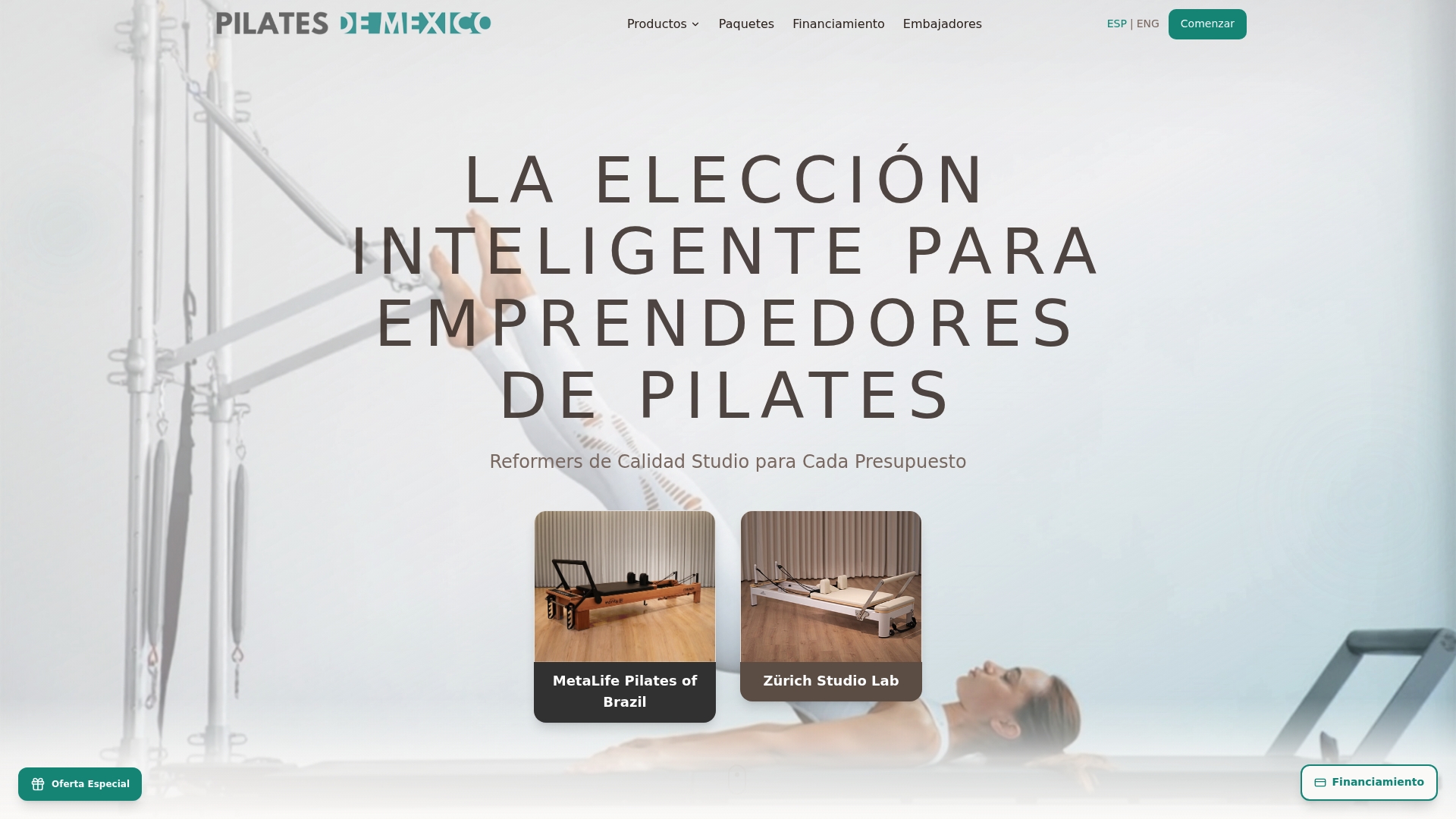
Tell us the size of your space, the number of reformers you need, and your target opening date. With that information, we’ll put together a written proposal. Explore our catalog first in the Infinity Line and Advanced Line, or reach out to us at pilatesdemexico.com.
Frequently Asked Questions
How many reformers do I need to open a studio?
It depends on the size of your space and your class model. Many studios launch with six to eight reformers because it allows for profitable group sizes without overcrowding the room. Measure first and calculate your bookable spots; your equipment count should be determined by that, not the other way around.
Is there a minimum order to qualify for wholesale pricing?
Conditions vary depending on the project, equipment line, and package type. We recommend requesting a quote for the exact quantity you need and comparing the total installed cost. Multi-unit packages typically streamline logistics, accessories, and payments.
Is it better to import directly or buy from a supplier in Mexico?
For most studios, purchasing through a supplier in Mexico eliminates the hassle of freight, customs, and assembly, while providing a local warranty and spare parts. Direct importing requires upfront payments, paperwork, and lengthy lead times that you must absorb yourself, on top of extra costs beyond the factory price.
Can I finance the entire purchase?
Pilates de México offers direct financing to equip your studio. Terms and conditions are tailored to your project, so the best approach is to request a financing proposal alongside your quote to match payments to your projected cash flow.
Which reformers work best for a physical therapy or rehabilitation clinic?
For one-on-one sessions, stability, precise adjustments, and versatile accessories are essential. A clinic can start with just a few units and expand as demand grows. If you want to configure the ideal setup for your practice, we can guide you based on your space and patient needs.
Sources
- Importing fitness equipment, accessories, and gym gear
- Music for yoga studios: how to choose and license it