10–20 Years of Life: Durability of Professional Reformers for Studios
10–20 Years of Life: Professional Reformer Durability for Studios
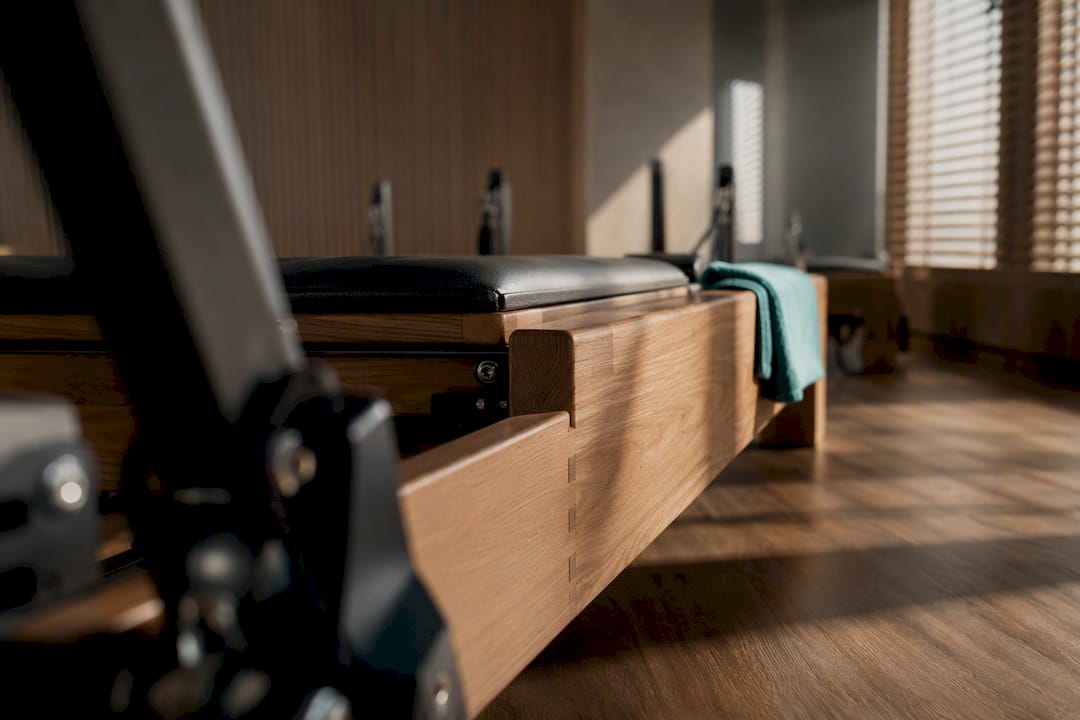
The durability of a professional reformer primarily depends on three factors: the frame, the quality of the springs, and the availability of spare parts and after-sales service. A well-maintained premium piece of equipment, such as those manufactured by MetaLife or the Zürich Labs line by Balanced Body, can perform for 10 to 20 years in commercial use. An economical model, without that support, usually needs replacement in 2 or 3 years.
In summary:
- The durability of a professional reformer fundamentally depends on the frame material, the quality of the springs, and the availability of reliable spare parts and after-sales service.
- Models made with certified wood and stainless steel hardware can have a lifespan of over 10 years in intensive use, while economical equipment needs replacement in 2 or 3 years.
- The minimum recommended load capacity for commercial use is 130 kg, although 150 kg or more is ideal to withstand dynamic efforts and intensive jumps.
- Poor quality springs lose tension quickly, affecting performance, and it's essential to check guaranteed cycles or specific spring warranties in the technical sheet.
- A well-maintained premium machine can last between 10 and 20 years, while economical ones require replacement every 2 to 4 years, making the annual cost more favorable for high-quality models.
Table of Contents
- Structural Factors Determining the Durability of a Professional Reformer
- Springs, Wheels, and Upholstery: What to Check in the Technical Sheet
- How to Detect Failures Before They Affect Classes
- Real Lifespan and Total Cost of Ownership of a Reformer
- Checklist to Evaluate Durability Before Buying
- How Pilates de México Supports the Durability of Its Equipment
- The Right Investment According to Your Use and Budget
- What Really Matters When Evaluating Durability
- Pilates de México: Equipment with Documented Durability
- Sources
Structural Factors Determining the Durability of a Professional Reformer
The frame is the skeleton of the equipment and the first point where the difference is noticed between a reformer that lasts a decade of daily classes and one that starts to creak after a year. Certified solid wood, like the Lyptus® FAS used by MetaLife, offers a natural rigidity that absorbs the repeated vibration of jumps and transitions without deforming. Aluminum or anodized steel, on the other hand, can weigh less and facilitate transport, but tend to transmit more vibration to the joints if the design doesn't compensate for that flexibility with additional reinforcements.
Quality certified wood better resists fatigue from repeated use than many light alloys, especially when the studio operates with six, eight, or ten classes a day. This does not rule out metal: there are very solid aluminum frames, but it's essential to check the gauge and the anodizing process before purchasing, not just the equipment's weight on the technical sheet.
The hardware also matters. Stainless steel resists corrosion from sweat and environmental humidity far better than painted or chromed steel, which begins to rust at friction points after a few months of intensive use. Welds and assemblies must be precise: a joint with play, even minimal, translates into noise, progressive looseness, and, over time, material fatigue around the weak point.
Load capacity is the data most ignored when comparing prices. For professional use, a minimum capacity of 130 kg is advisable, with 150 kg or more as an ideal reference, as recommended by this guide for equipping Pilates studios. This margin is not capricious: it covers the dynamic forces of a jump or an explosive thrust, which far exceed the static weight of the person on the carriage. A reformer calibrated only for static load can fail precisely during the movement where firmness is most needed.
When evaluating a model, check:
- The type of wood or alloy of the frame and if it has origin certification.
- The material of visible hardware (screws, hinges, supports).
- The declared dynamic load capacity, not just the static one.
- The finish of the welds and joints under the carriage.
Pro tip: ask the supplier for the dynamic load capacity datasheet, not just the static one. If the vendor only has static data, it's a sign that the product was not tested for intensive commercial use.
Springs, Wheels, and Upholstery: What to Check on the Datasheet
Springs are, by far, the component that degrades the most with daily use, and also the one that varies the most between brands. Low-quality springs can lose between 10% and 20% of their tension in a few months of intensive use, leading to inconsistent resistance during exercise and clients noticing that "something changed" without being able to explain what. A reputable datasheet should indicate guaranteed fatigue cycles or at least a specific warranty on the springs, separate from the general frame warranty.
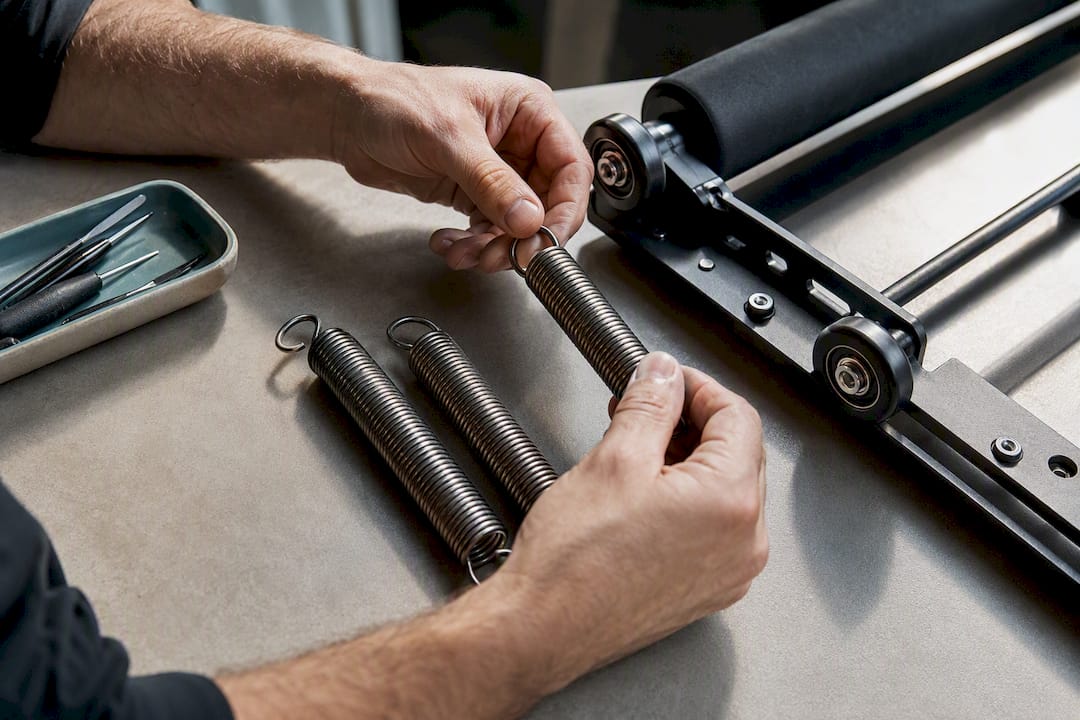
The wheels and the carriage sliding system are the second point of constant friction. Sealed stainless steel bearings maintain a smooth glide even after thousands of hours of use, according to the professional equipment guide for Pilates studios, while open or plastic bearings accumulate dust, become noisy sooner, and require much more frequent lubrication. Noise, in fact, is a reliable early indicator: a quiet carriage at six months almost always remains quiet at three years.
Pulleys and cables deserve the same attention. An uncoated cable without corrosion resistance will fray sooner in humid climates, and an inexpensive plastic pulley will wear down at the contact point with the cable much faster than a machined aluminum one.
For upholstery, prioritize materials with good resistance to sweat and frequent cleaning with disinfectant, and confirm that the cover can be replaced without changing the entire platform. This should be kept in mind:
- Guaranteed spring cycles (ask for them in writing, not verbally).
- Bearing type: sealed stainless steel versus open or plastic.
- Anti-corrosion coating on cables and pulleys.
- Independently replaceable upholstery, without disassembling the frame.
Pro tip: try out a display reformer and move the carriage yourself before buying. If you feel lateral vibration or hear a click when reaching the end of the travel, that unit already has wear that will worsen with daily commercial use.
How to Detect Failures Before They Affect Classes?
Squeaks, carriage looseness, and perceptible loss of spring tension are the three most common warning signs, and all appear before the equipment truly fails. An intermittent squeak usually indicates a lack of lubrication in the bearings; a constant, high-pitched squeak, on the other hand, usually signals advanced rail wear. Lateral carriage play almost always comes from loose screws, though it can also be a symptom of frame joint fatigue if it persists after tightening.
A structured maintenance program prevents these signals from turning into critical failures, as confirmed by maintenance guides for commercial reformers. A reasonable routine for a studio with intensive daily use is organized as follows:
- Daily: Clean the surface and rail with a dry cloth or compatible disinfectant, leaving no wet residue.
- Weekly: Visual inspection of screws, cables, and general upholstery condition.
- Monthly: Light lubrication of the rail and bearings with a specific gliding product.
- Quarterly: Review spring tension and wear, comparing resistance between units of the same model.
- Annually: Full technical service, ideally by manufacturer-certified personnel.
Corrective maintenance costs typically skyrocket when this routine is ignored: a scheduled spring replacement costs a fraction of what it costs to repair a carriage damaged by prolonged vibration. Recording each intervention, with date and replaced part, allows you to see patterns and decide with data whether to restore the equipment or replace it entirely.
Real Lifespan and Total Cost of Ownership of a Reformer
A well-maintained premium reformer lasts between 10 and 20 years in a studio with daily commercial use. Economical models, in the same intensive use context, usually require replacement between 2 and 4 years. The difference is not just in the purchase price: it's in the annualized cost.

Restoring premium equipment (springs, upholstery, and wheels) by a certified technician can bring it back to near-original performance, and it's often cheaper than buying new equipment if the frame is still intact. This makes partial restoration a valid alternative to full replacement, provided the chassis shows no structural fatigue.
A simple calculation clarifies this:
| Concept | Premium Reformer | Budget Reformer |
|---|---|---|
| Estimated Lifespan | 10 to 20 years | 2 to 4 years |
| Typical Mid-Life Restoration | Springs, upholstery, wheels | Complete replacement is usually more viable |
| Resale Value at 5 Years | 50% to 70% of original | Low or none |
If you divide the purchase price by the years of useful life, a premium piece of equipment with a 15-year lifespan and good resale value ends up costing less per year than a budget one replaced three times in the same period, even if the initial outlay is higher. That's the calculation that should guide the decision, not just the price on the label.
Checklist for Evaluating Durability Before Buying
Before signing any purchase, new or used, it's advisable to ask the right questions and not rely solely on the commercial description:
- What exactly does the warranty cover: only the frame, or also springs, wheels, and labor?
- How many fatigue cycles does the manufacturer guarantee for the springs?
- What is the actual response time for shipping common spare parts?
- Does the supplier have local stock, or do you have to wait for imports every time?
Warranties that include labor and technical visits significantly reduce the total cost of ownership, because they eliminate the downtime that occurs when the studio has to find and pay an external technician every time something fails.
In person, or upon receiving the equipment, perform these quick checks:
- Move the carriage from end to end and feel for lateral vibration.
- Listen carefully: any squeak from the factory is a bad sign.
- Visually check for play in the frame joints under the seat.
- Ask for the technical sheet on dynamic capacity, not just static.
- Request in writing the guaranteed cycles of the springs and the process for ordering spare parts.
A serious manufacturer can tell you, with precision, how many cycles a spring supports and how long it takes to send you a new one.
How Pilates de México Backs the Durability of Its Equipment
Pilates de México distributes MetaLife, built with certified Lyptus® FAS wood and stainless steel hardware, along with the Zürich Labs line from Balanced Body for studios seeking a professional alternative with documented specifications. Both lines are designed to withstand over 200 different exercises and years of daily classes without losing precision in carriage glide.
The real difference between buying right once and buying wrong three times is almost never in the list price. It's about whether the supplier has the spare parts when you need them and if the warranty covers more than just the chassis.
The support includes direct financing, packages to equip full studios, stock of spare parts, and after-sales guides so that no studio depends on importing a common part every time it wears out. You can also consult the comparison of leading reformer brands to understand where each line stands before deciding.
- Certified materials with documented traceability.
- Extended warranty on structure and wear components.
- Spare parts available without exclusive reliance on imports.
- Opening consultancy to calculate how many units your studio needs.
The Right Investment According to Your Use and Budget
If your studio operates with intensive daily classes, invest in a reformer with a certified wooden frame, springs with written guaranteed cycles, and a supplier with locally available spare parts. Use the checklist in this guide during each showroom visit, demand detailed warranties before signing, and consider financing if it allows you to buy quality from the first piece of equipment. Record every maintenance: that history will later tell you whether to restore or replace.
What Really Matters When Evaluating Durability
The conversation about professional reformers often stops at the list price, and that's where the mistake lies. The frame and springs capture attention in technical datasheets, but the factor that most determines whether a studio suffers or not with its equipment is something less noticeable: the supplier's response speed when something wears out. A spring that loses tension doesn't close a studio. A spring that loses tension and takes three weeks to be replaced, however, does affect the studio's reputation.
The "seven-year itch" is real: even the best commercial reformers reach a point where upholstery, springs, and wheels need a major overhaul. Those who buy thinking only of year one will face an expensive surprise in year seven. Those who buy thinking of annualized cost, with labor warranty included, reach that point with a plan already in place.
My straightforward advice: prioritize supplier over brand. A decent reformer with excellent support almost always beats an excellent reformer without support.
Pilates de México: Equipment with Documented Durability
Pilates de México is the alternative to buying blindly based on price: each piece of equipment comes with clear specifications for dynamic capacity, spring cycles, and frame warranty, so you don't discover the equipment's shortcomings months after it's been in your studio.
We carry MetaLife, built with certified Lyptus® FAS wood and designed for years of daily classes, along with more accessible options for studios that are just starting out and don't want to begin with the most expensive equipment in the catalog. If your priority is structural strength, check the specifications of the Zürich Labs reformer or the Infinity with tower from MetaLife. If the challenge is distributing the investment, our direct financing allows you to equip your entire studio without sacrificing frame quality to save on the first payment. And if you're still defining how many units your studio needs, contact us to build a custom package tailored to your daily operation.
Sources
- Pilates Reformer Machine for Studios: Professional Equipment Guide 2026
- Choosing the Best Pilates Reformer: Complete Guide for Studios
- Commercial Pilates Reformer Maintenance: Keep Your Equipment in Top Shape